
“I finally understood that it's not easy for a woman to raise a man,” Tupac sings in what has become rap's anthem to the mothers who raised more than one generation of artists. The often crude narrative of hip hop is inextricably linked to a love that never fails, or perhaps two: that for the mother and that for the family, natural or by choice. In Dear Mama (1995), Tupac sang about Afeni Shakur, Black Panther activist, not as a mythical woman relegated to her role as an exemplary mother, but as a person, an individual who in her strength, in her instinct for social revolution, as well as in drug addiction and economic difficulties, was able to act as a guide, helping him to become an artist.
Not a perfect woman, not a perfect relationship, but a person present and worthy of being understood. “I only love Mahbed and my mother, sorry” is another, more recent and very popular quote that needs no introduction (but if you miss it, it is God's Plan by Drake) and in which we find the topos of mothers, in a narrative that follows an intergenerational thread, remaining central decades later.
For rappers, who most often grew up without a father figure in contexts that can be marginal and difficult, the figure of the only parent present becomes the symbol of love, a lifeboat to cling to, a lighthouse to look at. A person not to be disappointed, to be protected by and, in turn, to be taken care of. Someone to dedicate the redemption obtained in music to. “Yeah, I haven't lived with mom in years / I pay her rent and I don't go to see her” raps Shiva in the 2022 song You don't know. Even for the rapper from Corsico the figure of the mother inevitably enters into the lyrics which reflect the reality experienced, for better or for worse, without altering it. This is how we meet Carmen, the woman who raised Shiva, or rather Andrea as she calls him, together with his brothers, Luca and Martina, and who rolled up her sleeves to guarantee a future for herself and her three children.
“Ma was out, the neighbor made pasta for me / I slept with my brother Luca on a single bed / I went on a scooter with him, he accompanied me to middle school / In those dark alleys only courage can be seen”. This is how Shiva paints his childhood in My story (2021), retracing the way in which family ties made him who he is today: like Andrea, like Shiva. “If a father doesn't tell you what's wrong / How do I understand when I have multiple demons at my side?” instead he raps in another bar, exposing the emptiness around the father figure and how this present absence has defined him. Inextricably linked to the family, with his brother Luca who today acts as CEO of the Milano Ovest Label, and his sister Martina who shares his hits via social media, full of pride, Shiva often speaks about them, in music and in interviews, with that touch of rap pride. Less often it happens that mothers have the opportunity to talk about what it was like to accompany the growth of those who, one day, became artists. Carmen did it, revealing her experience.
Andrea's first steps into the world, his obsession with music, the fear of going the wrong way, the darkest moment they overcame together. And then the greatest value that Carmen wanted to pass on to her son: responsibility. In music, but above all in life. Because today it's his turn to be a parent. And between example mothers and absent fathers, which parents will rap artists be able to be? “So I freed myself from all the guilt that I thought I caused / So I freed my mother from all the pain that she called shame,” raps Kendrick Lamar at the end of his very long reflection on generational trauma in Mother, I Sober (2022). By breaking the chain of guilt, shame and oppression, speaking openly about how complex it can be to grow and mature in certain contexts, Kendrick recognizes that he has made the fate of his children lighter: “So I let our children go, may good karma accompany them.”
In the shared responsibility of breaking the circle, of giving back to children more than what was received from their parents, rappers become adults and question themselves about the future. Shiva in Letter to Draco (2024): “And I hope you will take from me, but only my good part.” Between mistakes from which you learn and a promise to keep: “You will learn to love, maybe you will understand all this”.
Carmen believes it. She is the first to believe that her son will be a free artist and a better parent. Indeed, she is the first to believe in her son, ever since he was a child of few eloquent words and gestures.
What was Andrea like as a child?
He was a restless child, but in a good way. Curious about everything, always with his head somewhere else. He couldn't sit still for five minutes. He had such energy that you got tired just looking at him, but he was also tender, sensitive, more than he let on. As a child he cried over good things, not just bad ones. He never really lost that part, that sensitivity.
What relationship did you create with your brothers?
He has always had a very close bond with Luca and Martina. Andrea is the youngest and perhaps for this reason he early learned the ability to observe and absorb what surrounds him. Luca has always had the instinct to protect him. When Andrea started to grow artistically, it was natural that they worked together. Martina represents her quieter side. They love each other enormously, even without having to say it.
And with you?
With me… Andrea has always been a son who didn't open up easily, but when he did, he did it all at once. They were rare moments, but they were worth more than a thousand normal conversations.
How was he at school?
He wasn't made for school, I'll say it without beating around the bush. But he wasn't stupid, on the contrary. It was the system that wasn't for him. He failed four times in first grade and then stopped. I was very sad about it, because culture is important, but I understood that he was already looking for something else. He was looking for a place where his voice made sense.
How much space has music had at home?
Music has always been present in our house. We listened to everything: a bit of soul, a bit of Italian songwriting. But Andrea found rap on his own, like kids find things when no one shows them to them, that is, on the street, among friends, through YouTube. He started writing lyrics very early. When he made you read them, even if you didn't understand that world well, there was something that struck you.
When did you realize that you wanted to make music your career?
At 14 he had already released his first mixtape. At that age I was still thinking about homework. There I understood that it wasn't a pastime, he wasn't doing it to become famous, he was doing it out of necessity, because otherwise he would feel bad.
Did you experience it in a positive way or with the fear that he might get into trouble?
Both things together, which is the normal condition of a mother. I was proud of him, I saw that he was talented, but I knew that a certain environment brings with it traps. Corsico is not the easiest place to grow up. I hoped music was his way out, and in some ways it was.
What are the values you wanted to convey to him?
Loyalty. Respect for those who really love you. Family first of all. And responsibility, which was the hardest thing to teach him, maybe even the thing he had to learn the hard way. But he's got it inside him, Andrea. He has it.
What role did spirituality have in Andrea's growth?
Faith has always been there in the house, even when it wasn't explicitly mentioned. You absorb certain things, they don't teach you in words. Andrea found his way of being with God: in music, in difficult moments. It is not the faith of those who go to mass every Sunday but of those who, at times, have the feeling of having been “saved”.
Did the absent figure of his father, which he often talks about in his songs, influence him growing up?
Yes and it would be dishonest to deny it. A child feels that lack, even when he doesn't say it. Andrea has always talked about it in interviews, in the lyrics, in those verses that break your heart if you know where they come from. That wound marked him, but it also shaped him. He learned early not to expect anyone else to solve things for him.
When success came, what changed in your life?
Many things have changed, some for the better, I won't deny it. There was more stability, Luca started working with him, the financial worries eased. But the best thing wasn't the money. It was seeing it come to fruition. Seeing him do the thing he was born to do. He lived the neighborhood with pride, because Corsico remained his home, even when he could have left. He could go and live in the center of Milan, he could live the life of the famous, far from everything. And yet he remained. Corsico is him, they cannot be separated.
Was there an episode where you feared for his future?
More than one. But you already know the hardest moment, it's what everyone knows, when they arrested him. There the fear became concrete, with a precise address: San Vittore prison.
When Andrea was accused of attempted murder, what was that moment for the family?
The darkest moment. There's no other way to put it. When news like this reaches you, the world stops. You can't breathe. Then little by little you pick up the pieces, you cling to your family, to your lawyers, to the truth. We stood together because there was no other choice. In moments like this you either come together or fall apart.
How did you experience the period of his detention?
The talks were the most important thing. You looked forward to that half hour as if it were the only good thing of the week. He tried to be strong, not to make us feel the weight of what he was going through, but a mother sees it anyway. We let the lawyers do their job, we hoped the truth would emerge. And something emerged, such as mitigating circumstances and the reduction of sentences. It wasn't the complete justice we wanted, but it was a step nonetheless.
When he came out, what was the first thing he said to you?
Some things remain between us, but he didn't really say anything out of the ordinary. He was simply there. It was there, and it was enough.
How did you deal with this difficult period for Andrea with his children?
Draco was born while Andrea was inside. That was something that broke the hearts of the whole family. A grandson who arrives on the most beautiful day and you can't be there. We tried to be present for Laura, for the baby, to build a sense of family around that birth. The bond between Andrea and his children exists and he knows how much he has to recover.
Do you somehow blame his chosen career for what happened?
No, I don't blame the music. What happened is the result of a context, of choices, of a moment. But the musical career is the truest and healthiest thing that Andrea has. And today I am left with a sense of relief, but also of responsibility. As if once out of the tunnel there was still so much to build.
What kind of parent would you like him to be for his children?
Present. First of all present. He himself wrote there in a song, “I want you to always have a father, not like mine did.” That sentence struck me deeply, because it means that he understood. I don't want him to become a perfect father, because no one is, but I want him to be there. May his children know they can count on him.
How do you imagine its future?
I imagine him free. Free to make music, to be with his children, to sleep peacefully at night. Andrea has been through a lot, but he has also shown that he knows how to get back up. The future I want for him is simple: that he is happy, that he is well, and that when his children grow up they can be proud of him. I already am.
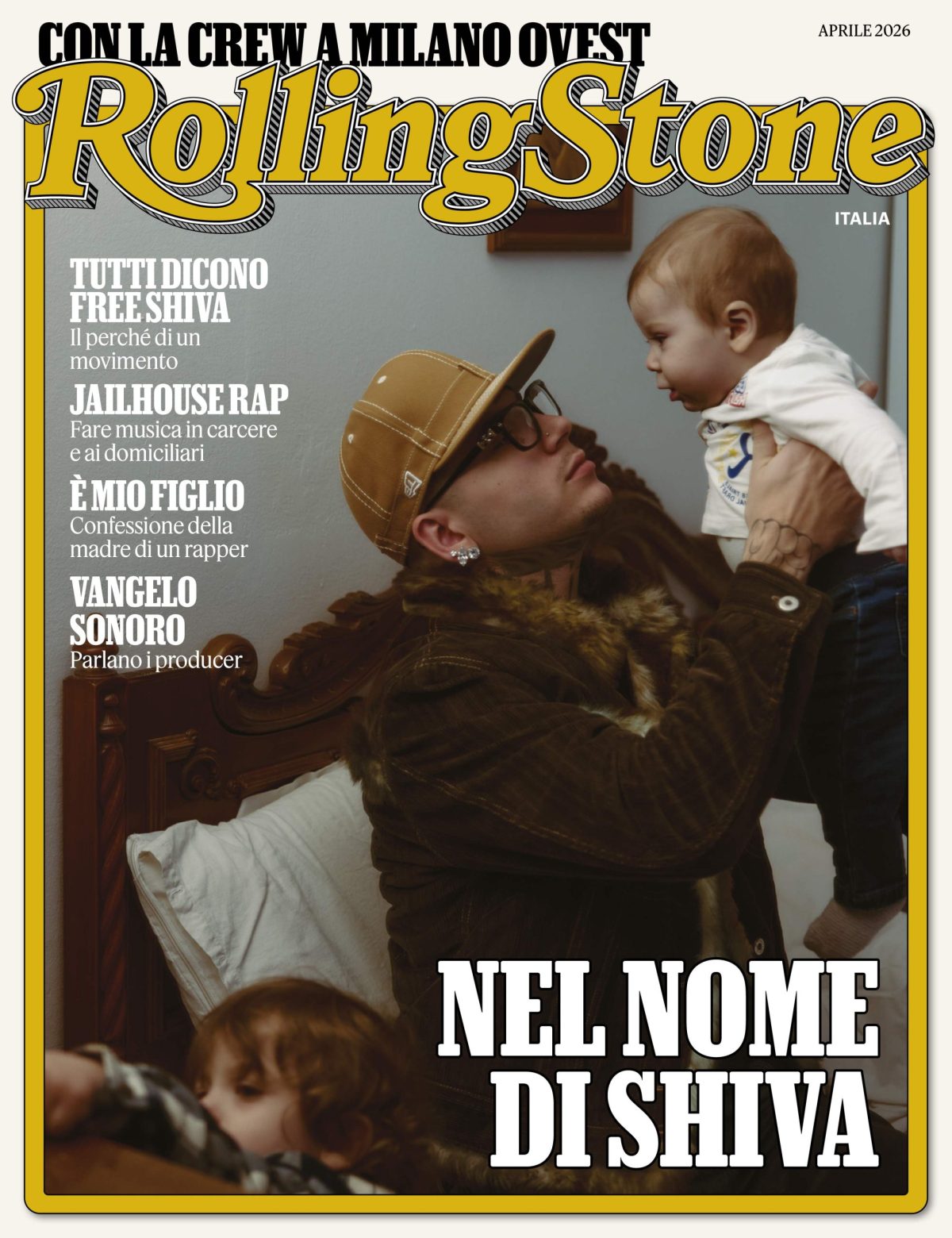
Photo: Michele Perna. Shiva outfit. Jacket: Dolce & Gabbana. Jeans: Purple.
Belt: Htc Los Angeles. Shoes: Timberland. Hat: Fitted Mains x New Era. Glasses: Chrome Hearts
The interview is contained in the paper issue of Rolling Stone Italia dedicated to Shiva, which can be purchased on newsstands and at this link.