
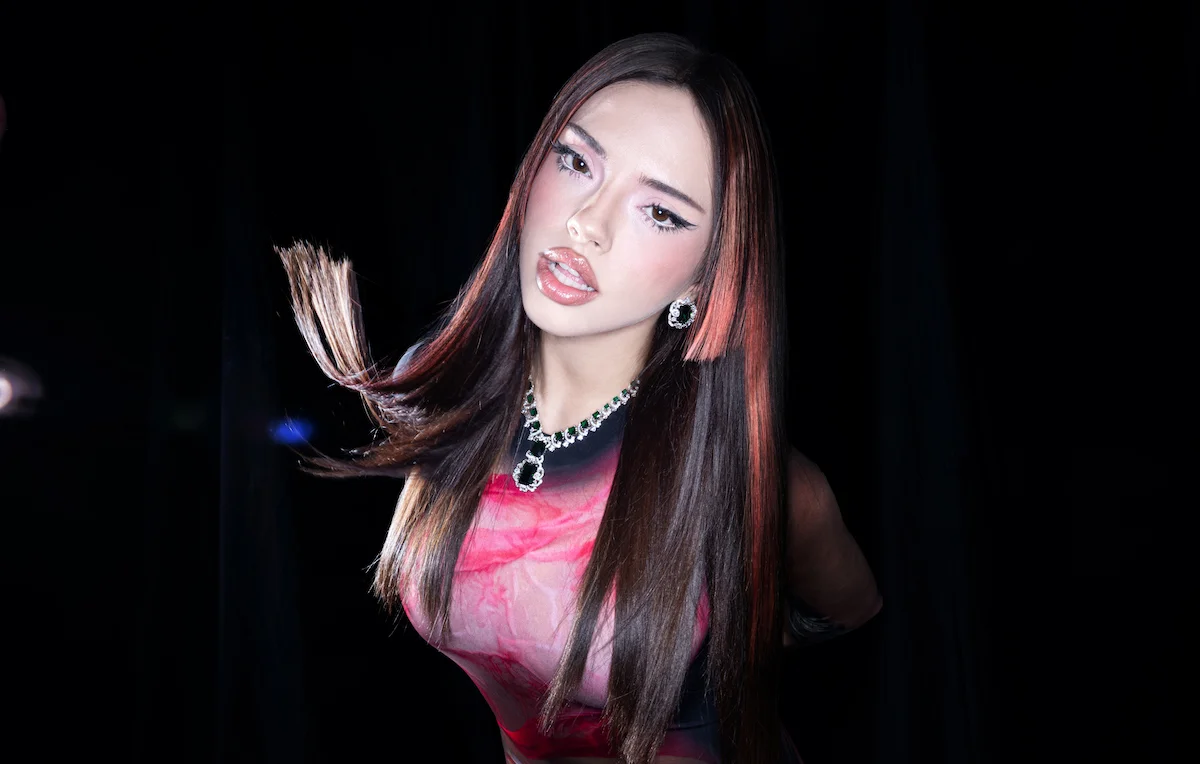
During Eurovision week I am invited to Vienna to watch the final. During the second semi-final, they are at an event in the city. I meet a dear friend, we catch up on life, on the past months. The large screen in the center of the hall shows live coverage of the festival. The Bulgarian competitor, Dara, opens. His performance strikes us: it is super-pop (with references ranging from K-pop to the more well-known American one), but with a Balkan nuance. She knows how to dance, she knows how to be on stage, she knows how to pierce the TV. Bangaranga thus it becomes our “piece to focus on”. Also because we then dedicate ourselves to life, forgetting about the event.
Two days later Dara, somewhat surprisingly, won the Eurovision by beating Israel, again on the podium despite accusations from the previous days of forcing the public's vote. It looks incredible. I, like her, was the first to not believe it and to collapse to the ground in the moment of victory awarded to her by both the national juries and the voting public. After all, it is a historic moment: it is the first time that Bulgaria has managed to win Eurovision. And, in 2027, it will be the first time it will host the competition.
When Dara and I talk for this interview a couple of weeks later, we start from that moment. Dara is in the car. She was late for about ten minutes – as a diva should be – apologizing with the most untouchable of excuses: she had a meeting with the Prime Minister of Bulgaria. She is all dressed up for the occasion, she speaks with a cheerful seriousness that is interrupted by kawaii verses or gestures, as if she had well studied the lessons of Korean and Japanese idols. She is very happy, with that glow that only an unexpected Eurovision champion can have. After all, outside of Bulgaria no one knew about her. In his country, however, he is obviously a celebrity. His day tells the story: after the meeting with the prime minister, he is going to carry out his role as coach on The Voice; in the evening he will have a party to celebrate the victory; at 5 in the morning a plane to Stockholm where he has scheduled a series of writing sessions for new songs.
Dara has clear ideas: she is here to stay. And to put Bulgaria on the map. While waiting for that featuring with Fred Again…
When you won you said, “I don't know what's happening, but it's great.” Now that some time has passed, have you really realized what happened at Eurovision? Or does it all still seem like a dream?
Today it is no longer a dream. It was something I had been showing for a very long time. Since September, for nine months. Every day I wrote: “I will win Eurovision”. It was a wish thrown out to the universe, but without really expecting anything. I worked hard at all times: for the performance, for singing and dancing well, for keeping my mental health stable, for following my diet and being able to truly feel joy on stage. It was a huge preparation, a great exercise.
But have you ever really believed it?
I didn't expect something like this to happen, but I believed in my team and all the people I worked with, because I had the chance to collaborate with real professionals, incredible people. My mission was to put Bulgaria on the map.
And you did.
The moment I saw the Bulgarian flag in the first place I thought: “Thank you God”. I kept repeating it over and over: “Thank you God, thank you God, thank you God.” Because until the end we didn't really know if we would make it or not. I'm really proud that I attracted attention and was able to, in my high heels, walk down the hill and tell the world: “Hey, we're Bulgarians, we're knocking on your door, open up for us.”
Said like this, it seems like it was an easy journey. Were there any difficulties?
If my family hadn't been there for me, maybe I wouldn't have even gone to Eurovision. I had to overcome many difficulties, especially due to all the hatred I received after winning the selections in Bulgaria. I was afraid to even leave the house because of this wave of hatred that had been poured on me. But my husband was there holding me together, telling me: “You have to go, you have to win, you have to do it.” I am blessed to have people like this around me.
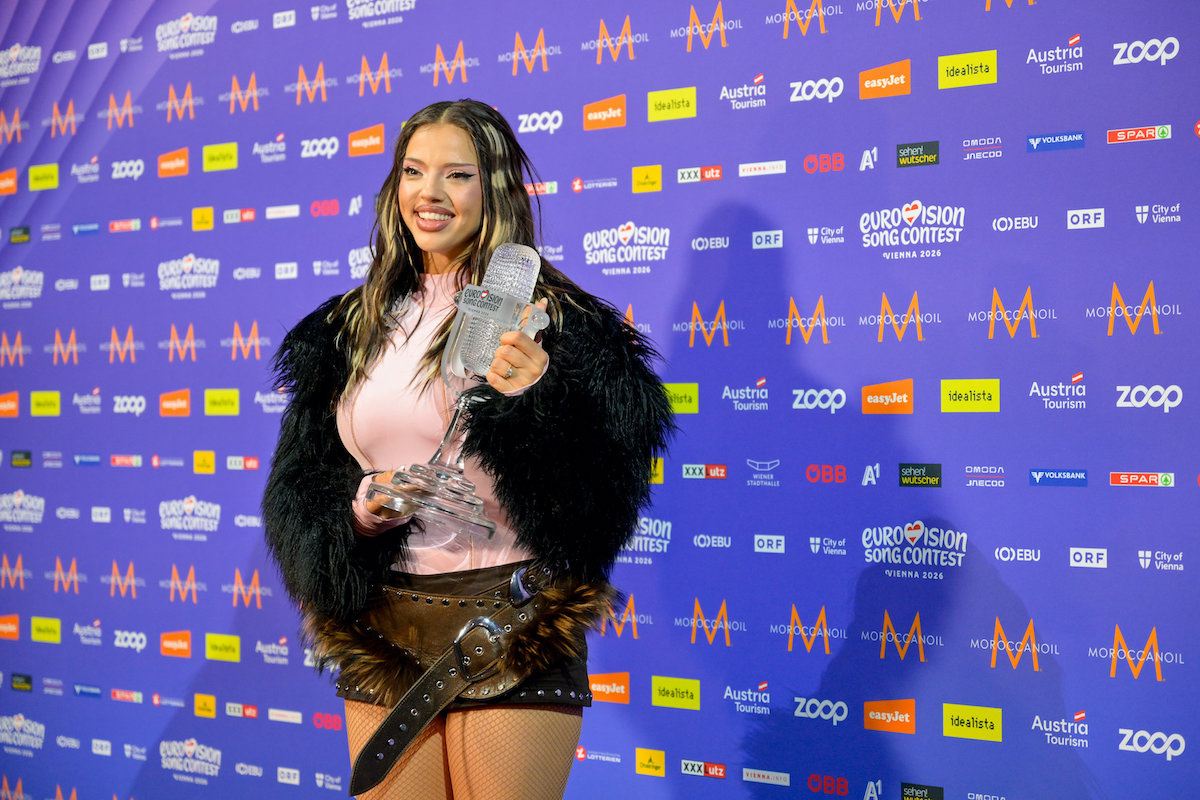
Photo: ORF/Klaus Titze
I was in Vienna for the final. When Israel's competitor took the lead, the climate in the area changed. The audience booed while some Israelis responded with chants. There was a lot of tension. The public wanted you to win, and Israel to lose. What did you perceive from there? Did you understand what was happening?
I couldn't think and notice these things. At that moment my head was already somewhere else. These are not things you can understand at that moment: I was agitated, confused.
And after?
I saw the public's reactions the following days by watching videos online. Lots of people followed me, tagged me everywhere. But there is so much content that it is difficult to watch it all. And as you imagine from that moment I didn't really have a free second.
I can imagine, you are answering me from a moving car…
I think it will take me a few months to get the full picture of what happened, because so many things really happened. But this is only the first step. I have a big plan for the future: for myself, for my career and for Bulgarian music.
Apart from Le Mystère des Voix Bulgares, the state TV choir of Bulgarian voices, I don't remember any big names from your country.
We Bulgarians don't have an international superstar. We don't have artists or singers who have truly represented us. That's why I think hearing the audience chanting Bulgaria's name at Eurovision was the best part.
What do you hear about Bulgarian in your music? Bangaranga is an international song, also because a team made up of people from Greece, Romania and Norway worked on it.
I graduated in Bulgarian folk singing, that is my basis and it comes back to what I do. The music I make in the future will still contain elements of Bulgarian folklore. At Eurovision I showed off a traditional dress on the turquoise carpet, which recalled the Kukeri, frightening masks which in our folklore serve to ward off evil. Writing history for Bulgaria is not just about my name. We have so many wonderful, ancient traditions that I want to show the world. While I was singing Bangaranga I thought: our tradition really has its own energy. Bangaranga!
At the moment in contemporary pop there is a lot of return to folklore. From the local to the global. The first name is obviously Rosalía, but the examples are multiplying.
Yes it's very true. I believe that every artist emerging today finally has the platforms to show where they come from. All Gen Z, the new generation, wants to show who they really are.
From your performance at Eurovision you could understand how formative your experience on television had been. You did X Factor, now you're a coach on The Voice.
Yes, I grew up on television. I started at 17 with The X Factor. When I'm on TV, I feel at home. In Bulgaria I did practically every show… almost everything. I just miss MasterChef, you know?
Have you met our Sal Da Vinci?
Yes, certainly! We even danced together. I love it. I think he's so cute, so good. The first video I saw of him made me think he was a really good person. You can feel it immediately. I also love his song, I danced to it.
I want to ask you something: before the final you put up a poster for Fred Again… asking him to collaborate. Did he then reply to you?
Yes. He sent me a message through his agent. I had seen a new song of his, I think with Argentine artists, in which there was a Bulgarian folk melody. When I heard that song I thought: this is incredible. Bulgarian folklore mixed with the sound of one of my favorite artists.
Hearing that made me realize that Bulgaria is on the map, that something is starting to emerge, that there is a new energy that is starting to warm the world.
And now what happens? What's the next step for you?
I have to live one day at a time, or rather an hour at a time, because there is too much going on. A little while ago I was with the prime minister. Now I have to go to coaching – I'm also late – then I have a show in a club, a big celebration party. And then at five in the morning I'll take a plane to Stockholm to write songs.
I see you beautifully focused.
Yes, I want to spread Bulgarian love everywhere.