
If K-pop were a sonic cathedral, El Capitxn (born Jang Yi-jeong) would be one of the artists who designed some of its stained glass windows. For years, his name has appeared in the credits of global hits by BTS, IU and TXT, to name three. We know choreographies, songs and aesthetics about K-pop, rarely who is behind the mixers. We take the opportunity to understand something more with him, who passed through Milan for his tour.
Because yes, Jang Yi-jeong worked for Hybe Records, the production company of your favorite bands, but he is not just a producer. In its history there have been falls, silence and, let's pass the term, resurrection.
It all started in 2011, when at a very young age he got noticed in talent Birth of the Great Star 2. The road seems clear: in 2013 he made his debut together with the band HISTORY. Years of success followed and then a sudden stop, a few years later, due to a neurological voice problem. The notes no longer come out, even saying “hello” becomes a giant obstacle. Without a clear medical diagnosis and with HISTORY disbanding in 2017, his career appears to be over forever.
A deep friendship with Suga of BTS intervenes to change the course of destiny. He was among the first to see what Jang, perhaps, could no longer see: a compositional talent. In 2018, Jang crosses the threshold of Big Hit to mix what will become a BTS anthem, Ddaeng.
Thus was born El Capitxn, his artistic alter ego. From that moment, he becomes Suga's (Agust D) right-hand man, co-producing milestones very dear to fans of the genre such as Daechwita and the global hit Eight of IU.
But let's go back to Milan, where we saw him perform something decidedly different from what one expects if one knows little about the subject. A performance that brought together instruments, DJ sets, vocals. Because after years as a producer El Capitxn has started publishing his music, and taking it around together with the work he has done for others. And if in the first single Breaking Through the atmospheres are melodic and dark, what we see on stage is not easily describable but we could say something halfway between a musical revisitation of The Crow and an industrial mass. Does it give you an idea?
We meet him the next day in his hotel in Milan. He's wearing his tour sweatshirt with a huge hood. He is shy but determined. «The show went well, but there was a moment on stage where the whole flow completely stopped. I went out of the structure I had planned and rebuilt it in real time based on the atmosphere and the audience's reaction. The Italian public is very honest: if they like something, they respond immediately. If this is not the case, the energy drops just as quickly.”
We ask him what the biggest differences are between what he experienced in his early days and what he does now: «I was a person within a structure. I received songs, stages, roles, and all I did was try to perform them as best I could. So, more than why I did it, what mattered was how well I managed to do it. Now it's the exact opposite. I approach not only the music, but also the stage, the narrative, the character. I started shaping the sound of other artists when the first question I asked myself became: “What should this person sound like?”. It turned out to be completely different territory from writing a beautiful melody: I had to calculate the artist's limitations, strengths and even the temperature of his emotions. That was my start as a producer.”
From there the successes, numerical satisfactions and everything else. But he wanted to return to the stage: «For a long time I was someone in the background. I was used to getting results through others. It was too safe a place… I shouldn't reveal my emotions directly. So I decided to take a step forward, to expose myself.”
«At first people just thought that a producer should be in the background. But I wanted to break this belief by showing the creation process directly on stage. For me, being a producer and a performer are not separate things.”
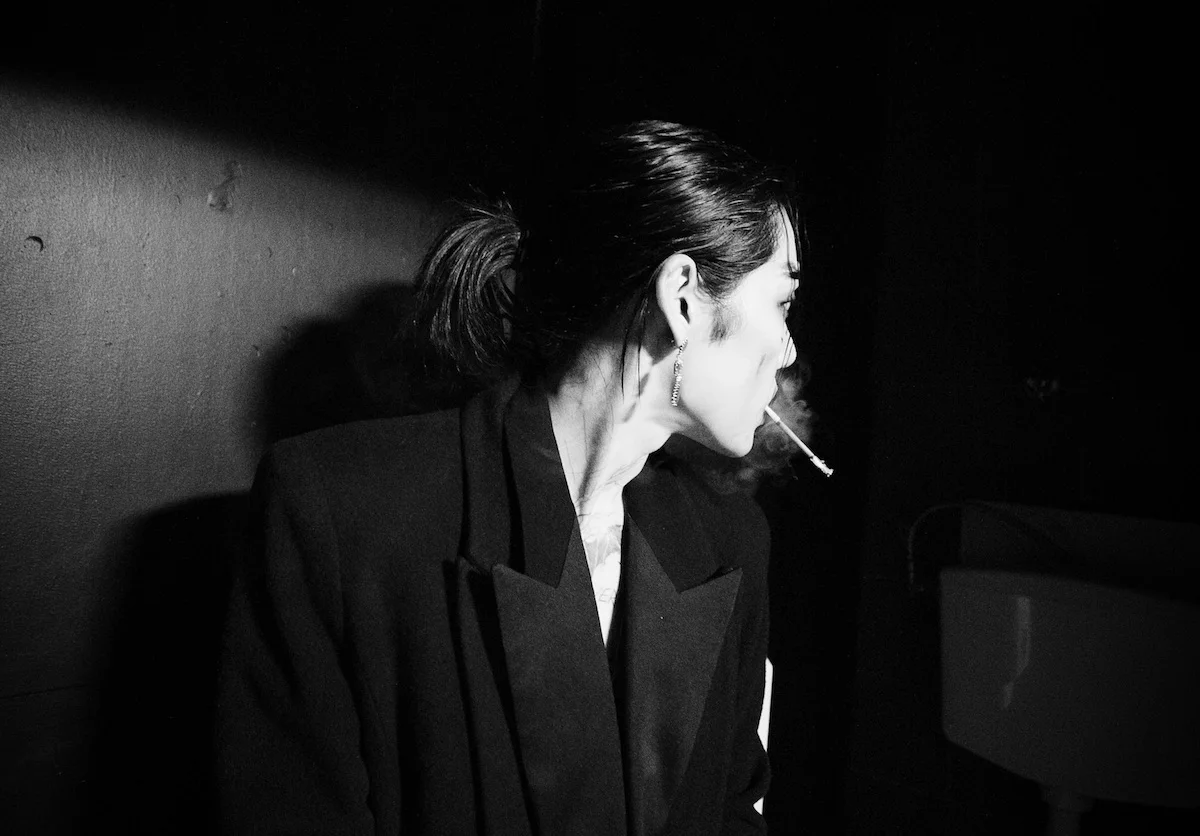
On stage he appears tattooed on his face and wearing make-up, a sort of modern vampire who comes from South Korea. Something rather distant from what one imagines when he thinks of pop coming from Asia. Watching his live performance makes you wonder what the direction is, he seems to mix everything he likes. There are moments in which he plays the bass on rock pieces, others more intimate and melodic, still others in which a DJ set appears with the songs he has produced. Maybe that's the whole point: do what you want. At a certain point, the little gem that it is starts Breaking Through. First preview of a record that «isn't just a collection of songs, it's a single narrative. It starts in a controlled state, then gradually develops cracks, and eventually transforms into something completely different. Sonically it mixes rock, hip-hop and electronica.”
The central part seems to be the conflict, the tension. Both aesthetic and sound. «I would like people who listen to my stuff to feel that there is something “a little strange” about it. As if a family structure was slightly off-axis. I would like the emotion to remain even after the end of the song, without being resolved.
We remind him that he has produced songs that have millions of streams but he almost downplays it: «Once completed in the studio, the music is no longer mine. It is interpreted in different ways and consumed in different situations. This makes me more cautious: it's not just an achievement, it can become part of someone's time and life. It's strange to think that a sound that started in my room enters completely different languages and lives.”
We ask him what direction he sees for K-pop: «Today the very idea of genre has almost lost meaning. Everything can be mixed. Technically everything is faster, but for this reason having your own center has become vital. I think K-pop needs to move in a more personal, raw and maybe a little uncomfortable direction. Music with visible cracks lasts longer.” Word of someone who knows about cracks.