
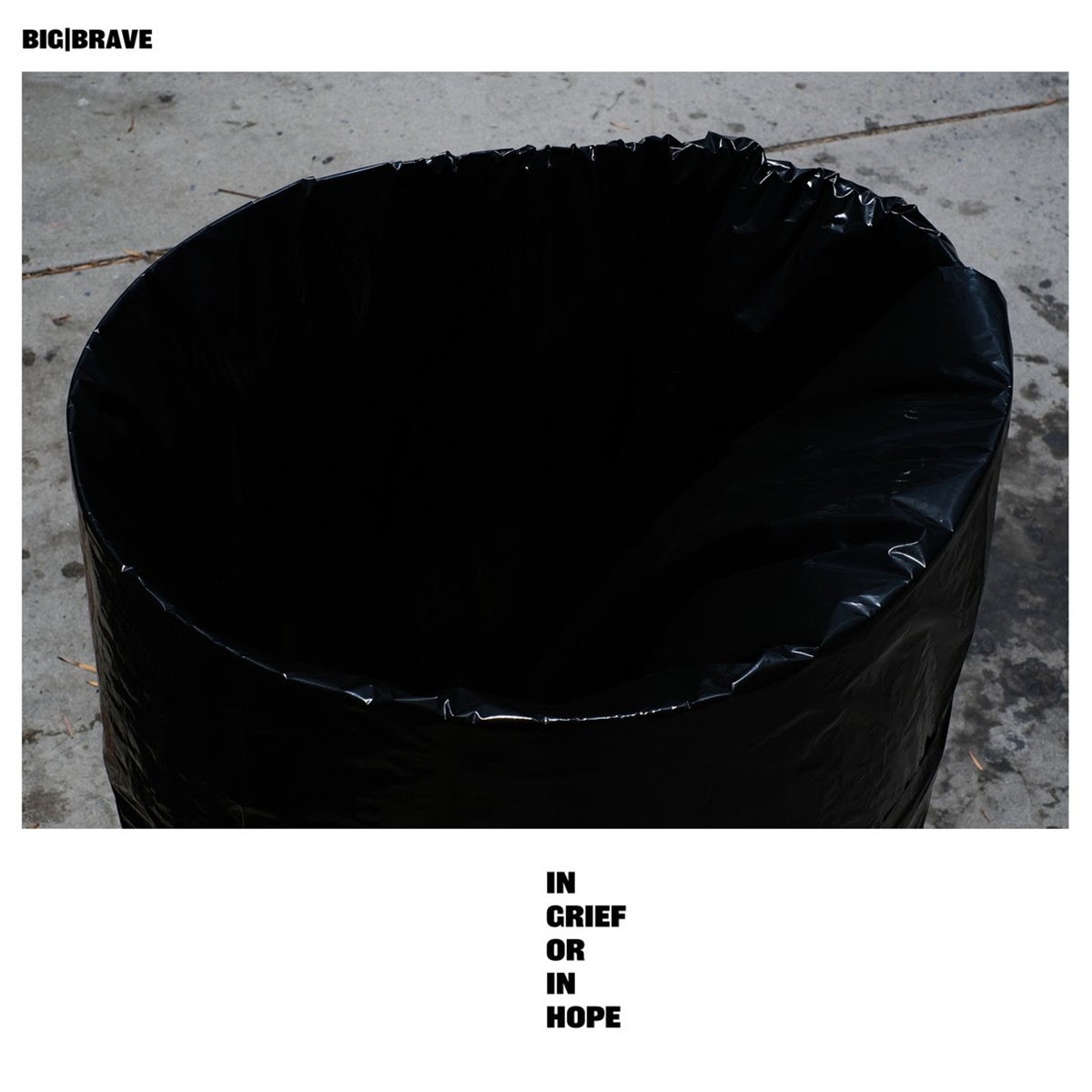
I think there is little doubt that metal has definitely shed its skin and the very essence of the sound heavy has somehow transformed from the aggressive speed of its origins to depth. The Canadians BIG|BRAVE are among the groups to have made perhaps the most intriguing and personal journey together with their label mates The Body, gradually becoming more intimate and innovative and building their tracks on a deep scaffolding of sounds and manipulations. The new album marks an important turning point for the trio, given that the compositions are increasingly dense and oriented towards the guitar and above all given the total elimination of the percussive component (it is not known whether the setting aside of drummer Tasy Hudson is definitive or only temporary). Precisely to make the sound more saturated, guitarist/singer Robin Wattie and guitarist Mathieu Ball called on a long-time friend like Australian bassist Liam Andrews (MY DISCO, Aicher, Spillings) to complete the trio. The musician has actually been part of the band for a long time in the version on stagebut for him this was the first time in the studio together with his new/old adventure companions. After two extraordinary albums such as “Nature Morte” and “A Chaos Of Flowers”, the publication during 2025 of an interlocutory and atypical album such as “OST”, had actually instilled some doubts about the future of the trio. Perplexities fortunately dispelled by the arrival on the shelves of the tenth album by the Montreal group, entitled “in grief or in hope”, defined with (excessive) grandiloquence in the press kit as “a creative vision of electroacoustic sound and emotional storytelling, an infinite wealth of overwhelming distortion and devastating beauty”.
To avoid any misunderstanding, don't expect a work on par with “A Chaos Of Flowers”, but this new album consolidates the three musicians as creators of a recognisable, deep, solemn sound, with dynamics that move further and further away from the last vestiges of metal. Each song is a microcosm of distortions in stark contrast to the delicacy of the themes covered and Wattie's voice. The instinctive progressions of the trio are made more vivid by the recording made practically live by the trusty Seth Manchester, now a master in exploiting the imposing and characteristic sound of their performances on stage in the studio. On the modalities of her singing, both hieratic and profound, Wattie said: “I wanted to explore a different, more captivating and melodic way of expressing myself, intertwined with the intensity of the instrumentation and the changes in key. I couldn't think of anything but pain and hope; to death and life; to cause and effect; to the common experiences of being human”.
Their mode of sound deconstruction based on layers of guitar, bass and drones is already evident from the incipit of “what may be the kindest way to leave” and similar (making due proportions) to what Low developed with the masterpiece “Double Negative”. Even if the percussive component is completely missing, the songs possess an impressive physical strength born from the density of the sound and the continuous tension between silence and saturation. “a shape of shame” has an almost component “pop” (take the term with benefit of inventory…) which despite the foundations of distorted instruments, manages to elevate the voice that tells of a restless night where “in ears blood is gnashing reminding me that I'm still alive”. The first extract of the album, “the ineptitude for mutual discernment”, is a sort of powerful synthesis of the trio's singular approach to structural distortion and emotional complexity, which, as in other subsequent songs, plays on the juxtaposition of the angular waves of the guitars and bass with the resolute voice of Robin Wattie. The instrumental and ethereal “holding tongue” works perfectly as an interlude in the middle of the program, before “verdure” recalls the name of the debut “Feral Verdure” from 2014, as a sort of reflection on the entire journey made up to now. And if “skin ripper”, excluding the vocal parts, seems like a song taken from Ball and Andrews' parallel project called Spillings, “an uttering of antipathy” even introduces vocal effects and a light electronic manipulation that does not bother, on the contrary, it contributes to increasing the sense of alienation and retained pain. The title track closes the work with a question as simple as it is potentially devastating: “when does one feel the most, is it in grief or is it in hope?”.
No more assaults, no more drums, but a monolithic sound scaffold created by guitars, bass, drones and effects on which Robin Wattie manages to rise with his voice that is at the same time strong, clear and suffering for a final effect that is as powerful as it is now perfectly recognizable and personal. If “A Chaos Of Flowers” had immediately irremediably conquered me, the new “in grief or in hope” is less immediate in immediately touching certain intimate chords, but, after repeated listening, the sensation and awareness of how the Canadian trio has become an important and essential reality in its specific musical segment and beyond remains strong, now belonging to a category of their own, suspended between noise and contemplation, between devastation and beauty.
06/25/2026
Antonio Santini for SANREMO.FM