
Trap, Italian hip-hop, the explosion of dubstep with “Scary Monsters And Nice Sprites”. The long wave of return eurodance of the various David Guettas, Calvin Harris, who soon became one with the omnipresent sound of Max Martin and his most prominent disciples. Reggaeton-pop from “Despacito” onwards. The landing in the West of k-pop. Adele and Bruno Mars; Taylor Swift and Pharrell Williams' hits. Justin Bieber. “Somebody That I Used To Know”, “Call Me Maybe”, a long line of summer hits (from Shakira to Fedez + J-Ax).
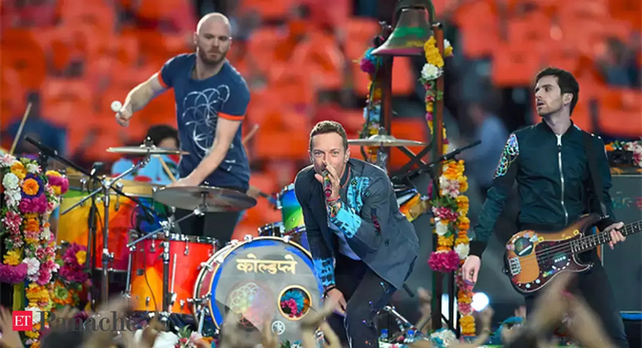
There is more, besides this, in the range of mainstream Ten years? I understand that the previous list is enough for some to lose any further interest. Others, however, I imagine them ready with the various “X is missing!”, “Why not Y?”. But, in addition to many single names, an entire strand has been excluded from the list above, not too distinct and in hindsight also lacking a shared name, yet very present in the charts and in musical memory. What if I say Coldplay? Imagine Dragons? OneRepublic? Bastille?
Don't run away, I don't want to convince you to listen to them. Or rather, yes, but mostly to see the music in perspective, identifying it for what it is. That is, one of the sound prevalent of the decade just passed, endowed with incisive and easily identifiable aesthetics and characteristics. And perhaps also the recent current which in the imagination of the decade was more associated with the term “rock” as well as (hear hear) with the adjective indie – at least before, at least among us, this was taken advantage of by Calcutta, Motta and the rest of their ilk.
A list published in 2018 on RateYourMusic tried to bring some order and sketched out a rather effective name: stomp rock. Citing a Daily Beast article on Imagine Dragons, the page's introduction reads (attributing the thought to a hypothetical record producer):
We need a sub-strand based on Colplay and hip-hop, mixed with Edm and Autotune, and let's also throw in some Eighties synthetic effects. We need to echo it handclap! Let's drench it in reverb! And let's move the right pieces for it to be used during National Football League games.
Energetic rhythms and electronic mixes, therefore, but not only: the artists who move in this territory have a rather chameleon-like approach, and draw liberally from the most varied eras to maximize the impact of their sound in terms of charging and grandeur. From the Eighties come the pad synthetics and the thunderous shots of the gated drum; from the decades following the scan boom-bap and the use/abuse of riser dance-like.
But there is also a lot of the Seventies, and the first songs clearly show the attention to muscularity and catchy riffs, which owes a lot to arena rock/Aor but also to the power-pop that perhaps perfected its immediacy in that period. A more recent link, however, is that between various names and that current of choral pop that in previous years had crossed the indie galaxy: it is not uncommon to encounter, especially in the second part of this playlist, acoustic progressions that go from piano to fortissimo, engaging choruses that unleash the “community” feeling, essential but clearly visible vocal harmonies and chords that can easily be reproduced in a “beach” guise.
Whatever the cut – more devoted to the Aor (or even to raids heartland rock), to hip-hop/electropop, or indie-folk — one element is central in almost all the songs: the enthralling character of the rhythmic constructions. Drumroll and full band drumming, straight bass drum peppered with folk guitars (Avicii teaches), interlocking percussions and handclaps that sometimes sound bold and other times simply paranoid: the emphasis on impetuous scansions is an essential ingredient for the effectiveness of the genre, and is well highlighted by the name chosen to indicate it. The onomatopoeic “stomp”, in fact, indicates an energetic and rhythmic step, certainly as flashy as the sound of what, more shrewdly, some might define as sinister workout music.
Yet, with its brazen eclecticism and ability to combine current fashions with immortal tricks from the pop/rock manual, this trend has given rise to a sound encyclopedic in his own way; a mixed fry of influences that sounds like a musical counterpart to the series blockbuster or the various Ready Player One, Wreck-It Ralph, Guardians of the Galaxy. Glittering but reliable like a refurbished used one, it is a risky mix of conformism and bravado, capable of inserting dizzying singles into albums that are often anodyne if not irritating.
The names involved range from figures with a certain indie credibility (Florence + The Machine or Arcade Fire, the latter in some way “noble fathers” of the trend and returning to them during the writing of this article) to artists that many alternative music fans see as smoke and mirrors (Imagine Dragons or Ed Sheeran). Sometimes, the artists are the main creators of their sound, other times the songs are designed by teams of famous authors. For some, then, the sounds stomp they are the key element of the proposal, while others have exploited them only for sporadic – but often decidedly iconic – incursions. Always and in any case, the music in question remains distinguishably white, despite the occasional featuring and the explicit recovery of elements black in the voice or in the rhythmic setting.
The chosen pieces try to reflect both the distinctive traits of the genre and its variety; they are mostly great successes with hundreds of millions of streams (for some you can easily use the adjective “generational”) but all have been included in the belief that they are first and foremost exciting pieces. Terrible taste, some might think, but to each their own. On the other hand, to update your shower repertoire, Bastille and Killers seem a more credible option than Fontaines Dc.
Antonio Santini for SANREMO.FM
