

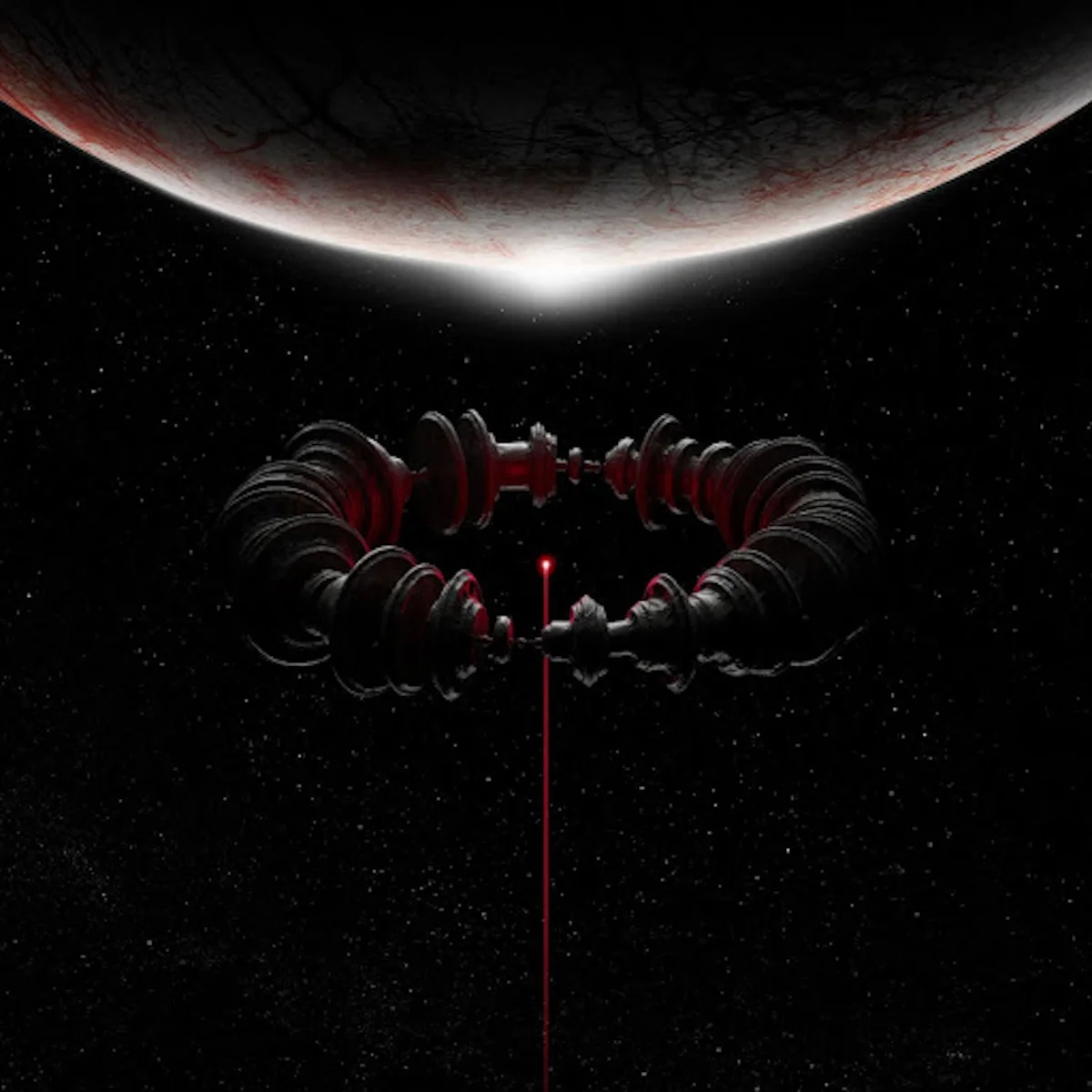
They will tell you that Wow! is the name of the mysterious radio signal detected in 1977 and which was interpreted as a possible extraterrestrial message. Real. They will rightly explain to you that The Dark Forest it is inspired by the dark forest theory according to which we have never found traces of alien life because, if they exist, they hide for fear of being annihilated. Maybe they'll write that Cryogen it's about an icy moon of Jupiter. The truth is that in the new Muse album Matthew Bellamy sings about deep space to evoke the emptiness of inner space and that is, it seems to understand, first and foremost the end of a relationship. “As individuals we seek love so as not to feel alone, and as a species we seek not to be alone in the universe,” he said. And in short The Wow! Signal it has every appearance of being a breakup album.
Listen to it from the end, start from Space Debris and it will be clear. The debris drifting in space is not that of a spaceship, but the remnants of a relationship. The lost connection is not the one between the capsule and the control base, but between two people, the black of deep space is that of the unknown that is faced after a trauma. “A love like that,” Bellamy sings, “cannot grow old with dignity, it burns and fades into a cold, vast, empty space.” That's what Bellamy sings about in The Wow! Signal: the black hole you can end up in after the end of an important story and perhaps after some other life upheaval. “Everything I Dreamed of” he sings in Shimmering Scars over a dramatic piano part and with an emphasis that makes Bono sound like a singer with a measured style “has flown to the stars and lurks in the dark”.
I don't think that Bellamy has so far spoken openly about the reasons for the end of his marriage to Elle Evans, which for now is mostly a matter of half-words and indiscretions, but I bet my euro that this is also what the album is about. There's a memorable joke that Tina Fey made at the Golden Globes a dozen years ago about Gravitythe film with George Clooney and Sandra Bullock: «It's the story of how George Clooney would rather wander into space and die than spend one more minute with a woman his age». The Wow! Signal it's the story of how Matthew Bellamy prefers to venture into a 45-minute record full of mysterious images, references to space and artificial intelligence, church-like choirs, sonic oddities and Latin lyrics rather than tell us clearly what happened to him.
Despite the forty orchestra members and the choir of around fifty members, Space Debris among other things, it is one of the least charged tracks on a very charged album. It is the house specialty. An army of strings, keyboards that resemble church organs, high-pitched solos, distorted basses flanked by teams of acoustic double basses, excruciating synthesizers are there to tell this story in an epic way. But you know what? Better are the pieces in which Muse exaggerate and get close to the wall of kitsch, and sometimes break it, than the pieces in which they want to seem like a normal pop group. And therefore the ultra-distorted riff of is better Cryogen that remembers Plug in Baby of the 80s poppettino by Nightshift Superstar (despite the bass).
Because yes, if the word kitsch defines objects that would like to be artistic, but are actually characterized by something excessive and crude, a piece like The Dark Forest it's kitsch with that dystopian musical orchestral part and the Latin passage “Sanctus Signum, Dominus Deus, Cometa Altissimus, Currus Machina, Navis Lucifer, Kyrie Eleison”. If you want to laugh, don't hold back, but in its shamelessness the piece is contagious. In addition to the unreleased role of Dan Lancaster, the fourth Muse, there is what I believe is the first featuring on an album by the group, an ugly mess called Hush with Ellie Goulding starting with a phrase that sounds like a rewrite of the riff of Seven Nation Army. After all, Muse have always been of that school: in rock nothing is created, nothing is destroyed, everything is transformed.
Then I agree, sometimes Muse give the impression of wanting to cover the modesty of the compositions with imagination and skill and in The Sickness in You & I they seem undecided whether to be sexy funketarians or rude thrashers and I'm undecided whether it's rubbish or a strong piece (we'll talk to you in a few listens). In any case, after the clumsy attempt to make a post-80s record like Simulation Theory and after the populist visions intercepted in Will of the People, The Wow! Signal All in all, this is good news. It is both Bellamy's most personal album and a return to how the three made songs a few years ago, with references to Absolution And Black Holes and Revelations.
The introduction full of Hexagons it makes the song seem unbearably passionate or sublime, a hostile attack on the ears or an exhilarating moment, which is precisely the line that separates those who hate the band from those who appreciate them. Sometimes you want to pause the album and listen to Satie to clear your ears, but “even less” is not part of the group's vocabulary. Muse are here not to do less, but more, indeed to do too much and this is the work of a band that knows how to play and fights hard, something that can be felt and is good for music. The records that tell and represent contemporaneity are others, but a good half of The Wow! Signal proves that Muse have no intention of losing themselves in the deep space of irrelevance.
Daniel D`Amico for SANREMO.FM
