
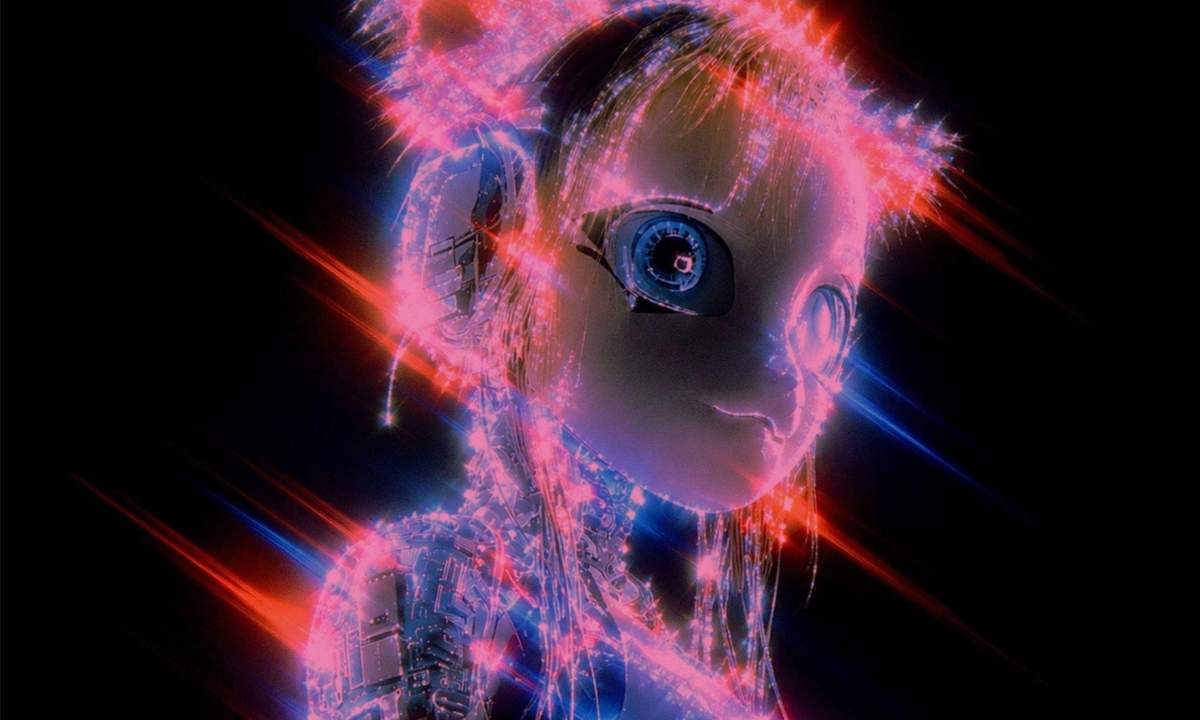
Hachiko public SUPERHYPERTROIAthe deluxe of HYPERTROIAthe album released in February 2026. Out everywhere for La Crème Records, the reissue expands the imagery of the original album with new songs and a long list of collaborations. But to understand why we are talking about it, it is best to start from a question that many have asked: who is Hachiko really?
Who is Hachiko: the disguised project that no one can identify
Hachiko it is one of the most particular cases on the recent Italian scene. Behind the name there is not just one person, but a project: a performer who raps and sings and the producer Twinkswho together build a deliberately secret identity. The two appear masked, the registry remains hidden, and the trade press itself has repeatedly admitted that it doesn't know who is behind it. Rolling Stone Italia defined Hachiko as a singer about whom nothing is known, but who seems to know everything about her audience.
The only certain data on the origin is the city: Hachiko is Florentine. The rest is construction, a creature presented as a cybernetic party fairy, which appears where there is a straight four-quarter bass drum and moves between rap, hyperpop and rave aesthetics.
What Hachiko is about: the overturning of gender stereotypes
The mechanism that made the project recognizable is simple and provocative: Hachiko talks about men like male trap talks about women. Erectile dysfunctions, daddy issues, toxic dynamics told from the opposite side to what Italian rap has accustomed us to. It's a reversal of perspective that uses vulgarity as a tool, not an end, to give voice to the experiences of women and LGBTQ+ people that rarely find space in mainstream love songs.
Already with the first album memoirs of a slut (2025) the project had attracted the attention of independent critics, and HYPERTROIA he raised its ambition, transforming the provocation into an overtly political and generational concept: an imaginary dystopian republic from which to observe the present and try to imagine a different future.
What changes with SUPERHYPERTROIA
If HYPERTROIA was the message sent from that dystopian future, SUPERHYPERTROIA it is the next step. The deluxe transforms individual discourse into something collective, opening the album to new voices and collaborations. The freedom claimed in the original album, the artists say, expands and multiplies until it becomes a shared celebration.
Hachiko herself says it, presenting the project: the idea was to return to that dreamed future and make it an open space, experienced together with the people who have followed the project from the beginning. A party, therefore, but with a framework that remains political: the future that the album continues to tell is born, in its reading, every time you choose to be yourself freely.
The SUPERHYPERTROIA tracklist
| # | Title |
|---|---|
| 1 | HYPERTROIA |
| 2 | KAMPAGNOLA |
| 3 | PUSSY LICKING |
| 4 | UNDER |
| 5 | BREAKDOWN |
| 6 | COCKLOVER |
| 7 | THE DRUGS feat. Lorenzo_BITW |
| 8 | 90 MILA feat. Elena Romano |
| 9 | GAY SEX feat. Sarabamba |
| 10 | APOLOGY OF A SLUT |
| 11 | PODIAGIST feat. Jimmy Penthotal |
| 12 | TT RGZZ feat. Camilla PNK |
| 13 | LOVE IN THE DARKROOM feat. Ethan |
| 14 | HYPERTROIA (Orchestral Version) |
Hachiko live: summer festivals and HACHIKORAVE
The live dimension is central to the project, which on stages becomes rave and performance. Those who have seen him recently, from the Sherwood Festival in Padua to MI AMI, describe him as one of the most subversive acts of contemporary urban, between techno accelerations, electrofunk rhythms and more intimate moments. After the dates at the summer festivals, the signed events return in autumn HACHIKORAVE.
| Date | Event and place |
|---|---|
| July 10th | Let's Festival, Castelfranco di Sotto |
| September 11th | Circolo Magnolia, Milan (HACHIKORAVE) |
| October 16th | I Candelai, Palermo (HACHIKORAVE) |
| October 17 | General Markets, Catania (HACHIKORAVE) |
The calendar is constantly updated, with booking entrusted to Monksta. Between deluxe and new dates, Hachiko confirms that it is one of the most discussed and divisive projects on the Italian scene in 2026: loved by those who see it as a cultural operation, contested by those who read it only as a provocation. Almost always, however, impossible to ignore.