
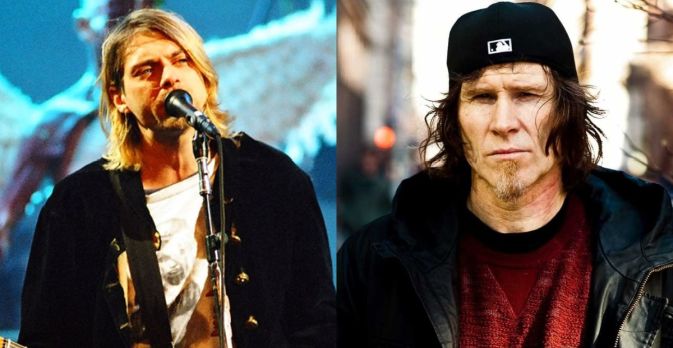
Before the explosion of grunge, which would transform Nirvana and Screaming Trees into two of the symbolic names of the Seattle scene, Kurt Cobain and Mark Lanegan tried to make an album together. It was 1989 and that project, destined to remain unfinished, was called “The Jury”. It will remain one of the greatest “missed records” in rock history.
The idea was born immediately after Nirvana's first American tour. Cobain and Lanegan, bonded by a deep mutual respect, began writing original songs with the intention of recording an album for SubPop. “Mark and Kurt got together. I think they got really drunk or high, wrote a bunch of songs, got excited, and went to Jonathan Poneman and said, 'Hey, we want to make an album together!'” producer Jack Endino recalled.
The recordings were made at Reciprocal Recordings in Seattle with Endino behind the desk. The lineup included Krist Novoselic on bass and Mark Pickerel of Screaming Trees on drums. The name chosen was “The Jury”, following Pickerel's proposal, while Cobain would have preferred “Lithium”. Endino, amused, nevertheless noted “Screaming Nirvana” on the session documents.
However, when the group entered the studio, the project had already changed radically. The original songs were gone. “When they arrived they said to me: 'We tried to write some songs, but we didn't record them and we forgot them all. So we'll do some Lead Belly songs.” The choice fell on the great American bluesman, much loved by both of us. “He was one of the ones that both Kurt and I liked, and that we listened to together,” Lanegan recalled.
During just two sessions, four songs were recorded: “Where Did You Sleep Last Night?”, with Lanegan on vocals, “Grey Goose”, which remained instrumental, and “Ain't It A Shame” and “They Hung Him On A Cross”, both performed by Cobain. They would have been the only testimonies of that collaboration.
The enthusiasm, however, died almost immediately. “We ended up losing interest very quickly, realizing that it wasn't up to par with the originals we liked to listen to. We told Sub Pop that the project probably wouldn't go forward, and that's when they suggested I do a solo record,” Lanegan said.
According to drummer Mark Pickerel, the problem was above all a character problem. “They looked like two middle school kids at a party, two wall flowers. It was really frustrating. Neither of them ever took the lead and said, 'I'll sing this one,' or, 'You'd be perfect for the first verse, I'll go into the chorus and then do the second.'
After a second session, in August 1989, “The Jury” was definitively shelved. “We never made a real decision to abandon it, but we all became very busy. I had high hopes, I wanted it to become a real band. But evidently it wasn't meant to be,” Pickerel will say.
Paradoxically, the project's failure marked the beginning of Lanegan's solo career. It was Sub Pop, after realizing that “The Jury” would not go ahead, that proposed him to record “The Winding Sheet”, his solo debut released in 1990. Of those sessions, in fact, only “Where Did You Sleep Last Night?” found a place on the album, while the other three songs remained unreleased until the Nirvana box set “With The Lights Out”, released in 2004.
The friendship between Cobain and Lanegan, however, did not end. The two continued to meet during the years of the definitive explosion of grunge, sharing a deep respect. Lanegan had sensed from Nirvana's first concert that he had something unrepeatable ahead of him. “Nirvana was ready from the first time I saw them: wonderful songs, wonderful singer, wonderful look, everything was wonderful. I couldn't erase the idea that I had just witnessed something great.” Of Cobain he will instead say: “Kurt considered me a sort of big brother. I knew he had something special. After a while, the rest of the world understood it too.”
In January 1991 Screaming Trees signed with a major label and released “Uncle Anesthesia”, the fifth album of their career, produced by Chris Cornell (Soundgarden). The album gave the band their first entry into the US charts thanks to the single “Bed Of Roses”, which reached number 23 on the Modern Rock Tracks.
A few months later the Seattle phenomenon finally exploded. On August 27th Pearl Jam arrived with “Ten”, while on September 24th it was Nirvana's “Nevermind” that changed the face of Nineties rock forever. The long wave of success also overwhelmed Screaming Trees, who in 1992 released “Sweet Oblivion”, their most famous album. The single “Nearly Lost You”, included in the soundtrack of Cameron Crowe's film “Singles”, became their signature song, while Cobain chose Lanegan's band as the opening act for some of Nirvana's most important dates, including the Reading and Roskilde festivals.
Behind the success, however, there always remained the deep bond between Cobain and Lanegan. Looking back on his friend in his autobiography “Sing Backwards And Weep,” Lanegan would write: “I could have been a better guide to this boy I adored.” According to a story that has never been definitively confirmed, on April 5, 1994, the day of his death, Cobain tried to telephone him, but Lanegan did not answer. That remorse will accompany him throughout his life. “I will always feel remorse. I was a selfish person who didn't respond to friends, a stubborn drug addict who would rather become homeless than accept anyone's help.”
Years later, when the Screaming Trees broke up and Lanegan spiraled into addiction, actually living on the streets in Seattle, it was Courtney Love, Kurt Cobain's widow, who helped him get into rehab. Along with the support, he also gave him a note that he will never forget: “Kurt loved you and would have liked to see you alive.”
Years later, Dave Grohl would reveal that “The Winding Sheet” profoundly influenced Nirvana's “Mtv Unplugged”, which closed with “Where Did You Sleep Last Night?” in tribute to his friend Lanegan. “Kurt admired Lanegan greatly. 'The Winding Sheet' was a huge influence on our Unplugged.”
On February 22, 2022 Mark Lanegan was found dead in his home in Killarney, Ireland; the causes of death are linked to Covid, which he had overcome (he had recounted the experience in a book, “Devil in a Coma”) but which had weakened his body.
Thus, the regret remains for what could have been the two-way meeting between Kurt Cobain and Mark Lanegan: an album written and sung by two of the most intense and tormented voices of American rock of the Nineties.
Only four recordings of that lost album survive, but they are enough to hint at the extraordinary potential of a collaboration that never had time to come to fruition. Ain't it a shame?
Daniel D`Amico for SANREMO.FM
