
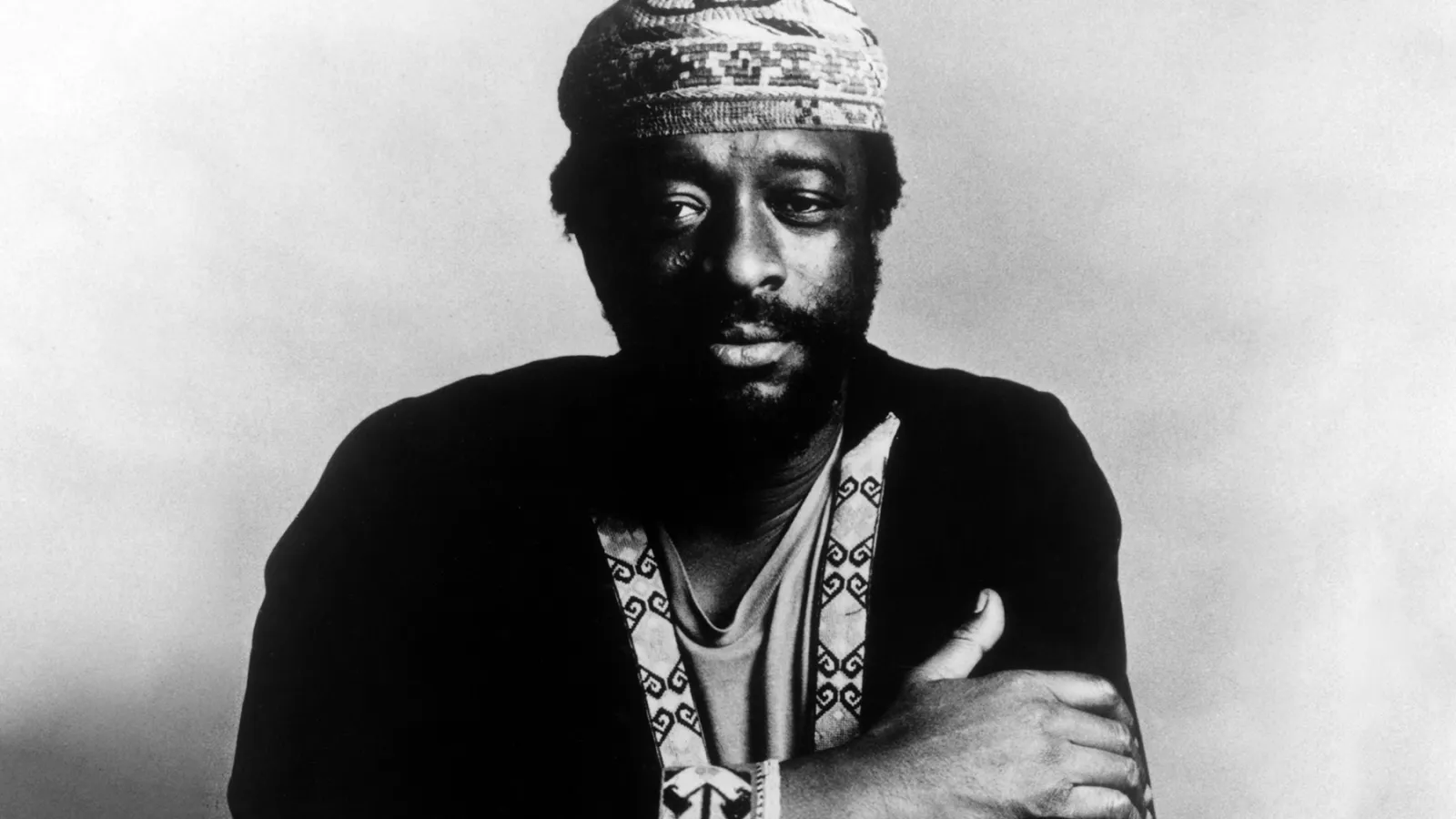
James Blood Ulmer, the innovative guitarist who fused avant-garde jazz with funk and the blues, died on June 3, according to a statement his family published via DownBeat. A cause of death was not immediately available, but his family said Ulmer died “peacefully.” He was 86.
Known for a unique approach to improvisation and his warm, husky voice, Ulmer settled into a niche of his own in the late Seventies and early Eighties. Before releasing his own albums, Ulmer played electric guitar in free-jazz firebrand Ornette Coleman's Prime Time touring ensemble. Drawing on Coleman's “harmolodic” music theory — essentially a group of musicians putting harmony, movement, and melody on the same plane for a transcendent sound collage — Ulmer freed the sound of guitar, playing in bursts of chords or self-divining melodies, in pop and soul contexts on his solo albums. Critics and musicians instantly recognized him as an innovator.
“The feeling of loss, for me, and many in my circle, is profound,” Living Color guitarist, Vernon Reid, who produced Ulmer's Memphis Blood album, written on social media. “Blood was one of one. He was made of the stuff that Blues is made of. Raw. Pure. Elemental.”
“To the world, James Blood Ulmer was a legend, a visionary and a musical force whose sound was distinctive and unique,” his family statement said. “To his family, he was their teacher, their storyteller, and a source of strength. … His music was fearless, and so was his spirit.” Details of a public celebration of life are forthcoming. “Please respect our privacy at this time and play Blood's music LOUD!” the family wrote.
Born Willie James Ulmer in St. Matthews, South Carolina, on Feb. 8, 1940, music was an integral part of his upbringing. Born to a Baptist preacher, Ulmer sang gospel with his father's vocal group, the Southern Sons, and started learning guitar at age four. He found fresh inspiration as a teen in the blues and Chuck Berry's music, which his parents considered “the devil's music,” according to the family's statement.
At age 18, the musician moved to Pittsburgh, where he established a family that he supported by playing guitar with doo-wop groups like the Del Vikings. Moves to Columbus, Ohio, and Detroit found Ulmer developing his chops through teaching and playing in local clubs. “After receiving the cold shoulder from his hero, Wes Montgomery, Blood began developing his own musical language, determined to sound like no one else,” his family said. The Ulmers later moved to New York, where he met Coleman.
Outside of his work with Coleman, Ulmer cut his teeth in Art Blakey's Jazz Messengers as their first guitarist, and he recorded with jazz organist Lary Young (aka Khalid Yasim) and tenor saxophonist Joe Henderson. He released his first album, Tales of Captain Blackwhich featured Coleman on alto sax and Coleman's son, Denardo, on drums, in 1979, establishing him as a fresh voice on guitar. In 1980, the post-punk group, Public Image Ltd., recruited Ulmer as their supporting act for their US tour. Ulmer started singing on his second, more blues-oriented album, Are You Glad to Be in Americain 1981. That same year, he signed to major label, Columbia, and issued FreeLancing. At the time of the release, a New York Times article called Ulmer the “most original electric guitarist to emerge since the late Jimi Hendrix.”
Highlights of Ulmer's recording career include Odyssey (1983), for which his backing group worked without a bassist, and the live Part time (1984). He put his own spin on Coleman's catalog on Music Speaks Louder Than Words (1995) and trades licks with Parliament-Funkadelic's Bernie Worrell on the Bill Laswell–produced Blue Blood. His blues albums in the 2000s, beginning with Memphis Bloodshowed how well he could balance the conventional with the unconventional.
Ulmer also recorded with Music Revelation Ensemble, Phalanx, and Third Rail and guested on albums by Ry Cooder, the Roots, and Joe Henderson. He played his final concert at the Detroit Jazz Festival on Sept. 1, 2024, after which “his health began to decline, and he entered a quieter season away from the road and the stage,” his family wrote. Ulmer leaves behind six children and his wife, Eva.
Asked in 1998 how he'd like to be remembered by Perfect Sound Forever, Ulmer had a blunt answer: “A hard worker! That's it!”