
Who said that bands necessarily have to change with each new release? And if for some the pond remains, paradoxically, the best escape route from the useless noise of today? Well, the Boards of Canada, who return thirteen years after “Tomorrow's Harvest”, act like the immobile stone at the bottom of the river, both to mock the current and everything that, all too often, flows uselessly on the surface, and to not let themselves be overwhelmed by the adversities of a rather crazy era. A parable mostly associated with the figure of Buddha and oriental tales that teaches how true strength actually always lies in imperturbability. And which the duo implicitly makes theirs.
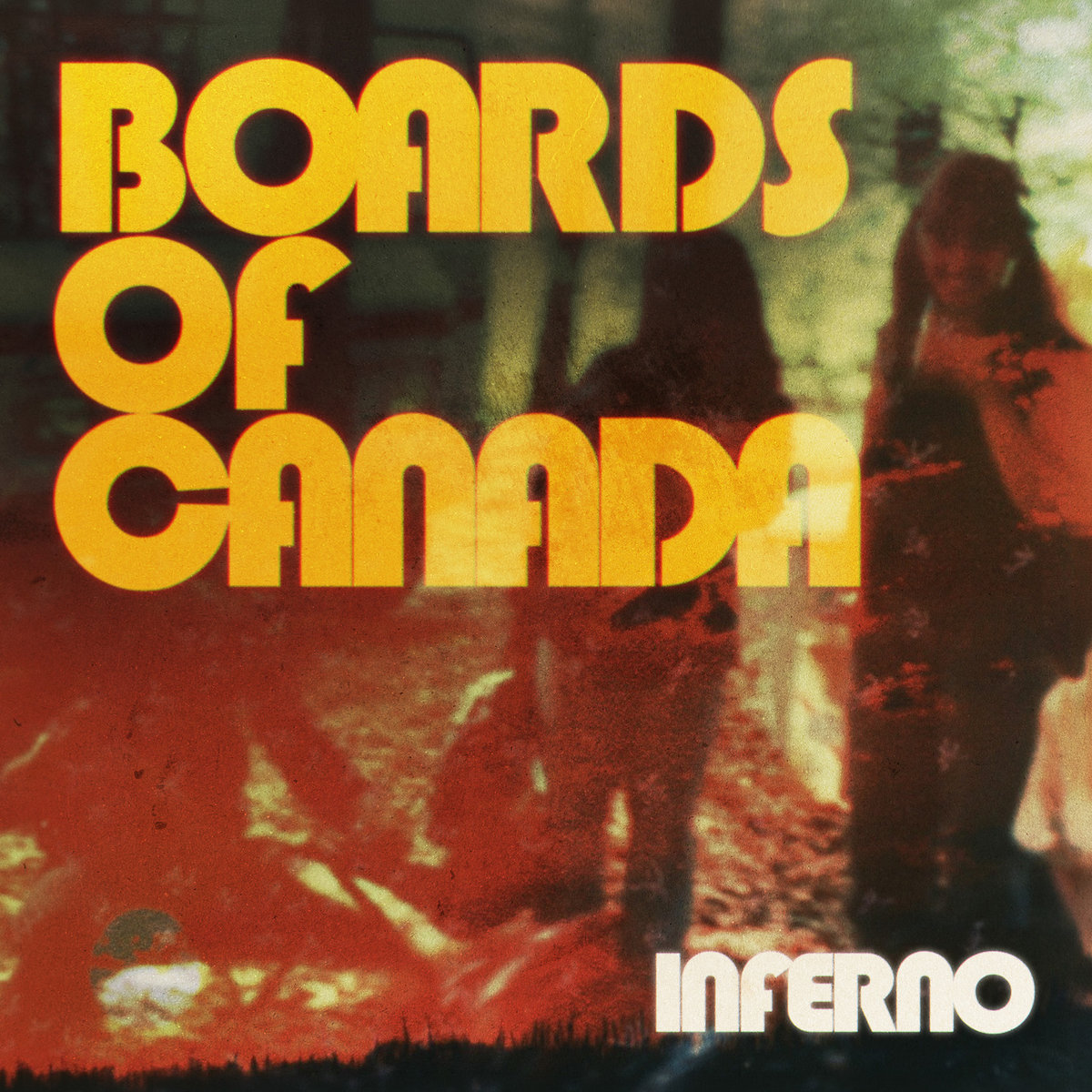
The arrival of the long-awaited fifth album by the two pioneers of that strange thing called Idm has been, beyond the metaphorical references, announced several times, sometimes in ways as incredible as they are informal, such as June 29, 2022, the day on which the representative of Hexagon Sun, Mark David Garrett, hinted at the release of a new album. A first clue which four years later, starting from 6 April 2026, was followed by surprising but also pleasantly enigmatic episodes: on the official channel of the Scottish duo composed of Mike Sandison and Marcus Eoin, fans began to receive strange video cassettes with a seven hexagon logo, surrounded by typical Super8 shots, typical of the nostalgic imagery of the Boards of Canada, arranged inside the same cassette. It's a gimmick that immediately suggested that something was finally moving. The sender of the parcels, Bleep, the Warp online store, then gave a hand to what had initially appeared only as rumours, which only officially confirmed the matter on 14 April, instantly igniting the now almost extinguished enthusiasm of enthusiasts and others. Two days later the Boards of Canada finally published a video entitled “Tape 05” on YouTube, accompanying the first new official score since 2013, followed by the publication date of the coveted “Inferno”.
Composed of eighteen movements which, at least on paper, do nothing to change the Boards of Canada's habitual imagination, “Inferno” is a record that implies a very focused criticism of contemporary society and the tragic nature of events, between endless wars and equally tragic ones that have just begun. “Blood In The Labyrinth” contains, not surprisingly, excerpts of “The Effects Of PCP”, the dialogue taken from the 1979 docufilm “Angel Death” directed by John Cosgrove. They are surgical choices that quantify the political approach of an album that seems designed to set to music a film with a post-apocalyptic script, peppered as it is with an unthinkable series of religious references, such as the reference to a famous passage from the Gospel of Matthew that pervades the theme at the center of “Father And Son”, a track composed starting from samples borrowed from an episode of “Man Alive” focused on the sect of the Children of God, also known to most as The Family International. In the three and a half minutes of the song there is an air full of tension, almost as if a random track from “Music Has The Right To Children” was projected onto a black canvas, therefore darkened with the mere intent of telling the story of a father who arrives in Los Angeles to talk to his son who from one day to the next has abruptly interrupted all relationships with him and with the outside world to dedicate himself body and soul to the Children of God.
The grimoire of religious references does not end there. “Naraka” takes its name from the realm of suffering in Buddhist, Hindu and Jain traditions: synth dusty and fast rhythms give way, without warning, to a sampled Hare Krishna chant. While adhering to their stylistic signature, the occultism that emerges recalls a certain ritual gesture rather than simple citationism. On “All Reason Departs” a cavernous voice reads from Aleister Crowley’s “Magick in Theory and Practice,” published in 1929: the statement that “the great war must be fought” as a premise to the proclamation of the Aeon of Horus, the new cosmic era that Crowley announced in 1904 to replace the Christian era, while a drum programming densely, it closes every margin around the word, until it frays and is partly lost at the end. The approach of “Prophecy at 1420 MHz” is different, which samples a conference by Seyyed Hossein Nasr, an Iranian philosopher among the main exponents of the Islamic tradition, known for his criticism of modern secularism, transforming it through a sound manipulation that stretches its contours without erasing them, with blackened guitars and vocoder that emerge from the tangle of frequencies: the title is a reference to the hydrogen line, a frequency at 1420 megahertz used by astronomers to study the structure of the universe and look for extraterrestrial signals.
On a sonic level, “Inferno” is, in all likelihood, the clearest album of their career: more physical than “Tomorrow's Harvest”, with an architecture that in some ways recalls “The Campfire Headphase” due to the presence of the guitars, but calibrated on a different scale, as if upside down. The ethereal vapors of downtempo are everywhere, but drawn with a prophetic and maximalist style. “Hydrogen Helium Lithium Leviathan” seems to come from a different elemental plane: it is the dark declination of “Aquarius“, built on a drone that thickens, percussion that advances by inertia and distant chords; an electronica that touches rock without belonging to it, as if it were performed not in an arena but through a ritual. “Blood in the Labyrinth” brings the influences to the surface guys: arpeggios similar to sitar they converse with heavy pulsations, in one hauntology which becomes more and more tangible. “Into The Magic Land” takes the harmonic canons of the instrument and brings the materiality of the instrument to the foreground: the strings resonate in the room, the wood is as audible as the note. “Deep Time”, already released as “Tape 05” in April before the official announcement, is the quietest moment of the album: strings and woodwind in slow movement, a construction that leaves empty space and nostalgia still to be experienced.
“You Retreat In Time And Space” dissolves the accumulated tension in cascading melodies and sunny chords: the album's brightest point. “I Saw Through Platonia” closes the work, with that faint electronic psychedelia with elegiac tones that is now a recognizable figure, and a recorded heartbeat that stops just before the track ends. A few days before the release, the White House used “Deep Time” without authorization in a propaganda video featuring helicopters and border patrol; superimposed on those images, the song dismantled their claims better than any comment. The emotional horizon of “Inferno” is not indignation: it is something closer to the lucid resignation of those who already know how it will end.
01/06/2026
Daniel D`Amico for SANREMO.FM