
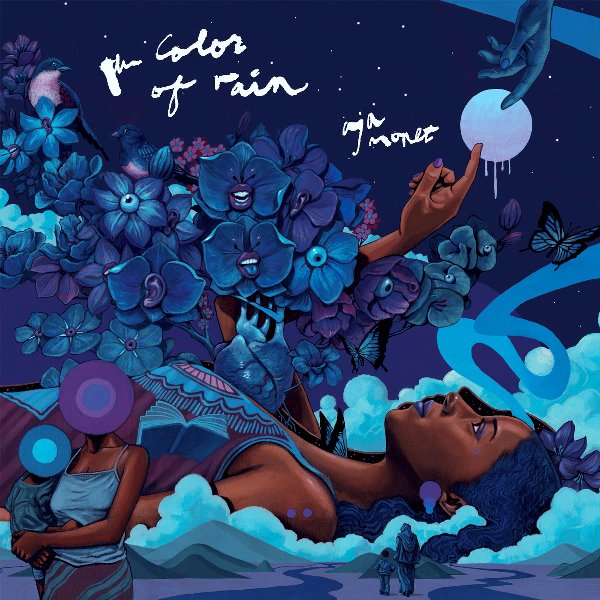
Slam poetry and jazz music, spirituality and rhythmic sinuosity, corrosive lyrics and refined hip-hop and soul sounds: in Aja Monet's second album there is all this, but also more. “The Color Of Rain” is not just a record, but also an atypical and at times surreal combination of psychedelia, jazz, black music and words, marked with a persuasive musicality and with an incisiveness that goes hand in hand with the invectives against the current American system.
In “The Color Of Rain” words become music and music becomes words. Aja Monet's new album has the advantage, compared to her debut, of focusing more attention on the music, thus allowing the lyrics to delve deeper. The themes are identity, malaise, femininity, but there are no slogans or semantic frivolities. Monet recounts daily exhaustion with hypnotic jazz-soul sounds in the splendid “Elsewhere” and addresses the painful theme of exploitation at work with a rhythmic carousel of voices, percussion and drums that recalls Kip Hanrahan (“For The Congo”).
It is a decidedly more ambitious and exploratory album, the second birth of the American artist, harsh and cutting in its invectives against star-system that shake the acrobatic punk-funk sounds of the incendiary “Hollyweird” and incredibly tender and poetic in “Love Is A Choosing”. It is a cultured and atypical project, “The Color Of Rain”: Aja Monet reworks the instances of the 70s jazz-beat scene, turns her gaze to Gil Scott-Heron and Stevie Wonder, assimilates and absorbs both the avant-jazz of Matana Roberts and the modern soul of Meshell Ndegeocello (here in the role of musician but also co-producer).
Blues and psychedelic surrealism in hip-hop style (“Melting Clocks”), minimalist extremism (“I Came To The Poem”) and extroverted funky-jazz textures (“Working Class Musician”) alternate in the palette of colors and shades that Aja Monet punctuates with a surprising eclecticism and a vocal versatility that fascinates and holds attention. Despite this, the tone of the album remains placid and suave: qualities that are exalted on the splendid final page of “Indigo”, inviting the listener to an instant repeat which will not fail to reveal further lyrical (“Skinfolk”) and musical (“I Know That I Don't Know”, “Song Of Myself”) ideas of rare depth and beauty.
06/22/2026
Daniel D`Amico for SANREMO.FM