
Even before he reportedly pulled a gun on the band who had hired him, the very concept of pop-opera madman producer Phil Spector working with the Ramones—a gloriously threadbare band by design—might have felt like a mismatch. Following the alleged stick-up, the fruit of their union arrived in the form of 1980’s End of the Century, a record that works by the skin of its teeth by pulling each instrument apart in the mix and layering each sound until the music towers over the band itself.
Kansas-by-way-of-Boston punks Caufield Schnug and Lira Mondal, who play together as Sweeping Promises, are more often compared to the Ramones’ more unwieldy, arty contemporaries; think Kleenex, or the B-52s. But they clearly get what End of the Century was after—they, too, stack their simple sound until it sounds larger than the sum of its parts, having used that technique to fill just a little bit more dead space on each successive release.
No score yet, be the first to add.
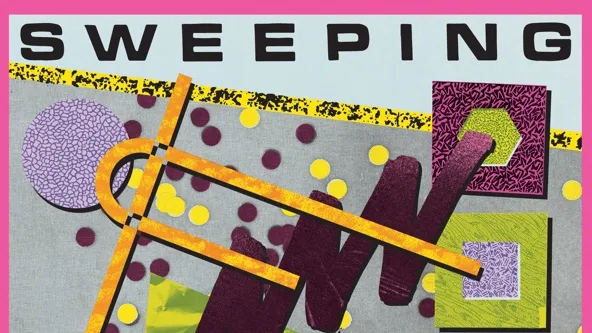
Sweeping Promises’ first two records both delivered a dozen or so airtight art-punk classics that sound like they’d been ripped off the radio during Stiff Records’ heyday. For their third record, You Say I Romanticize, Sweeping Promises set out to build their own garage-rock wall of sound. They don’t abandon their essential elements: crunchy guitar melodies you could sing along to, relatively simple instrumentation, a lo-fi fuzz that seems to take up an entire channel of its own. But here, the band stretches itself to build something broader, ratcheting up the scale over songwriting that’s durable enough to withstand added weight.
Mondal’s voice, which growls and rips through each bare-bones hook with fury, is a key part of this equation. Though she only began adding vocal harmonies on the band’s last record, you wonder why the leap to layering wasn’t adopted sooner; the army of her voice adds a crucial bite to You Say I Romanticize’s otherwise exuberant singalong. Opener “Shooting Shadows” alone proves the formula’s mettle, where Mondal’s sneering warning to the gunman hiding in her walls takes a buzzsaw to the song’s otherwise high-spirited post-punk bounce.
Both the lyrics across the record and certain production flourishes shudder with paranoia, as if to ground an intentionally vintage sound in a modern age. Mondal navigates a world rife with unrest on “Last Man,” named after a Mary Shelley novel grappling with the aftermath of a cholera outbreak. She’s already wringing her hands over the manmade terrors yet to emerge from the rubble: “And what happens when a pyre/Gets too big to put out,” she sings, “And what happens when the lies/Get too big to put out.” All the while, her backing vocals stab in and out of the mix, as if searching to hit a certain nerve it can’t quite locate. When the bass starts to bleed into the room with an ominous buzz at the end of “Accent,” or a piercing whistle is pulled from the guitar interplay on “My Anchoress,” it feels like a gentle push at the band’s previously established parameters.