
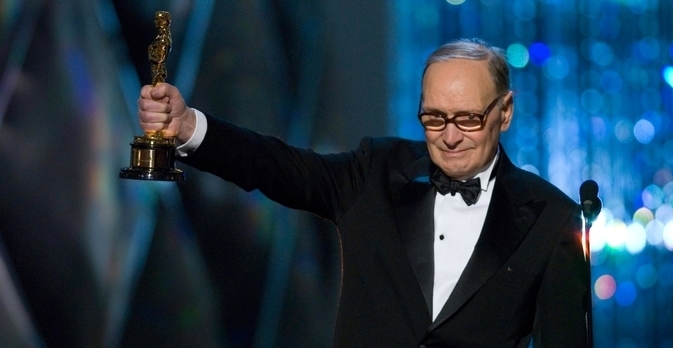
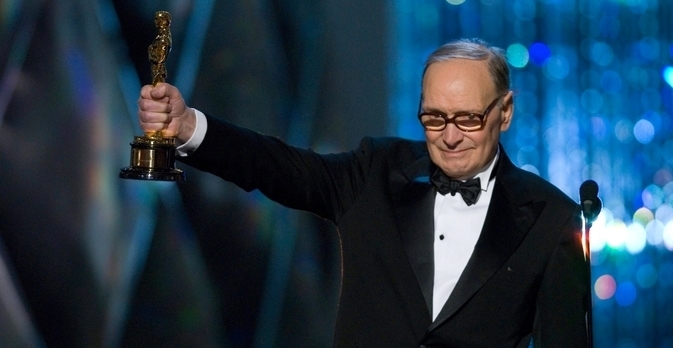
Giuseppe Tornatore's precious documentary on Morricone, “Ennio”, has been in theaters for a few days, and collects an impressive quantity of testimonies of gratitude towards the composer. From Gianni Morandi to Quentin Tarantino, from Quincy Jones to Bruce Springsteen to colleagues John Williams, Hans Zimmer and Nicola Piovani, the film makes clear how many artists are aware of a strong artistic debt towards the Italian author who, perhaps alongside Giorgio Moroder, can be said to be the most influential of the second half of the twentieth century in music.
“Ennio” combines words and music, and reviews the artist's entire career. Among the many aspects highlighted, one in particular deserves further investigation: his success, all things considered little remembered today, as an arranger of pop songs during the 1960s. Recent decades have in fact seen the sacrosanct celebration of the master, internationally venerated especially for westerns, also for his more orchestral and melodic soundtracks (“The Mission”, “Nuovo Cinema Paradiso”, “The Legend of the Pianist on the Ocean”, “Canone Inverso”, etc.) and for his experiences closest to the avant-garde (inside and outside film music: see the compilation “Crime And Dissonance” edited by Mike Patton and his works as a new improvisation group consonance and The Feedback). With the exception of perhaps “Se Telephone” and a handful of other songs, his contributions to the pop scene, although very present in Italian popular culture, are only rarely associated with the name of the person who gave them the form that made them immortal.
Here then is a summary, necessarily reductive, of the moments that for a good decade made Ennio Morricone the most hype of the Italian pop scene, pushing artists of great national resonance to turn to him to arrange pieces that today we remember as classics. Since his debut in the traditional field with Mario Lanza (1959) and Miranda Martino (1960, remembered here with two purely pop songs), the composer stands out for an imaginative and rich style, in which the scores, rather than simply acting as a background, duet with the vocal line, placing themselves on the same level as him. In this period, Morricone often uses pseudonyms (Alfred Arnold Cocozza, Dansavio, Leo Nichols) so that his pop career does not attract attention in the classical-contemporary circles that the composer still sees as his main environment. A turning point is represented by “Il jar” by Gianni Meccia (1960), for which Morricone dares a courageous find: the center of the arrangement, rather than the orchestra, are the awkward chimes of an actual metal jar, struck in a rhythmic/melodic way, but above all chaotic. Almost a disturbing element, which however makes the piece absolutely iconic.
Since then, the intrusions into his arrangements of elements that could be called “concrete music” have become increasingly frequent: events halfway between the riff and the timbric surprise, which rather than phrases of a speech are distinctive presences, around which the recognizability of the piece ends up being built. Sometimes they are performed by the orchestra; However, they are often an opportunity to exploit instruments that were still unusual for the period: the electric guitar twangy alongside the harpsichord (“Corri corri”, 1962), the electric or electronic organ (“Cicciona cha cha”, 1961; “Go-kart twist”, 1962). In “Fins, rifle and glasses” an important protagonist is the splash of water associated with the dive, and in the crucial “splash” the voice is multiplied by the reverb; then in the piece, as in many others, the voices of the accompanying choir play a central role. Particularly important, in this sense, is the partnership with the Cantori Moderni of his friend Alessandro Alessandroni, whose jumping vocalizations are the “concrete” fulcrum of the joke beguine “Abbronzatissima” (1963) and, in a more enveloping guise, the backbone of “Il mondo” (1965).
The more casual pieces are those in which Morricone most evidently shows his eclecticism, absorbing and filtering the fashions of the moment like a sponge: the surfing instrumental, the twistThe doo wop. Even the more classic episodes, however, are made immortal by the same distinctive elements. As the many who have drawn inspiration from the master remember, the exceptional nature of his style lies above all in the incisiveness of the counterpoints. Although he said he “hated melody,” Morricone possessed an extraordinary talent for inventing hookworm instrumentals, which without stealing the show from the vocal part completed and contrasted it, amplifying the emotional richness of the song. The nocturnal line of the flutes in “Il cielo in una stanza” (Morricone's rearrangement dates back to 1962), the echo first of the brass and then of dissonant piano and strings in “Sapore di sale” (1963), which simulates the undertow of the wave motion: these are simple expedients, in some cases even minimalist, which do not attract attention but creep into the memory and are indelibly associated with verses and refrains.
The famous “Se telephoneing”, composed and arranged by Morricone with words by Maurizio Costanzo, reveals the clarity of the master's inspiration. A melody based on three numbers, a pressing rhythm with a very atypical arrangement of accents and a dizzying change of tone in the middle of the chorus: these are the ingredients; the rest is a class that is difficult to emulate. Rightly, the song is remembered as one of the masterpieces of all Italian music.
All the characteristic traits appear simultaneously even in the first experiments westernanticipated in 1961 by the reworking for Nico Fidenco of the biblical theme of “Exodus” (which saw a clear increase in grandeur instrumental). The rereading of “Pastures Of Plenty” by Woody Guthrie (1962) is, in hindsight, the most significant moment: recorded by the Californian Peter Tevis, it will become the test bed for “A Fistful of Dollars” with whose theme it shares the entire arrangement of bells, pops and ocarina. As the decade progressed, Morricone's pop contributions were increasingly included in his torrential cinematographic production, which allowed him a notable variation of atmospheres: from the playful “Uccellacci e birdsi” (1966) to the disillusioned march of “Filastrocca vietnamita”, passing through the unforgettable song that closes the compilation. “Here's To You”, proposed by the composer to Joan Baez at the end of the sessions of Giuliano Montaldo's “Sacco e Vanzetti” (1971), is the spiritual summit of Morricone pop, and probably also the piece that best anticipates the evocative grandeur of his soundtracks of the decades to come. As in “Se Telephone”, the construction materials are very few but perfectly assembled: a melodic ostinato, the organ set to its most crystalline register, the clear voice of the folksinger. It is a masterful baroque system for many voices, which transforms a few chords into an overwhelming ascent towards Heaven.
The post Morricone pop! appeared first on Onda Rock.
Antonio Santini for SANREMO.FM
