
Ambient drone is the format par excellence for long and meditative sound excursions: songs that exceed ten minutes, sometimes reaching half an hour if not more, and develop without recognizable melodies or a rhythmic structure; rather, a mass of sound that branches out, slowly and enveloping: the harmony remains almost immobile, with the variations that sway like slow fluctuations, repeated in a virtually infinite coming and going. Stars Of The Lid are perhaps the most discussed example, but reducing the genre to just that one, albeit precious, name means telling only part of it. Not that the mapping is simple: there is, after all, no true geographic center of the scene; rather, there is a silent apparatus, organized around a few poles that communicate at a distance.
In fact, once the kosmische musik phase of the Seventies and the new age period of the following decade ended, we moved towards dimensions of domestic intimacy. The United States remains a historical reference, but the coordinates have changed over time. Japan is the other fixed point, with Tokyo and more peripheral areas such as Kobe. Europe, for its part, has carved out a growing role for itself, especially as a distribution and reprinting platform. But their continuous movements matter more than the poles: a label is born in one country and then moves elsewhere, perhaps two or three times, ending up operating thousands of kilometers from where it started. These migrations are almost always linked to the private life of those who manage the labels, not to market logic, and ensure that there is no real geographical centre.
Even the identity of artists moves according to similar logic, made up of pseudonyms and names that choose to remain in the shadows. The same goes for the treatment of materials: there is not just one way to deal with the dilation of acoustic spaces, and each artist develops his own method. The American duo The Fun Years builds loops from the turntable starting from unidentifiable sound sources; Will Long uses clips of tape played continuously; Ayami Suzuki works only with voice and electronics, and still others rely on digital to achieve a texture impossible to achieve with traditional instruments. It is precisely these differences, contrasted by an almost univocal sensitivity, that make up the geography of the genre: a map that the ten discs collected here try to tell.
Ayami Suzuki – Passages – 2023

Ayami Suzuki's art lives in the voice, and every element revolves around it. Based in Tokyo, he studied Celtic folk music as a young man, although little remains of that training. “Passages” layers the chanting with loopsreverbs and delay in order to create organic drones: he records a singing melody, repeats it cyclically and intones other vocal lines over it, as if he were improvising a session of minimalist polyphony. A delicate and ephemeral singing, without ascensions or climaxes, always tenuous and measured. The titles mix languages: “Mugenkaidan” (from the Japanese “mugen”, infinity) and “Denkmal” (German word for “monument”), and reflect the cyclical and potentially infinite progression of his compositions. Suzuki's voice is doubled, tripled, until it forms a chorus of doppelgänger and sonic illusions, veering from the celestial to the esoteric but elegiac drone.
Celer – Engaged Touches – 2009

Recorded by Will Long and his wife Danielle Baquet-Long in two sessions, “Engaged Touches” is the melancholic dialogue of a fragmented memory, the memory of faded photographs and the nostalgia of the past. The pivot is the cyclical, triumphal and at the same time tragic structure. The vocabulary is that of an elusive imagination: piano, strings, bells, field recording of trains, dining cars and fireworks collected during a trip to India are reverberated and made soft. The cover, with a man standing up, already visually anticipates that sense of threshold and expectation that runs through the album. Released a few months before Danielle's death, “Engaged Touches” also became, despite itself, a swan song: unlike other works by the couple, here the instruments coexist in the same space, in what remains, in all likelihood, one of the most moving points of the genre.
Hakobune – Love Knows Where – 2015
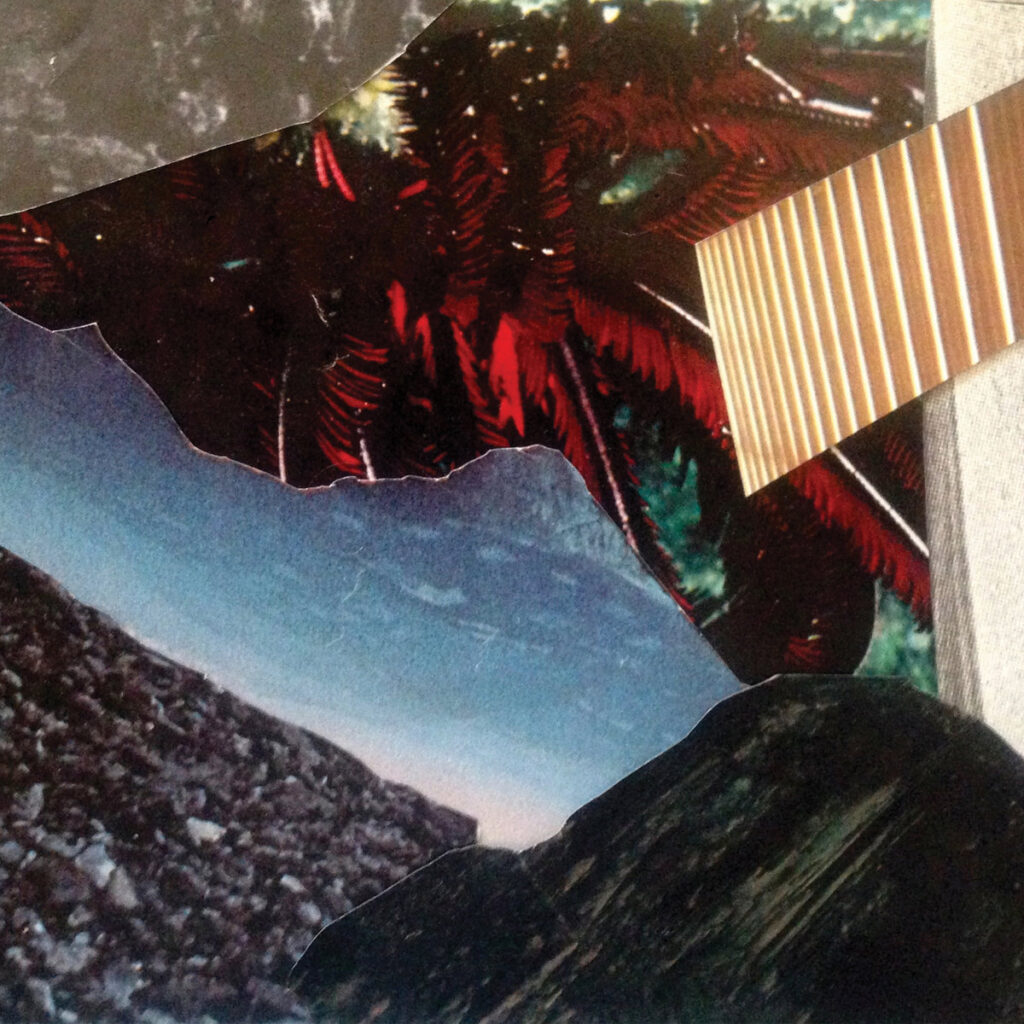
Behind Hakobune is Takahiro Yorifuji. His technique consists of layering the guitar through pedals and reverbs, making it so static as to make one doubt whether the sound matrix is the six-string instrument. The result is a harmonious landscape that thickens without losing calm: an instinctive method, which he himself describes as not very complicated, to be practiced preferably in the morning. “Love Knows Where” is released on cassette and contains three songs: two long ones and a shorter one as a hinge. The first plays ironically on its title: more than “Rapids”, it is a calm and transparent expanse. From there, the record descends into melancholy and dissolves into minimalism, a dark escape shrouded in its own isolation. Before dedicating himself to this low-fidelity quiet, he played in the Whales, a band powerviolence: a contrast that makes the stillness and bliss of his solo compositions even more surprising.
Hirotaka Shirotsubaki – Hyogo – 2020
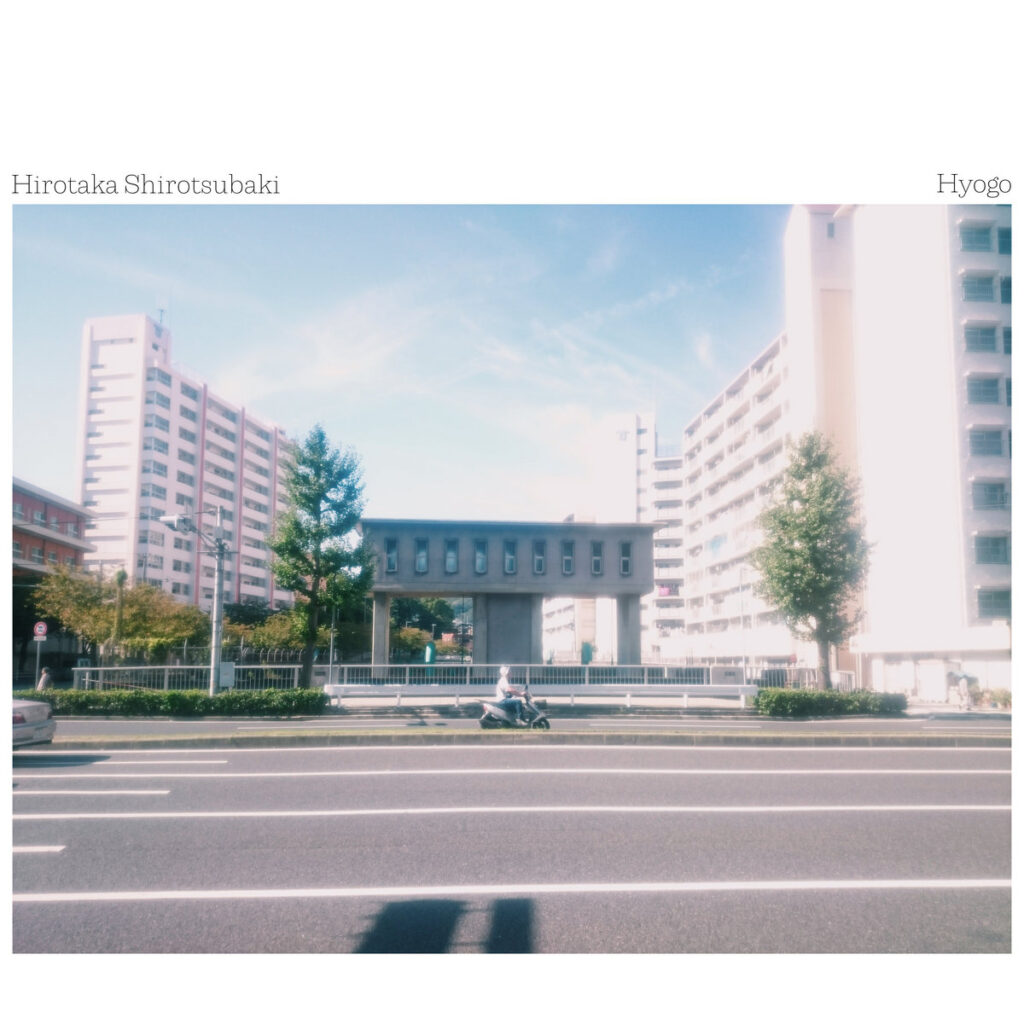
Born in 1986 in a small town near Kobe, Hirotaka Shirotsubaki has been releasing music since 2011 with admirable consistency. His first works were linked to the quiet of the suburbs where he grew up; over the years his work has become more universal, leaving free interpretation to the listener. “Hyogo” captures both hemispheres; the work takes its name from the Kobe neighborhood where he spent his childhood, and, as declared by the artist, serves to fix the memories of that place. An imaginary that Shirotsubaki explores song after song, as in “Daikai”, which takes its name from the underground station that collapsed in the 1995 earthquake. But that of the soundscaper is also the ability to touch the intimate chords of his own experiences, whether in his own Japan or on other continents. The artist's catalog includes over thirty-five releases, yet “Hyogo” emerges as a sentimental cartography capable of enveloping.
Marble Sky – The Sad Return – 2007

Marble Sky is one of countless alias by Jeff Witscher, already known in the noise scene. In 2007 he released “The Sad Return” in just fifteen copies on cassette, with a dedication “to several friends in transit and passing through”: it is the album with which he abandons the abrasiveness of noise for an opposite calm. The opera is an autumnal listen, where guitar and electronics evolve with the tiredness of those who have suffered, while drone choruses mark the gray atmosphere of reverbs and drone romanticism. The space is dilated and allows you to explore your memories and emotions that will never return, drawing the ideal contours for the winter solstice and the solitude that it brings. Each note lasts tens of seconds and is intertwined in a context of intense harmonies and delicate yet poignant crescendos. It is a dim sound, which lives in the penumbra of a white noise capable of adorning every elephantine chord.
Opinion – YT – 2020

Very little is known about Opinion: the artist works from Montreal and has never made his identity public. “YT” was released in 2020 in a cassette of fifty copies, only three songs for a total of eighty minutes: the work opens with “Kansas”, forty minutes of subtle but constant timbral variations, innervated by vague field recordingcapable of evoking the apparent nothingness of the plains of the American Midwest, and of remaining almost immobile for its entire duration. Instead, “Uranium City” is the only track with recognizable variations of organ notes, while the rest proceeds on an almost total fixity. The label itself presents it as a sort of meditation on the great snowy spaces of the north, capable of restoring, according to it, the atmosphere of a Canadian snow day. As in Jakob Ullmann's almost imperceptible scores, the sound of Opinion lives on the threshold of the audible, an apathetic and subdued manifestation of an interior void.
Private Elevators – First Feelings – 2014

Private Elevators is the duo project of Adrian Knight and Matt Evans, both active in the New York scene with a much more formal profile than one would expect from a record ambient lo-fi. Knight writes music published by classical publisher Schott New York; Evans, trained as a percussionist, performs pieces by Steve Reich and Sarah Hennies. This academic baggage dissolves with “First Feelings”: hypnagogic textures creep in found sound newspapers floating among the drones, an amalgam of dim clarity, almost a single sound material suspended in a late-night nostalgia; the result is a raw work, as if worn out by perpetual recordings on magnetic tape. It remains a lateral episode in their respective biographies, and precisely for this reason it reveals a freer, less monitored side of two authors accustomed to writing for orchestras and ensemble.
The Fun Years – Baby, It's Cold Inside – 2008

The Fun Years are a duo made up of Ben Recht, baritone guitar, and Isaac Sparks, turntable. They are also among the most shy artists on the scene: they don't give interviews, they don't perform live, and when they respond to emails, they do so with few words. The protagonist of “Baby, It's Cold Inside” is Sparks' turntable, used to make money loops woolly from heterogeneous sound material, in a method that recalls Philip Jeck or Jan Jelinek in hypnotic guise. The connections are with the indie scene between the two millennia: the shadows of post-rock emerge in the guitar arpeggios, in the piano ostinatos dissolved in the rustle and in the reverse instrumental. The result is a harmony of anxieties that rests on a carpet of mantric low frequencies and vinyl noise close to the sound of fire, with phrasings not so far from slowcore and shoegaze, but dismantled piece by piece and reduced to filtered noise.
The Hers – Tough Cunt – 2012

The Hers is one of many alias by Louis Johnstone, British artist better known as Wanda Group. In an interview he recounted the origins of the project: “with The Hers I started using only old classical music records found in charity shops”, and then veered “towards something more like a long, blinding drone”. “Tough Cunt” was released in 2012 in just fifty copies on cassette. The result is disorienting, built by superimposing worn samples, endlessly repeated tapes and improvisations on an unusually short length: the effect is that of a half-sleep in which memories fragment like sand and recompose without warning. Moving between the anguish of a drone burrowed into the earth and the fumes of radioactive gas, Johnstone finds his references in artists such as Gas and The Caretaker; “Tough Cunt” is a work that lives between lyricism and hauntologymicrosounds and drones, delicate strings and alienating static.
Uon – Superbath – 2017

Uon is one of many aka by a Berlin musician known to friends as Shy, also active as Special Guest DJ, Caveman LSD and DJ Paradise. “Superbath” is a single twenty-four minute track, explicitly conceived as a sound bathguided relaxation sessions made up of continuous tones, Tibetan bells, gongbells, built around vibration rather than melody. The piece does not seek solutions or promise healing: it stands on its own (magnetic) simplicity, on a few aquatic lines that overlap without haste, leaving the listener with the task of completing the rest with their imagination: a dense space in which to immerse themselves, as if it were a sensorial deprivation tank. Seven years later, in 2024, the same song is remastered and re-released, this time under thealias Special Guest DJ: a remote self-quotation, but signed by the same person.
Daniel D`Amico for SANREMO.FM