
In Divine Interventiona piece about ignoring the apocalypse contained in the Rolling Stones' 25th album, Mick Jagger confesses that at one point he was so worried about the end of the world that he even consulted a psychic in Hollywood. “I asked her: what's my future? Well, she threw up,” he sings over a guitar boogie that recalls Some Girls. The message of the chorus is that, even when the world is ending, “dystopian values are too hot to handle, and I'll be gone in a blaze.” Now this is the Mick we know.
After all, the man who sang it is Time Is on My Side That Time Waits for No Onethe same one who once said he would rather die than continue singing Satisfaction at 45, he has never given the impression of worrying much about the future. Jagger, who will be 83 years old after the album's release on July 10, has always preferred the present. In the 1960s as Paul McCartney processed the end of a relationship in YesterdayJagger dismissed his ex in Yesterday's Papers. And if today in his latest album McCartney looks nostalgically at the boys of Dungeon Lane, the boys who met at Dartford station seem to think of something else, more interested in world affairs than in memories of the past.
Ringing Hollowa country-rock that brings to mind the influence of Gram Parsons on the Stones, is a kind of farewell letter from Jagger and Keith Richards to the United States. “I was madly in love with you / Before I even met you,” Jagger sings. “I've seen all your movies / I've smoked your cigarettes.” But now, he continues, the Statue of Liberty has a frown on her face. The lyrics are full of wry, biting observations like “let the dreamers have the dream they want, my favorite line / So roll the Fentanyl / Roll the coke… When the voices get drowned out / I want to scream at the top of my lungs.” Wow. The Stones still love their American fans, but as in Sweet Neo Con, Undercover of the Night And Street Fighting Manwhen they see an injustice they don't stay silent.
In Divine Interventionone of the best songs of Foreign Tongues Enhanced by a beautiful blues solo by Ronnie Wood, Jagger describes “billionaires frantically fleeing to their havens in the sky.” In Covered in You he raps that he's “tired of all these autocrats, they seem to multiply like a bunch of filthy rats with their missiles on parade.” He never mentions Donald Trump's name, but throws a dig at one of his allies in Mr. Charm in which he calls the first man in the world to have assets exceeding one thousand billion “mad mogul Mr. Musk”.
In Never Wanna Lose Youa pop-rock with a funky bass and Robert Smith of the Cure on synthesizers, Jagger shows the other side of life by telling his lover he would live with her even in Naples – or maybe it's Naples, Florida, since he's talking about a dilapidated trailer park. Aristotle said that politics is ultimately the struggle between the poor and the rich (and, typical of Jagger, this man of wealth and taste never mentions the fact that he and his bandmates are multi-millionaires).
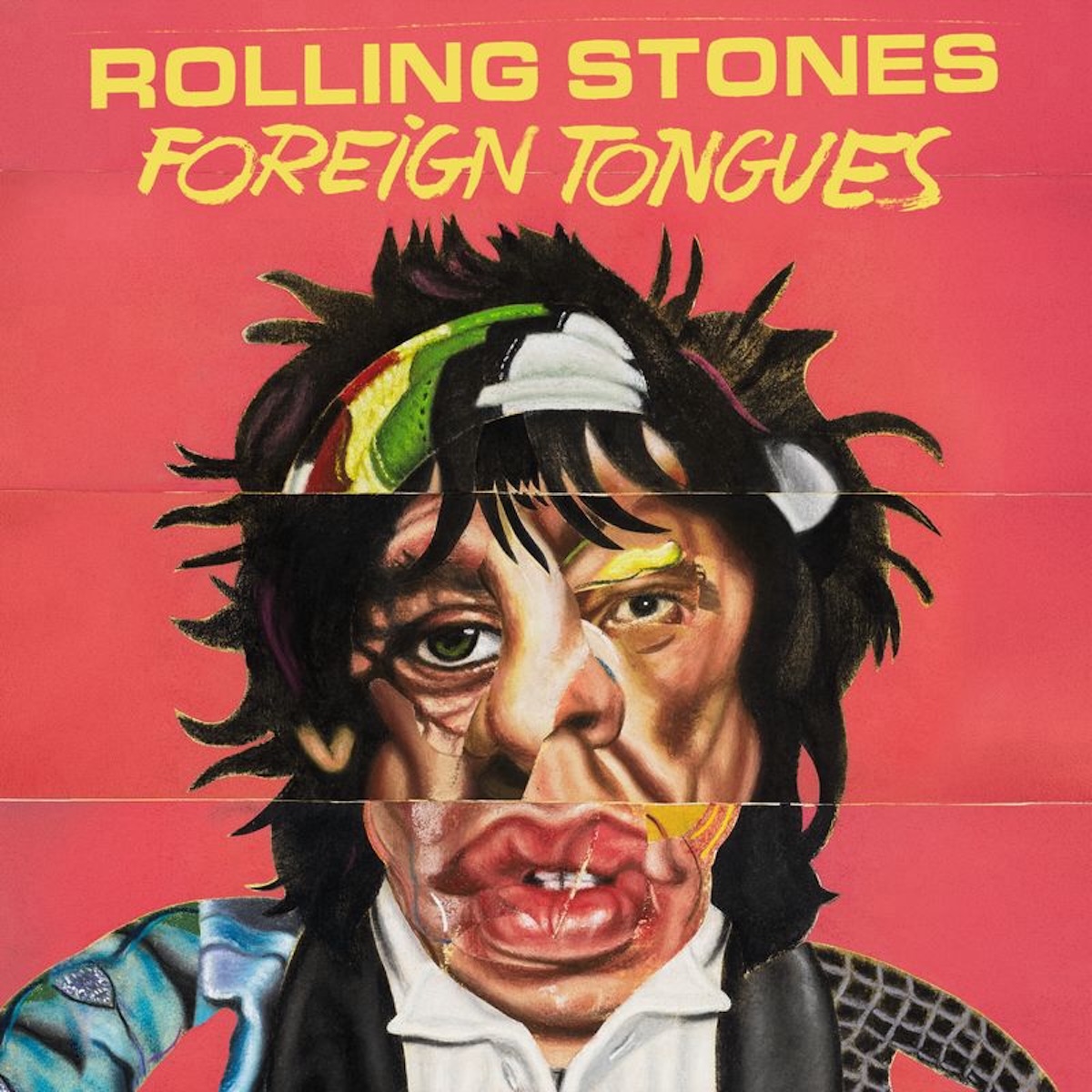
Three years ago Hackney Diamonds it had the feel of a great comeback, being the first album of original material in nearly two decades. And it was great. It earned the band, which also includes bassist Darryl Jones and drummer Steve Jordan, a Grammy and consolidated their status as England's longest-running hitmakers. Foreign Tongueswhich probably collects some songs that remained in an embryonic state during the sessions Hackney Diamondsgives the impression of being a continuation of the group's work and I mean that in a good way, because the recording method produced equally effective results.
Among the 14 songs there are very lively rock pieces (Hit Me in the Head, Rough and Twisted), theatrical ballads (Back in Your Lifethe excellent Some of Us by Richards), broken hearts in the disco (Jealous Lover, Never Wanna Lose You), honky-tonk country (Ringing Hollow) and an avalanche of Chuck Berry riffs (even literally, in the respectful cover of Beautiful Delilah). No strange twists, zero pop experiments: just the reassuring pleasure of their classic style.
After all, the Rolling Stones know perfectly well what one of their records should sound like. They remain faithful to blues, R&B and early rock'n'roll and, in case they risk derailing, Andrew Watt arrives – already at the helm of Hackney Diamonds – to put them back in the right direction. In addition to being nominated as a producer, he also obtained some credits, which is rare, as an author alongside Jagger and Richards, but perhaps he would have also deserved that of the group's conscience given that, as a superfan that he is, he helped them remember what their essence is: warm and bluesy riffs accompanied by Jagger's irony.
The only what-the-fuck moments are the rapping in the otherwise excellent Covered in Youwith McCartney on bass over a driving groove while Jagger says something about “seeing the whites of their butts”, and a rather conventional cover of You Know I'm No Good by Amy Winehouse. The good thing about the latter is Jagger imitating Mark Ronson's backing track with the harmonica. Missing are the long jams, night hikes or the musical storm of one Gimme Shelterbut overall the album delivers exactly what Stones fans want.
As already happened in Hackney Diamondsthe guest list is impressive: McCartney, Smith, Steve Winwood (on piano and organ), Benmont Tench of the Heartbreakers (on organ) and Bruno Mars, who plays a substantially inaudible cowbell at the disco party of Never Wanna Lose You. And again, as in Hackney Diamondsthe most significant appearance is that of the late Charlie Watts in a piece recorded in 2021 that recalls Hang Fire and which is called Hit Me in the Head. No disrespect to Jordan, but he has swing and another strength.
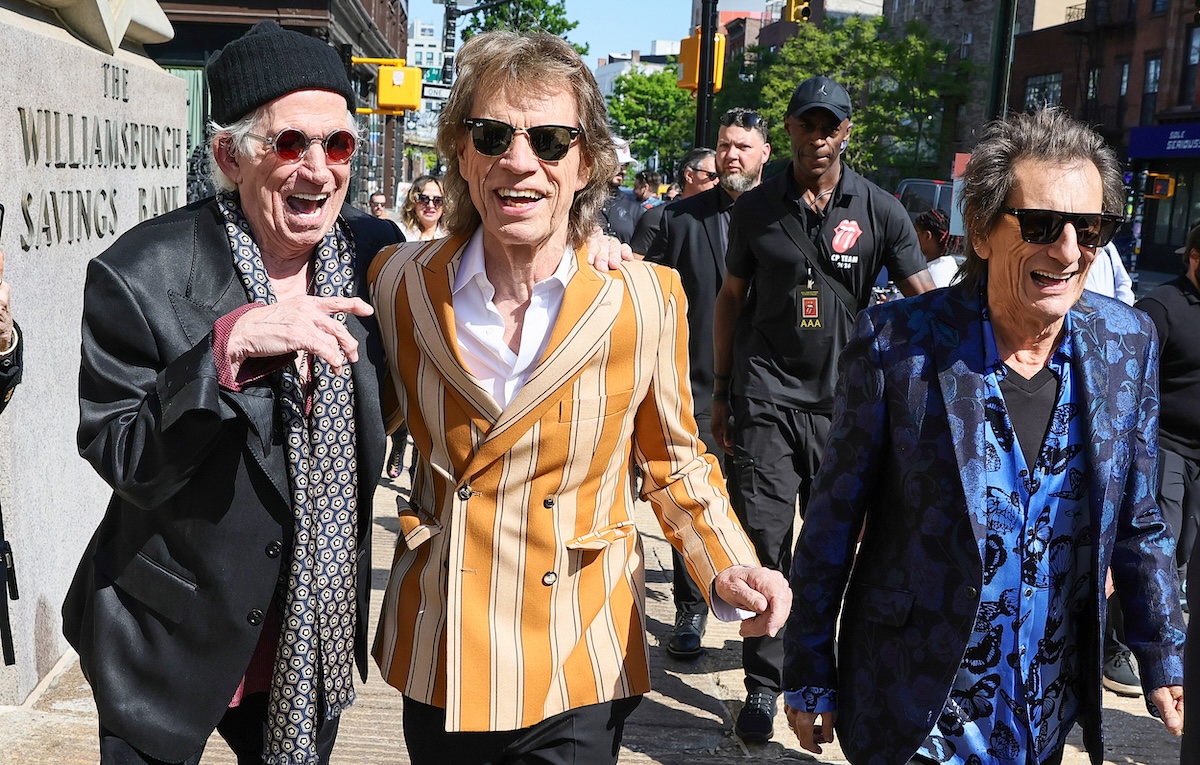
The Stones in Brooklyn for the presentation of 'Foreign Tongues'. Photo: Theo Wargo/Getty Images for UMG
It's true that at times the record is a little too smooth, but in essence it is Foreign Tongues the Stones are faithful to their trademark or at least to Charlie Watts' idea of what the Stones should sound like. For example, there are no Dust Brothers beats like in Bridges to Babylon. Jagger, Richards and Wood know that they will never surpass the series of masterpieces that go back to Beggars Banquet to Exile on Main St. (without forgetting Aftermath, Some Girls And Tattoo You), so why not try to do better than Dirty Work And Voodoo Lounge? They succeeded. Jagger's voice is miraculously as beautiful as it was forty years ago and he can even sing You Know I'm No Good in a higher key than that used by Amy Winehouse. And the ancient art of guitar interweaving between Richards and Wood produces tight textures, especially in Ringing Hollowand allows both to emerge here and there with moments of great relief.
In some respects Foreign Tongues surpasses Hackney Diamondswhich at times gave the impression of being a Jagger solo record due to its emphasis on vocal melodies. This one focuses more on the guitars and is more authentically “Stonesian”. The goal, as Watt explained, was to create songs that could work both in a stadium and as a single In the Starsis Never Wanna Lose You they would work well, should the band decide to tour.
As always, the Stones are at their best when they let themselves go. In Jealous Lovera soul-funk style Emotional RescueJagger leaves his lover because she is too jealous of other women (and he, for the record, never says he hasn't cheated on her). In Mr. Charm he ironically takes on the role of serial seducer, conquering a rich woman and telling her that “life is too short to limit yourself to making money, show me how to spend it, darling” (there is also a moment in which he admits his age, which is rare, and confesses that if he once dreamed of going to Mars, today he prefers to stay at home “making anagrams and spitting epigrams”). And then there is Some of Us by Richards, a touching declaration of love whose origins date back to the 80s: “Some of us are on our knees, begging, baby”. There is a deep emotion and vulnerability in his voice that at times intertwines with Jagger's, reflecting a level of dedication that can only come from lasting love.
Speaking of lasting love, the album closes with Jagger and Richards, who have known each other since they were 5, playing Beautiful Delilah by Chuck Berry with Chad Smith of the Red Hot Chili Peppers on concert bass drum. It's a return to the origins, a bit like when up there Hackney Diamonds the Glimmer Twins did Rolling Stone Blues by Muddy Waters. When Jagger met Richards again at Dartford station he had Waters and Berry records with him, and their first ever single was a cover of Like Hon of Berry. For four minutes they return to being Blues Incorporated, their first band. And you can clearly perceive that that spark lit a fire that still burns.
Jagger hopes the Stones release more albums. As he and Richards move deeper into their ninth decade of life (Wood turns 80 next year), it's hard not to think that this could be their last record. They don't know it either. But if that were the case, Foreign Tongues it would be a finale worthy of their legend.
From Rolling Stone US.
Daniel D`Amico for SANREMO.FM