
Article by Marzia Picciano
The point is that you can't stay silent, it's not natural in the current state of affairs, especially if you are an artist. And so it is according to i Post-operative pain management. Even before finding ourselves at Primavera Sound to take water and “lessons” in positioning (political and cultural), before even seeing Aarab Barghouti tread the stages of the event to remind everyone that while we dance and live there is still a lot of injustice that we have to face in the world, we were on the phone with Luca Romagnolipulsating part together with Marco 'Diniz' Di Nardo of the Abruzzo band that has plenty of lessons on the management of political and cultural urgency and here too, it has not failed to maintain its natural tension.
For Dead Children it's a little pearl left to everyone, including dogs and pigs (especially them) at the beginning of May waiting to come out with their seventh job, The Overhang Yearsin autumn. A title which is already indicative of an evaluation that the band made last year, when it returned to present itself with its full name, and with even more enthusiasm starting from the zero date of the return to its origins tour, those of OUFF!al Transumare Festival of 2025. Here “we try to address all the issues of life, because it seems fairer, more honest, and above all we talk about both the most beautiful and the ugliest ones” says Romagnoli. “Because, precisely, telling all these facets of existence makes them more true.” And today we have too much truth, but also too little.
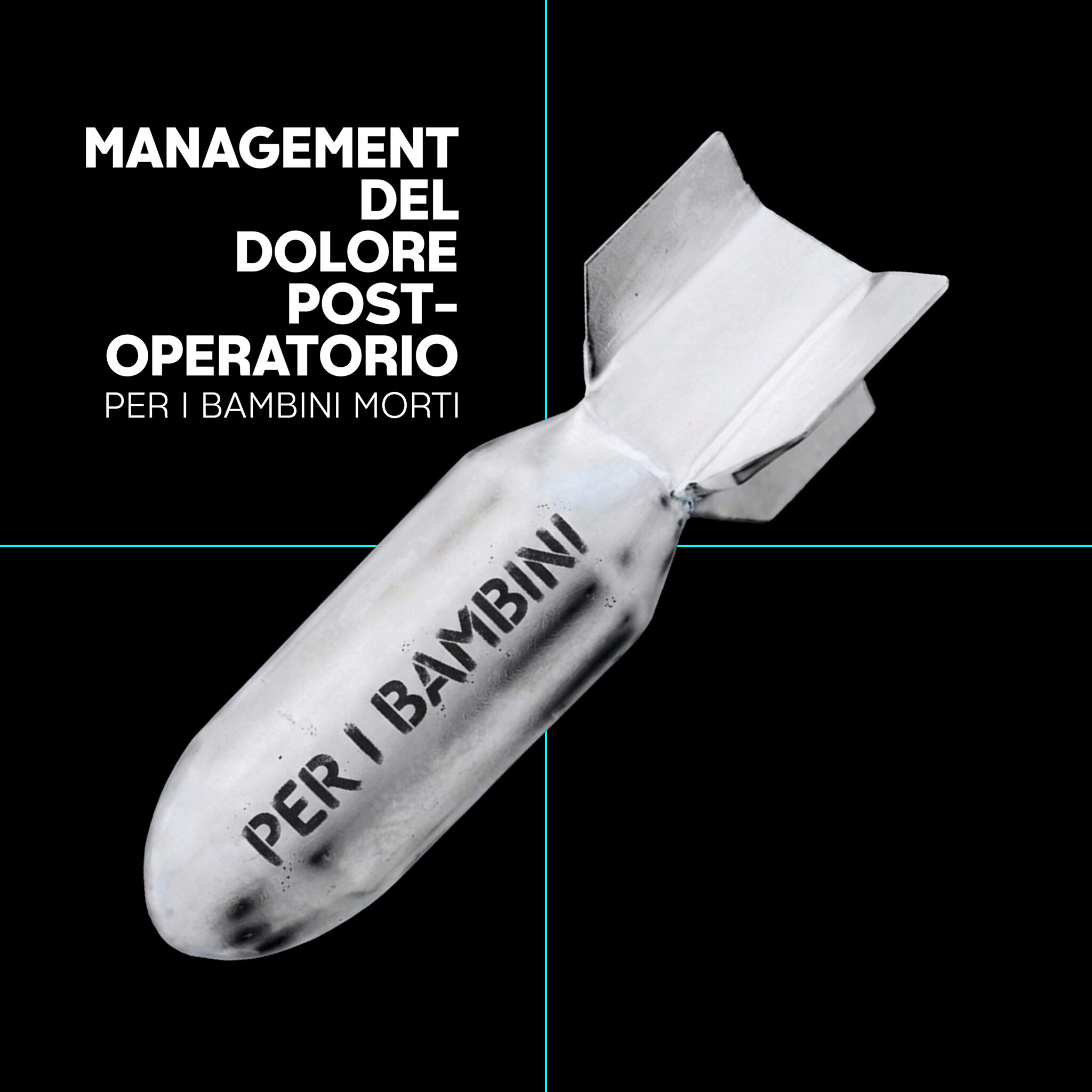
Then we get to For Dead Children. Another title that wants to leave a moment of dismay in the stomach: no appeal, no pleasure, just a brutal reality. Romagnoli explains that theirs is a saboteur spirit: if the piece seems too “accessible” they feel the need to break its balance, in this case with the title. Because then everything else is stubbornly calm, as we proceed through the horror.
“Sometimes it's the songs that choose us. In recent times, perhaps also due to age, we are moved more by sweetness, by whispers, than by screams.”
The result is a poetic text that clashes perfectly with the shock of its presentation name. Here art returns: the one that must tell the ugly. We are talking about a work that formally aims to be a canticle, because first of all ours refer to the structure of la Woman of Paradise Of Jacopone da Todi (ca. 13th century) to write a kind of prayer of the brutal, completely overturning its meaning (here the derelict apostrophe is the Earth).
Where in the reference work we experience and suffer the crucifixion of Christ through the torment of the one who loves him most, a mother, here we look with a mixture of battered melancholy and resignation at what is, theoretically, our mother, “pinched” in a moment of clarity outside the hypocritical and slimy confusion that lives and surrounds her. “Today we are overwhelmed by information and noise. Something whispered can be more powerful: like someone who speaks to you softly but disturbs you more than someone who shouts. Combining sweetness and a strong theme seemed more poetic to us. Then it's not always all calculated: certain things arrive like this.”
It is not simplistically a text of denunciation – too banal, they do it, we all do it – and it is here that the work of an artist who finds himself in the arduous task of interpreting reality arrives at its point: how do I present (not “sell”) the ugly thing I am seeing?
“Maybe sometimes it's good to do it within your craft, your art form. There are those who say it, perhaps reluctantly, but then go back to writing and arranging the macarena. Who doesn't say it at all, so as not to run the risk at all.”
Trivially, they would seem to say Romagnoli And Di Nardogiving things the contempt they deserve. And then we arrive at a crude title like For Dead Children (“so as not to run the risk of the partisans becoming human beings”). Nothing else to explain.
But a Luca Romagnoli we wanted to ask you to explain. Not only what “they” take a stand for, and in what way, but why today, now, it is impossible not to do so.
“We have always done this in addressing certain issues. In our discography there are several songs linked to current events: war, violence against women, etc. This time too we felt the need to talk about what surrounds us” Romagnoli replies. “Today there is too much chatter about 'deployingthe. For me it's simply about honesty. A person often tends to hide their ideas, for convenience. I don't think that certain artists are so superficial that they only think about the girlfriend who left them or the summer hit: they also think about serious things in their lives.”
But that's what often happens (and is justified). For the Post-operative pain management wanting to tell only part of things because it is convenient is reductive towards the greatness of life and art itself. And in any case it has an economic reason.
“If one side is always hidden, we enter into an industrial process: songs are produced like any other product. Artists have every right to choose another path, but I think that if an entire discography always lacks one's own thoughts on horror, on injustices, I believe that more than an artistic choice it is an economic choice. We are not extremists, I'm not saying that we should always talk about heavy themes, we too love lightness and fun, but we can only really enjoy those moments if we have been honest even about what is most serious.”
And not talking about it generates injustice, again. “If numerical gain becomes more important than saying something, then we choose profit rather than taking a stand. We know that we are powerless, but perhaps for this very reason it is even more important to try: otherwise we leave room for horror without doing anything.”
They are aware that they do this as privileged Westerners: “but precisely for this reason it is important to try, even just through empathy. It is one of the qualities of poetry: feeling even distant pains. Those who create art should have the courage to tackle even difficult topics, otherwise for us they lack honesty.”
Do artists who don't talk about horror really sin in courage? Even when faced with the uncertainty of not knowing how to approach a topic or of being guilty of arrogance in wanting to impose one's own vision (to paraphrase a very recent De Gregori). For Romagnoli it is always an economic question, which has its roots in a broader, collective feeling. That of the systematic elimination of pain from the community.
“In our hedonistic society we tend to erase it, to pretend that everything is fine. But when it arrives, it becomes devastating precisely because we have tried to avoid it. Personally I find lightness as the only theme rather boring: the big themes, life, death, suffering, are more interesting and also give depth to joy. Of course, it is true that happiness “sells” more: people often just want to have fun and not hear about heavy things. But this influences the choices of artists”.
Everyone is afraid, they have pain, in the end, says Romagnoli. But sometimes, these, fear must be faced. “Then there is a choice: if you put economic success and dignity on the scales, you have to decide which weighs more. We know very well that certain pieces will not become hits. But we do them anyway.”
And you have to do it in your art. “For me music is the most important thing, it's my life. If I don't put what I think there, but only in an Instagram story or at the table with friends, it means that I'm not really giving value to those ideas. And perhaps it also demonstrates a deeper fear: that of changing position for convenience. And in the end we end up only saying things that are good for everyone, but which often are of no use.”
The Overhang Years will he talk about this too?
“It's not a completely political record, but it starts from the idea that everything is political. Even joy is political: if we are aware that our privilege arises from the exploitation of others, it changes the way we experience certain moments. The record is quite strong, with a political dimension, but also poetic and melancholic. And for us those moments are among the most intense.”

Daniel D`Amico for SANREMO.FM
