
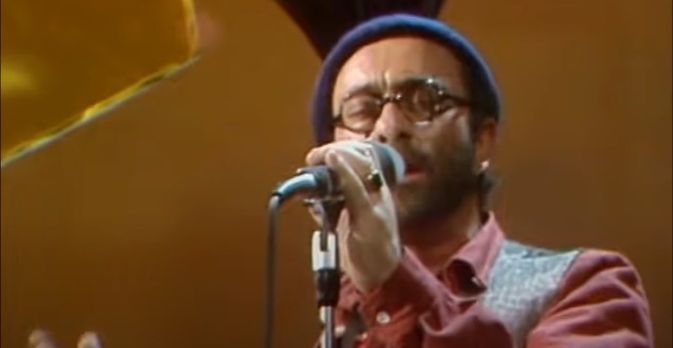
Seventies of lead and political and social tensions. Turbulence that inevitably also affected music. In the summer of 1978 Lucio Dalla also suddenly found himself at the center of that political climate that had also been affecting Italian music for years and which had resulted, for example, in the sensational “Palalido trial” suffered by his colleague and friend Francesco De Gregori. Until that moment, the protests that had affected many singer-songwriters had only marginally touched the Bolognese artist. But on the evening of July 24, during a concert at the Castello Sforzesco in Milan, the situation worsened dramatically.
Lucio Dalla was busy on the tour of “Come è profound il mare”, the album that had marked a decisive turning point in his career: for the first time he had written all the lyrics personally, leaving behind his long association with Roberto Roversi. On stage, in front of around ten thousand spectators, the Bolognese singer-songwriter was conducting one of his freest and most unpredictable shows, alternating songs, improvisations, vocalizations and jokes. Then, suddenly, a blaze.
A boy threw an incendiary bottle which grazed the singer without hitting him. The Molotov cocktail exploded a few steps away from him, while the audience watched the scene in disbelief. The person responsible, just fifteen years old, tried to escape but was immediately stopped. According to what later emerged, he claimed not to even know why he had done that gesture and claimed that the bottle had been given to him by other young people. Dalla emerged unharmed from the attack, while the boy ended up in prison.
The episode deeply affected the Emilian singer-songwriter, who in the following days entrusted the weekly Panorama with a bitter reflection on the meaning of that violence. “That boy was ruined by one gesture. And the fault lies with those who put it in his head that the singers are Che Guevara, that revolutions are made with songs. The fault lies with those who bombarded him and many other young people, for too long, with slogans, with falsely revolutionary phrases, with images of machine guns.” Dalla identified one of the roots of the problem in the excessive politicization of the figure of the singer-songwriter. In the 1970s many artists had been transformed, often against their will, into ideological and symbolic points of reference for entire generations. An overlap that the Bolognese musician considered dangerous. “Why now be surprised, horrified, if many young people have received what is certainly the most effective but also less serious, less useful message for society?”.
In the same interview, Dalla also reiterated his independence from traditional political affiliations. While declaring that he had voted for the Italian Communist Party for years, he claimed the right to escape any label: “In recent years I have always voted for the PCI. But today I claim the privilege of not having any membership card, the privilege of being able to be critical, without conditioning, even towards the party to which I am closest. It is the privilege, all things considered, also of no longer voting for it, but of feeling like the same communist. I am tired of labels. I have chased politics as a slogan from my life and from my songs.”
The throwing of the Molotov cocktail on Dalla's stage came in a season marked by frequent protests at concerts. Among the most active groups were the Authors, an expression of the extra-parliamentary area of the radical left, who targeted artists deemed too distant from political militancy or accused of having turned into stars. Not only Italian singer-songwriters ended up involved in their protests, but also international artists such as Led Zeppelin, Lou Reed and Santana.
Two years earlier, in April 1976, a similar incident had struck Francesco De Gregori at the Palalido in Milan. During the concert some protesters went on stage, interrupting the show and subjecting the Roman singer-songwriter to a real public interrogation. They accused him of having enriched himself by exploiting themes close to the left and of leading a life incompatible with the image that his songs conveyed. That evening went down in history as the Palalido “trial”. Immediately De Gregori commented: “All that was missing was the castor oil and the scene would have been complete.”
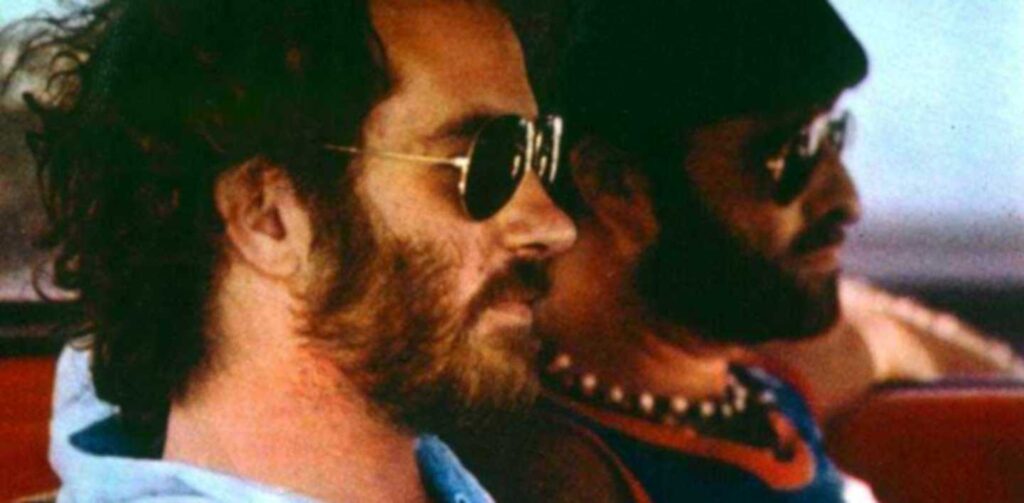
Lucio Dalla himself played an important role in his Roman friend's subsequent return to the scene. The two had already known each other since the early Seventies and had collaborated occasionally, for example in 1975 for the arrangement of “Pablo” (one of the “Rimmel” classics) and the following year on the lyrics of “Giovane explorere Tobia” (from “Bufalo Bill”, another LP by De Gregori). But it was precisely after those events that their relationship was definitively consolidated. In 1978 they recorded the single “Ma come fare i sailors” together, while the following year they decided to share the stage in a tour destined to enter the history of Italian music. Thus was born “Banana Republic”, the summer 1979 tour that transformed two very different artists in character and style into one of the most famous couples in Italian song.
A few years after the protests, the improvised trials and even the Molotov cocktails thrown during the concerts, Dalla and De Gregori found themselves side by side filling the stadiums, inaugurating a new season for live music in Italy.
Daniel D`Amico for SANREMO.FM
