
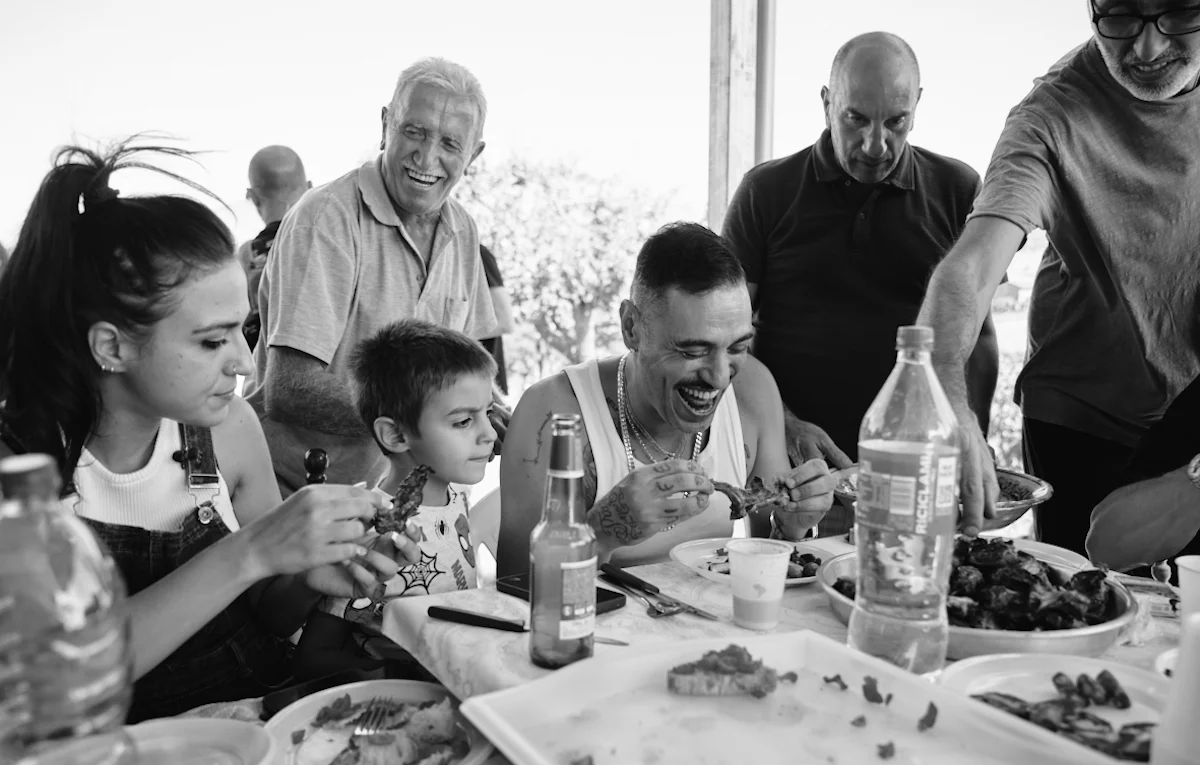
«It's our pride, Fabio», says a neighbor from Marracash in the days of public housing. The boy remained there in the complex, raised a family, Barona is still his home. While Marracash, which they call there Still Fabio has come a long way, a long, long way, in a way that perhaps not even he himself is clear about. He who, inside, in the end, is Still the son of two Sicilian emigrants in Milan, the one who dealt drugs, stole scooters, but at the same time read books and wrote essays that predicted, even here unconsciously, his future.
This is one of the simplest and most moving passages of King Marracash, the documentary film on Fabio Rizzo, aka Marracash. Produced by Greenlandia and Disney+, and directed by Pippo Mezzapesa, King Marracash is a journey through the history of the rapper, a large perfect circle that returns from the Barona of his early days to the Barona of today. It is there, in the working-class neighborhood south of Milan, that Marracash's journey begins and which in the documentary becomes a point of departure and return (even if Fabio, in life, still lives near the neighborhood). But it is also the point of arrival, or rather, of the last great stage achieved a few weeks ago, that is, that Marra Block Party which brought him back under those buildings for a concert, a restitution, which has already become history (read our report here).
History. A fundamental word in the career of Marracash who has written pages, broken records for Italian rap, often arriving at things first. And where he failed to arrive as a pioneer, he nevertheless achieved it better: the concert at San Siro – which symbolically opens the documentary – is the perfect example. He wasn't the first rapper to have his own show at the Meazza, but he was the one who did it best, in terms of quality, realization, path.
Everything is here: the beginnings on MySpace, the meeting with Guè (at the time Il Guercio), the entry into the Dogo Gang, Rock Musicthe first steps in Italian rap, the evenings at Berlin, the elephants on the streets of Barona in Badabum Cha Chto. And also the meeting with Paola Zukar, still his manager today, Jacopo Pesce, his record producer, but also Massimo Recalcati's comment on the depressive period before the definitive consecration from rapper to poet. The Hero's Path. Which however, in the world of absolute celebrity, brings with it an (inner) darkness in the face of an (external) brightness.
The writer lived in Barona, on and off, during his university years, when a single room in Milan cost around 300 euros and for a double you could get by with 200. As penniless students we pumped out Popolare from a rotten stereo (“AAA looking for killers in your area / for this reason I come from Ba-Ba-Barona / this is how the real Milan sounds”) and we were in the neighborhood during the recordings of Badabum Cha Chaalthough probably in those days an elephant on the street would have made us think of THC abuse rather than a video clip by an Italian rapper. After all, in 2008 rap in Italy was still a small thing in the mainstream. But Marracash, in those days making his first major record, had the ambitious idea that the road, the its road, he could take all the gold he had never yet seen. And so came the gold and platinum records.
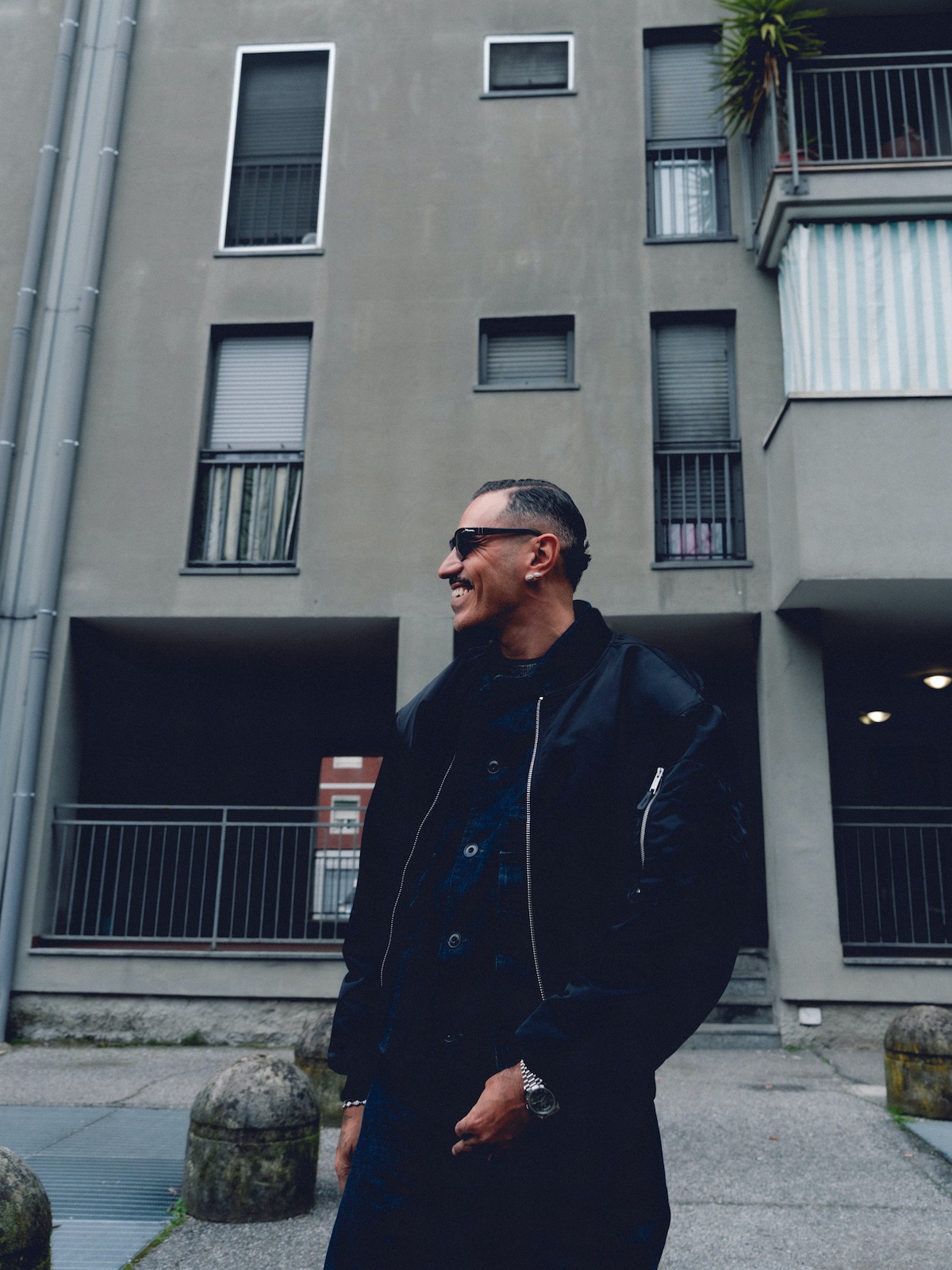
Photo: Andrea Tafel
A walk among the popular buildings of Barona, a family holiday in Nicosia – with mother, father, brother – in which he will be awarded honorary citizenship, discussions with the team about his psychiatric (and a possible diagnosis of bipolarism) and psychotherapeutic path, the all too talked about power couple story with Elodie (who is interviewed here). Marracash, this time too, does something that other rappers don't do: he talks deeply about his own weaknesses, his own feelings, about an intimacy that usually in the rap game, and among men in general, is hidden, private, silent.
For years Fabio and Marracash were two entities who loved, respected, hated and fought each other. And maybe, today, after a tour happy, the block party in Barona and peace with Elodie are finally coming together as one. Or as Marracash says at the opening of the documentary: «There is so much of my story in my songs. What I say and who I am coincide. I'm from the outskirts of everything. I come from nothing that I think can be an inspiration to everyone.” King, Still once.