
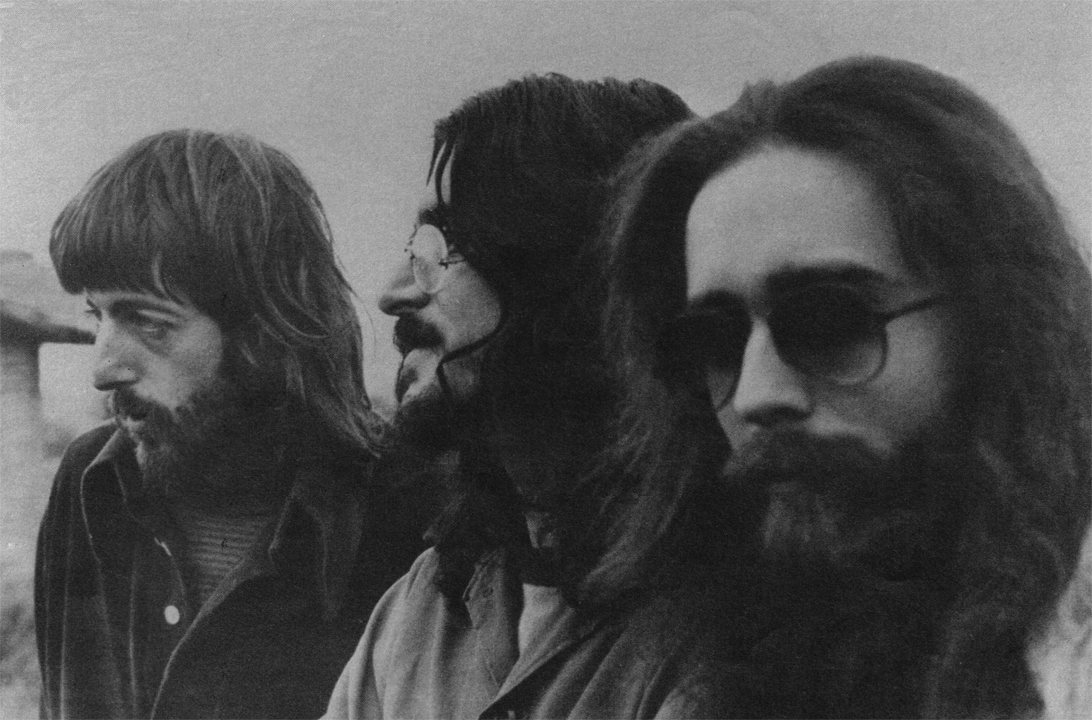
When you mention Italian progressive rock, you often win easily.
Beyond a rigorous proposal in the past, some of the groups renamed today struggle to pass the test of time: whether it is due to the symphonic-fabulistic revivals of the Crimsonian progressive (Le Orme, PFM, Metamorfosi), to the virtuosity of Keith Emerson (Banco, Il Balletto di Bronzo) or even to the difficulty of competing with the originals and, therefore, of reinventing themselves through a Mediterranean interpretation – don't worry, no one has forgotten the enormous contribution of Osanna or of Napoli Centrale, even if they veer towards the wildest jazz-rock. In short, comparisons with the originals often suffer and a large part of the scene appears aged. However, the undergrowth of Italian prog rock is much weirder than it seems: from the damned rock opera in Pholas Dactylus / Museo Rosenbach style to the Canterburian homage of Picchio Dal Pozzo, passing through the visionary avant-garde of Opus Avantra and the total unknowns – see Il Giro Strano.
In this marshy place, an alternative complex blooms like a flower in spring, which even today is little remembered by fans of the genre themselves.
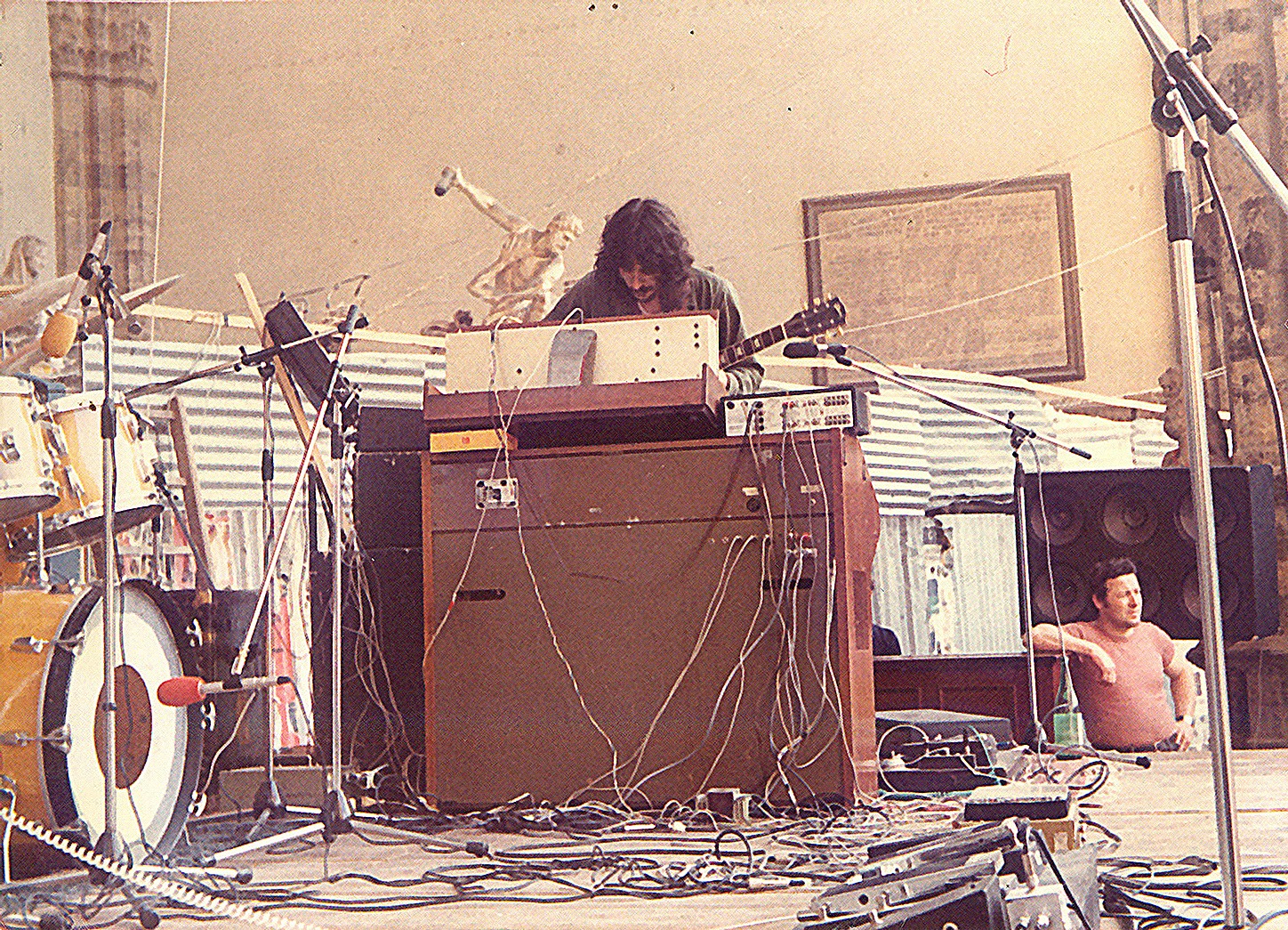
Founded by the Florentine musician Franco Falsini, Sensations' Fix – born with an involuntary spelling error – remain genuinely fascinated by the krautrock tendencies of the time, halfway between the meditative calm of Popol Vuh, the dreamy energy of Neu! and the nocturnal atmospheres of Tangerine Dream. Making use of the drummer Keith Edwards and the bassist and sound effectsist Richard Ursillo, Falsini wrote and composed from scratch some sketches and demos to be included in the band's first official album, released for Polydor in 1974. Looking at the cover of “Fragments of Light”, in particular the version lo-fi present in the 1994 CD release, one can immediately deduce the unchallenged aura of the record: a soft glow, a nostalgic sunset surrounded by leaden clouds, a landscape in the distance and a writing at the bottom right that reads “If the loser finds the receiver he became a winner” (trans. “if the loser finds the receiver he becomes a winner”) represent the iconic cover signed by the historic Milanese designer Mario Convertino – protagonist of the Italian progressive scene of the early Seventies – and by Carla Pallini, photographer of almost all the band's covers to come.

There title track introductory warmly welcomes the listener with a psychedelic folk guitar: suddenly a compelling ride emerges that highlights Falsini's embryonic synthesizer, which teleports us into the deepest space; halfway through the song a shameless solo kraut master the entire composition. The surreal “Nuclear War In Your Brain”, precursor of the lysergic atmospheres present in Falsini's solo album, “Cold Nose (Naso Freddo)” (Polydor, 1975), marries environmental refinement with tender environmental digressions. The same goes for the alienating “Space Age Energy” and the progressive “Life Beyond Darkness”. “Music Is Painting In The Air” is considered by fans to be the signature song of the band: an incomparable space rock piece made in Italy perfected by the romantic psychedelic-environmental combination in full Cluster style. Some sound passages seem to anticipate the ethereal effusions typical of shoegaze by about ten years. Not least is the proto-indie rock “Do You Love Me”, the first song on the album entirely sung by Falsini which boasts an excellent use of backing vocals. The innate influence of Sensations' Fix is often snubbed by Italian critics due to a foreign-loving attitude and, above all, a radical detachment from the traditional Italian format.
Yet, Falsini's total escape from the typical patterns and methods that were raging in Italy at the time gave light to his ingenious character, which soon spilled over into prominent compositions and devoted homages to German cosmic music.
Daniel D`Amico for SANREMO.FM
