
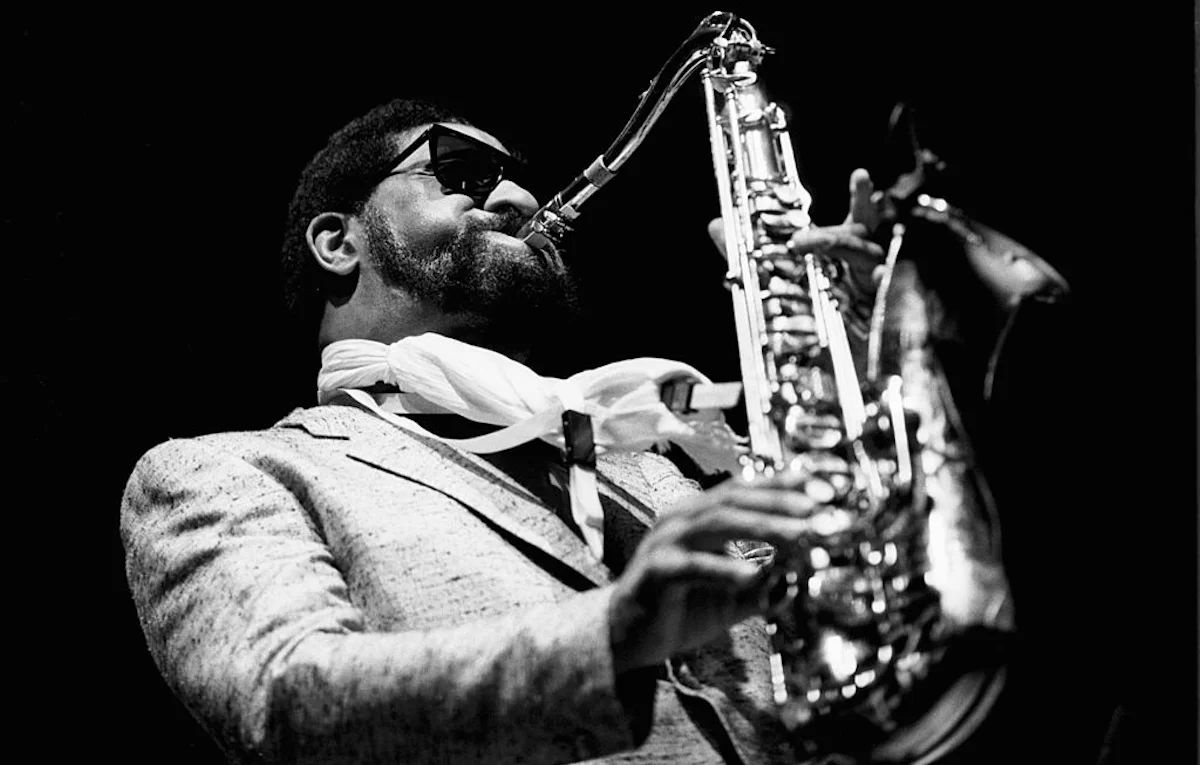
Legendary jazz musician Sonny Rollins has died. Saxophone Colossus, as he was nicknamed, passed away yesterday at his home in Woodstock. He was 95 years old. The precise cause of death is not yet known. In the press release announcing his death, a phrase from 2009 is quoted: «The life of a creative person does not end, but continues into the next existence. I believe that this life is not the beginning and the end of everything.”
Growing up in Harlem, Rollins was introduced to jazz at an early age, first playing the piano and then the saxophone. «It was my mother who gave me my first sax, an alto. I was 7 years old. I took him into the bedroom and started playing, that's all,” he told Jazz Times. «I was over the moon. My mother had to call me: “Come, it's time for dinner”. I could have gone on forever. I love playing alone, it's an exercise, but it's also a way to communicate with my muse.”
During high school Rollins honed his technique on the tenor sax with Jackie McLean and Art Taylor, friends from Harlem. After graduation he joined bands led by be bop greats such as trumpeter Fats Navarro and pianist Bud Powell. One of his first recording appearances dates back to 1949, in The Amazing Bud Powella cornerstone of hard bop, a genre that Rollins himself later helped define.
His rise stopped momentarily when he ended up in prison for armed robbery and due to a heroin addiction, from which he freed himself in the mid-1950s. He took part in the historic session which in 1951 gave birth to Dig by Miles Davis. He also played with the trumpeter in Collectors' Items And Bags' Groovethe latter containing Oila composition signed by Rollins destined to become a jazz standard performed by John Coltrane, Eric Dolphy and others.
Over the course of a career that lasted decades – from the end of the 1940s until his retirement from the scene in 2014 – the 1950s represented his most fertile period. Rollins played as a sideman on classics by Thelonious Monk, Dizzy Gillespie, Max Roach, Miles Davis, as well as releasing his most important series of albums as a leader as Sonny Rollins with the Modern Jazz Quartet, Moving Out, Work Time, Sonny Rollins Plus 4, Tenor Madness (in the title track there was an emerging Coltrane) and the absolute masterpiece as a leader, Saxophone Colossus from 1957, “one of the definitive works of his career”, as the Library of Congress defined it in 2017, when the album was included in the National Recording Registry. For Rollins «it was just a session like any other. It wasn't one of my first records as a leader, it didn't have a particular meaning.”
Less than a year after the session Saxophone ColossusRollins and two musicians he had never played with before, bassist Ray Brown and drummer Shelly Manne, produced another masterpiece, Way Out West. The accompaniment reduced to the essentials – it was one of the first jazz ensembles without piano – became the ideal basis for Rollins' sonic exploration. «If I had the choice, I would prefer the sax, drums and bass formula», the saxophonist told Jazz Times. «I think it offers the greatest margin for maneuver and the greatest creative freedom». A three-man lineup, with Max Roach and Oscar Pettiford, is also in Freedom Suite.
After a particularly creative phase, Rollins took a three-year break from the recording studios, until 1962, continuing to perfect his craft. He later said that he spent much of that time playing sax on the Williamsburg Bridge because he was unhappy with his playing. When he returned to the recording studio, it was no coincidence that he titled the album TheBridge.
Now recognized as the best improviser on the tenor sax in jazz, in the 1960s he continued to record and play at frenetic pace, collaborating with legends such as Don Cherry, Coleman Hawkins, Ron Carter, Herbie Hancock, Elvin Jones. He wrote the film's soundtrack Alfie and made a foray into free jazz with East Broadway Run Down. After another long break in the late 1960s, during which he practiced meditation, he returned in 1972 with Next Albumthe first in a series of records released on Orrin Keepnews' Milestone Records.
It is found in 1981 Waiting on a Friend by the Rolling Stones. It was Charlie Watts, his great admirer, who suggested calling him. «There are people who burn intensely and go out quickly, and then there are those who continue to burn for a long time. Sonny never made a bad record, ever. Some are just better than others,” the drummer said in 2010. “When he gets up and plays, there isn't a saxophonist who doesn't look at him in awe.”
There are three songs that Rollins plays on the Stones' album Tattoo You. “The Rolling Stones didn't interest me much, I considered them derivatives of black blues,” he told al New York Times. «But I remember that once I was in the supermarket and the radio was playing Top 40 songs. I heard that song and thought: “Who is that guy playing?”. That way of playing struck me. Then I said to myself: “Wait a minute, but that's me”.
One of Rollins' most significant releases in the 2000s came just days after 9/11. He lived a few blocks from the World Trade Center and was forced to evacuate his apartment taking only his sax with him. A few days later, on September 15, he held a concert in Boston then published as Without a Song: The 9/11 Concert.
His last concert dates back to 2012. Two years later he announced his retirement from music due to pulmonary fibrosis. “The problem is that I can't play the sax anymore,” he told al New Yorker. In 2020 he said he had hope of «getting better, playing better, making a better record. Hope never dies.” As he approaches 90, he also spoke about the inevitable end to his career. “Dying is a strange thing,” he told the New York Times. «Everyone is afraid of dying because it represents the unknown. But my mother died. My father died. My brother died. My sister died. My uncle died. My grandmother died. They were all wonderful people. If they can die, why can't I die? Am I better than them? It's ridiculous to think, “Oh dear, I shouldn't die.” My body will become dust, but my soul will live forever.”
From Rolling Stone US.