
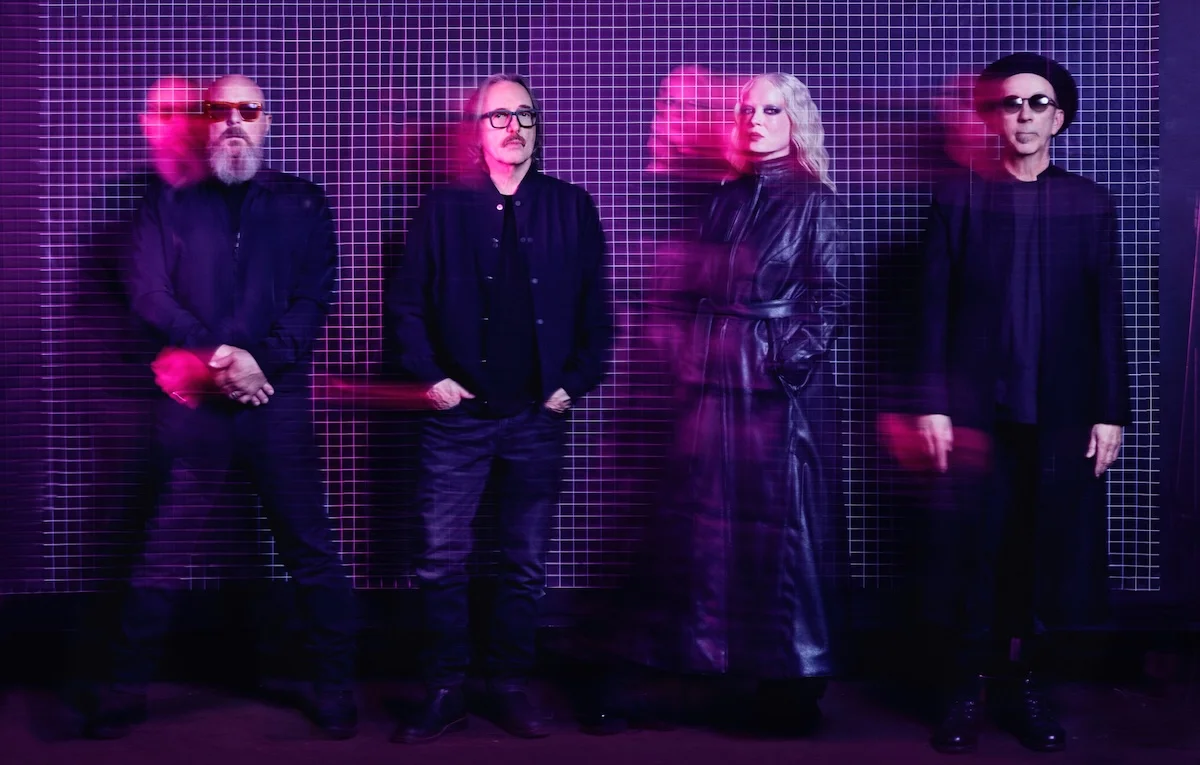
“Pretend to be anyone just to be adored,” Shirley Manson sang in 1995 in Stupid Girlrevealing the original sin of anyone who chooses to hand their ego over to the public. More than thirty years later, that phrase resonates like a supreme law of a contemporary market where, as the Garbage singer tells Rolling Stone«the music industry is in the hands of an oligarchy: at the top there are the big stars who don't have to worry about basic costs, at the bottom the emerging people who travel in a van. In the middle there are the bands for which making ends meet has become simply impossible.”
“It's no longer possible to tour like it used to,” he adds, taking a snapshot of a fading era. “We have to be very careful about every single expense.” He admits the crisis, however immediately denying the rumors of an imminent dissolution and speaking instead of a physiological restructuring. It is not the usual promotional rhetoric, but an analysis of late cultural capitalism explained by those who saw the birth and death of the last analogue empire. An analysis that quickly moves from tour budgets to the intimate sphere, denouncing the social spectacularization of pain. «I find it fantastic that today we have a language to define discomfort, but now everything is fetishized and there is no sense of proportion. It is a dangerous habit for the individual and for society. It's not good for anyone, it just generates further stress.”
It's a short step from psychological control to market control. Musical genres have been “crushed by years of rhetoric about the death of rock” in favor of more controlled radio formats. Garbage responded to this standardization last year with their eighth album Let All That We Imagine Be the Light which the band will bring to the stage of the Parco della Musica in Milan on June 25th, for the only Italian stage of a European tour which takes on the contours of a crucial passage after having announced that they will no longer tour the United States. Also because, on stage, Garbage's music stops being simple entertainment to become a thermometer of global tension. “Over the past five years, as a new era of fascism slowly dawns, musicians with a rebellious spirit are rearing their heads again,” Manson says. This is because «people desperately need truth, authenticity, and seek relief in the sound of angry guitars and heavy rhythms that resonate with their current mood. The Western media is complicit in the system. And that's why people turn directly to artists for the truth.”
Beyond the markets, for Manson the real taboo remains biological decline. Stripped of all rock star armor after her father's death in October 2025, the singer faces the milestone of turning 60. Reaching this goal «seems heavy to me in a way I didn't expect. My father was the dominant influence in my life and losing him made me think differently. It means coming to terms with my death and my decline. In Western society, talking about death is still an unmentionable taboo because people are afraid of getting old. But I know that even in decadence there will be extraordinary lessons to be learned.”
In this horizon of acceptance, the specter of that solo project that Geffen put on ice in the mid-2000s returns to the surface because it was considered too dark by the standards of global pop. «Recording a solo album is not a thought left in the past, but it is a project for the future. But first I'll lock myself in the studio with Garbage between the end of this year and the beginning of next year to write another album. We need to face reality, we are getting older, the clock is ticking and time is running out for all of us. Let's just try to cram as much life as possible into the years we have left. This awareness makes us give immense value to the exact moment we find ourselves in.”
It is a confession that shifts the analysis onto the idea of spirituality and the early detachment from the church in which she grew up. A path not without tensions for her, who grew up in Scotland and was constantly torn between visceral rebellion and deep devotion to her family. «My father was a religious man, but I always thought that that system of faith was naive and narcissistic in putting man at the center of the universe. The older I get, the more I find the need to have my own belief system, because things get scarier and require more guts. The final separation came from seeing my father abandoned by his own community in recent years. As he neared death I asked him how he felt about God and I realized he no longer had any real connection. In his darkest moment he just wanted more years of life and he was angry because he knew he wouldn't have them.” This experience forced the artist to question himself about the profound objective of his existence: “I don't have an answer yet, but I will continue to search.”
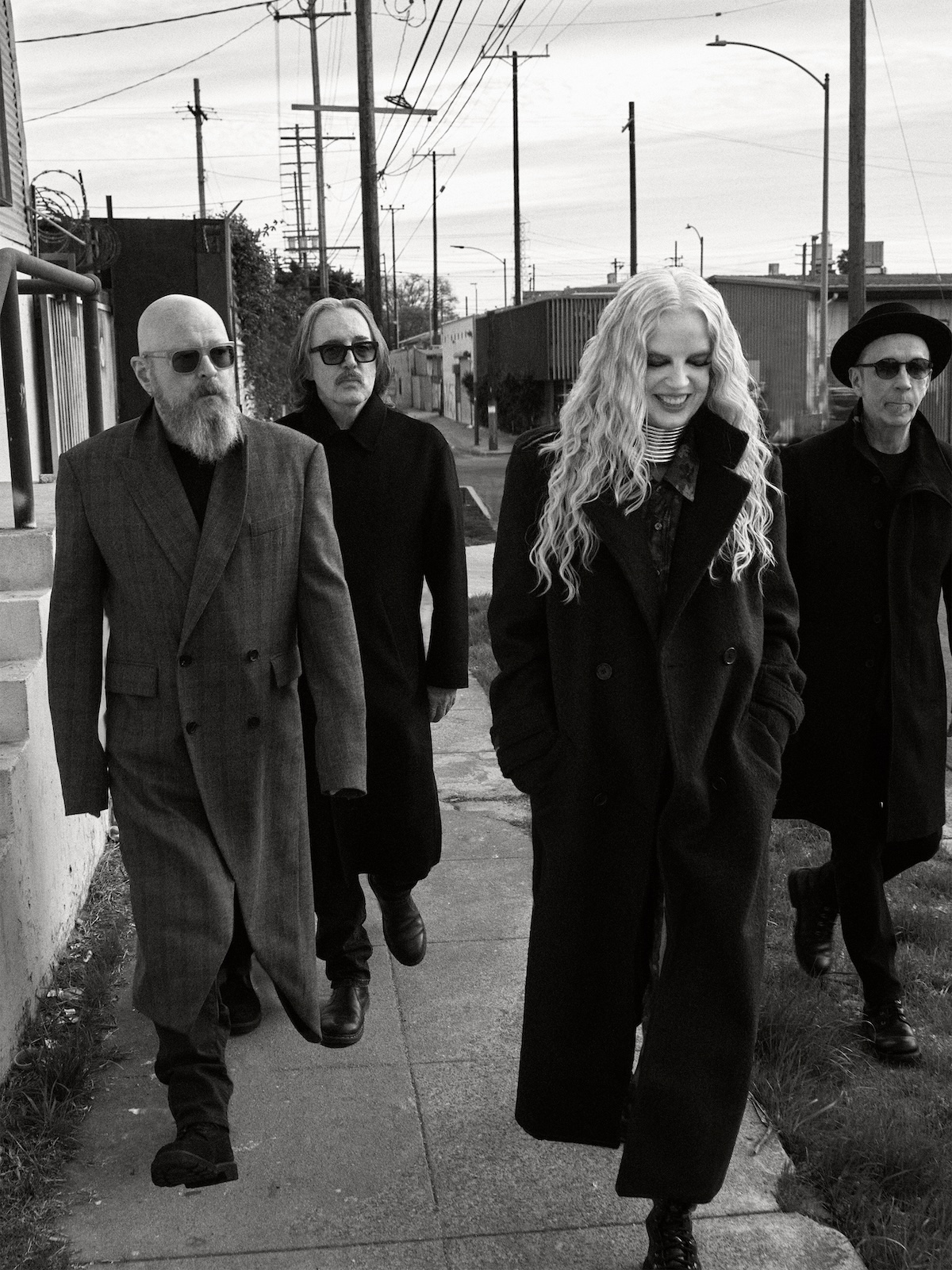
Photo: Joseph Cultice
From intimate to technological confusion, the epilogue of this lucid apocalypse takes place on the terrain of collective memory. Faced with the threat of artificial intelligence, destined to colonize platforms and perhaps even stages, Manson evokes dystopian scenarios. «AI will dominate radio, over time the technology will become so sophisticated that we will probably no longer be able to understand whether there is a human being or a robot on stage. I imagine the future in style Blade Runnerfull of replicants”, says the woman who, in 2008, starred in the television series Terminator: The Sarah Connor Chronicles. «At that point, everything will become irrelevant. But I think we will look for individuality again. For the last 15 years mainstream taste has been heavily oriented towards a homogeneous sound, always written by the same people, but I think we're seeing a shift now, more weird artists are emerging. I think of Yungblud. Love it or hate it, it's taking us back to that school of tough hard rock, and people desperately need that.”
It's the same short circuit that sees Gen Z appropriating the sound heritage of the 90s. It's not about simple nostalgia, but about the search for an analogue legacy by hyper-connected twenty-year-olds but without real collective spaces. «I don't find it strange that this generation seeks the sound of a disconnected era. In the 90s people gathered en masse at raves to find a community feeling. Now all culture is fragmented among the streaming channels on our computers. Everyone hears different things, we no longer have a centralized perception of our society and people are losing orientation. Everyone is desperately looking for a center that no longer exists.”
Against the fragmentation of a market that demands happy replicants, Shirley Manson's revolution coincides with the luxury of living in the time that remains. The acceptance of one's own fragility thus becomes the secret weapon to bring to the stage that angry sound of someone who has no intention of stopping searching.