
The COVID-19 pandemic led to the destruction of many musicians’ livelihood during the early years of this decade, but Davachi—who was an early adopter of Bandcamp Friday, releasing a remarkable run of EPs in 2020—points to another detrimental effect in a recent interview with Bandcamp Daily. “It’s gotten so much worse, this need for immediacy and digestibility,” she said, explaining why her works this decade have grown longer. “I was naturally leaning in those directions, but since Covid, I’ve done it more intentionally.”
That might explain why she’s chosen to stitch all these recent commissions back to back rather than allowing pieces like “The Rose Dialogues” their own space to sprawl out. It’s hard to glean a logic to the sequencing—why all 46 minutes of “The Rose Dialogues” are stitched end to end but “Songs of the Smile’s Fig” is scattered throughout, why we get “Interlude I,” “Interlude V,” and “Interlude II” in that order with no sign of the other two.
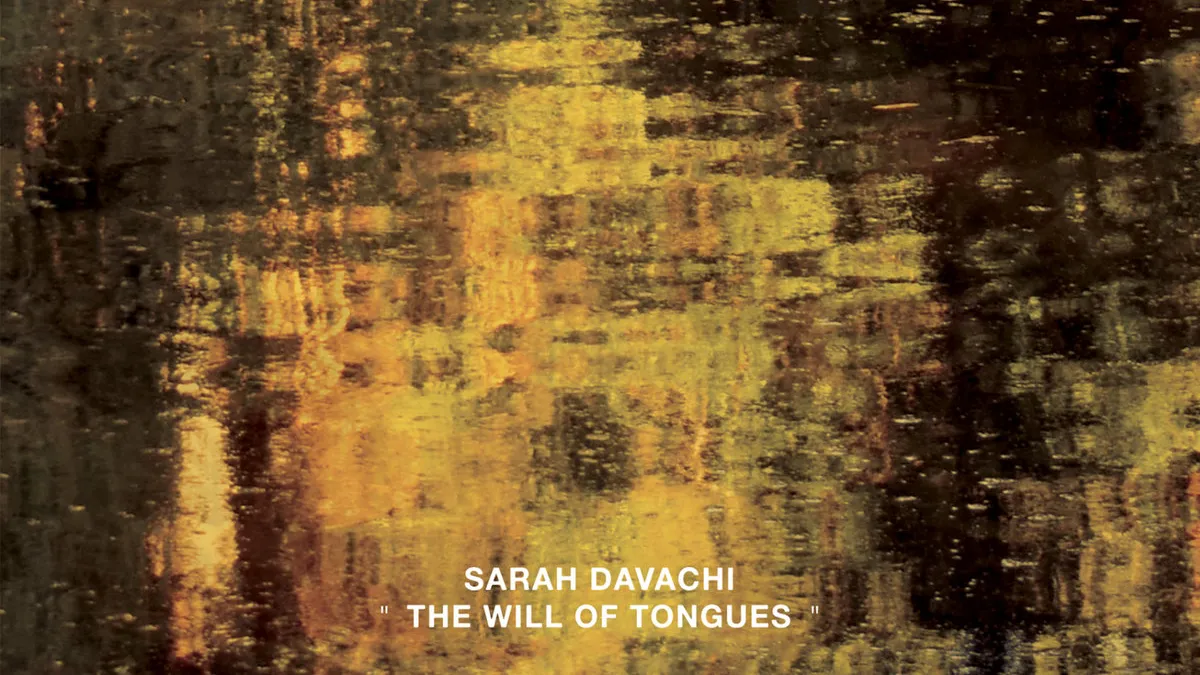
The press notes call this her most ambitious album. That seems like a byword for “long,” and The Will of Tongues feels more like a compilation than a durational work in itself, the way her three-hour audiovisual project Music for a Bellowing Room with Dicky Bahto did. It’s hard to shake the sense that the hyper-alert, zoomed-in state of focus Davachi aims to facilitate with her music would be easier to attain in a concert setting than in a format that makes one yearn for simpler pleasures after a while.
But there’s another reason Davachi might be so eager to go long on this release, and it can be found in the text itself—“Nothing expresses us after death, and I cried out, ‘this is how the will of tongues is made.’” This is how the French lyrics of “Songs of the Smile’s Fig Pt. 3” translate, and though it’s credited to André Breton’s “The Spectral Attitudes,” you won’t find it in any available translations of that poem—in true Surrealist fashion, Davachi has reassembled the words for her own purposes. That purpose seems to reflect on her own legacy as an artist, and on how the human development of language is tied to our desire to be remembered, to live on in some way in a future we can’t see for ourselves. Seen from this angle, The Will of Tongues is like a time capsule, a package future generations can excavate to confirm that, yes, Sarah Davachi did it her way, and all the rest of the world could do was slow down to catch up.