
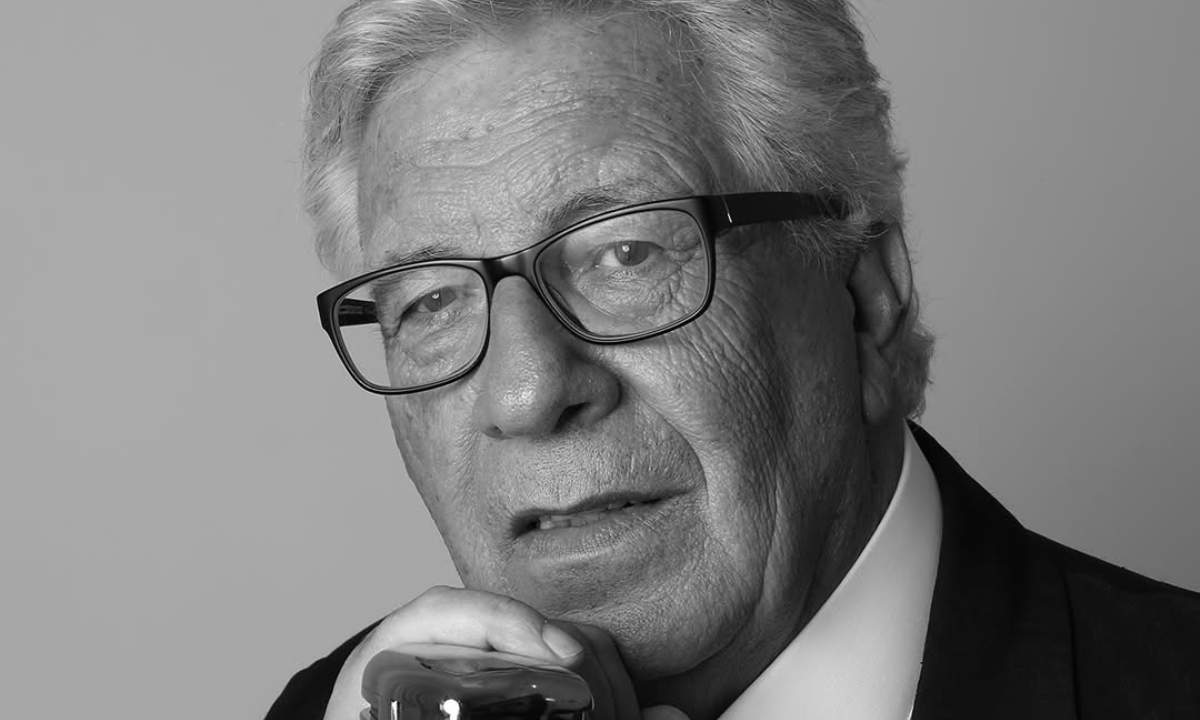
Born in Capri on July 27, 1939 like Giuseppe Faiella, Peppino of Capri for over sixty years he was the musician who brought Neapolitan songs into American rock and roll without losing their identity. Singer, pianist, author of around five hundred compositions, he holds with Milva, Toto Cutugno and Al Bano the record of fifteen participations in the Sanremo Festival, won twice. He died in his island villa on 11 July 2026, aged 86, after a long illness.
The boy who played for the American soldiers
The family were musicians: the grandfather played in the island band, his father Bernardo had a record and instrument shop and in his free time he played sax, clarinet, cello and double bass in the orchestra. In 1943, at the age of four, Peppino performed on the piano for the first time in front of the American troops stationed on Capri.
At six years old he began studying piano with a severe German teacher in Naples. In 1953, however, he also began playing in the night clubs of the island and of Ischia with his friend Ettore Falconieri on drums, under the name of Duo Caprese: at Number Two in Capri and at Rangio Fellone. When the teacher finds out, he kicks him out. From that moment he dedicated himself only to the American music that was arriving in Italy.
On 26 August 1956 Peppino and Ettore arrived on television at Primo applauso, hosted by Enzo Tortora, with Cry and Tu vuo' fa' l'americano. They win, and the prize is a television.
Peppino di Capri and his Rockers: the name born from a phrase
In 1958 the group was formed: Falconieri on drums, Pino Amenta on bass, Mario Cenci on guitar, Gabriele Varano on sax. They are called Capri Boys. On an evening in Ischia, in August of that year, an executive from the Milanese record company Carisch on holiday on the island noticed them and proposed a contract. On September 26th the five left for Milan in a Fiat 1100 to record ten songs.
It is there that the stage name was born, and the guitarist proposed it: since your name is Peppino and you come from Capri, you will be called Peppino di Capri. The group becomes Peppino di Capri and his Rockers.
The first 45 was released on 20 October 1958 and contains Let me cry. Success, however, came with the third, published on November 28, thanks to It's not a sinwritten by Ugo Calise, which becomes an evergreen of Neapolitan song. On December 16th the first 33 rpm was released, among the best-selling Italian albums of the season. The following year it's up to Voice 'and nighta 1905 classic that returns to the charts in its version.
The king of the twist
1960 is the year of consecration, with Nobody in the world, Capri moon And I want you to go. In 1961 he married the Turin model Roberta Stoppa, performed at Carnegie Hall and began touring Latin America, where he built audiences in Brazil, Venezuela, Peru and Argentina. These are the years of the lamé jackets, born from an idea of the drummer Falconieri and which became fashionable.
In December 1961 he recorded the Italian version of Let's Twist Again by Chubby Checker: since February 24, 1962 it has been first in the charts for weeks and reaches one million copies. In 1962 they confirmed the title of king of the twist St. Tropez Twist and Don't play that song, while his Speedy Gonzales is first for two weeks since January 12, 1963.
In 1963 he won the second edition of the Cantagiro ahead of Little Tony, Adriano Celentano and Gino Paoli, and published Robertadedicated to his wife. In June 1965 the group opened the Italian performances of the Beatles, together with New Dada and Fausto Leali, and a few months later recorded the Italian version of Girl. In 1966 he signed Operation sole, remembered as one of the very first Italian ska songs.
The crisis, and the return via Naples
The second half of the sixties is more difficult. In 1967 he competed for the first time in Sanremo with Dedicato all'amore, which did not reach the final, and record production slowed down. In the summer of 1968 the Rockers disbanded due to declining sales: the New Rockers arrived in their place.
The relaunch comes by returning to Neapolitan song. In 1969 he took to the Naples Festival Youthe first song written by Mimmo di Francia, which ranks fourth but dominates sales. In 1970 he won the Naples Festival with You call me loveagain by Mimmo di Francia, and founded his own label, Splash. From there starts the Naples yesterday – Naples today series, four volumes in velvet covers in which he reinterprets the Neapolitan classics in an almost rock key.
Champagne and the two victories in Sanremo
In 1973 he won the Sanremo Festival with A great love and nothing morewith lyrics by Franco Califano and music by Gianni Wright and Faiella himself, with the uncredited collaboration of Claudio Mattone. The song is dedicated to Giuliana Gagliardi, who would become his second wife.
At the end of the same year, the single that changed his career for a second time was released: Champagnecomposed by Mimmo di Francia on verses by Sergio Iodice and Depsa. It becomes his symbolic song and an international success, far beyond the boundaries of the Neapolitan repertoire.
In 1976 he won again, with I don't do it anymore. It is proof that the redemption of 1973 was not a coincidence: returning to win three years later, in an already changed Festival, is achieved by very few.
Fifteen times in Sanremo: all the participations
Fifteen race appearances from 1967 to 2005, two victories. It is the record of the Festival, shared with Milva, Toto Cutugno and Al Bano.
| Year | Song | Result |
|---|---|---|
| 1967 | Dedicated to love | Not finalist |
| 1971 | The ultimate romantic | 13th place |
| 1973 | A great love and nothing more | 1st place |
| 1976 | I don't do it anymore | 1st place |
| 1980 | That is, you | 20th place |
| 1985 | And time and time again | 9th place |
| 1987 | The dreamer | 5th place |
| 1988 | Don't chat | 17th place |
| 1989 | My piano | 11th place |
| 1990 | Long live Maria | Finalist |
| 1992 | Blues fairytale, with Pietra Montecorvino | 14th place |
| 1993 | The voice of the stars | Not finalist |
| 1995 | But what do you know… (…if you haven't done the piano bar), like Trio Melody with Gigi Proietti and Stefano Palatresi | 13th place |
| 2001 | It will rain (Habibi ené) | 11th place |
| 2005 | The bench | Finalist |
Three of these participations are almost always forgotten in the reconstructions of his career: 1992 paired with Pietra Montecorvino, 1993 and 2001.
The songs of Peppino di Capri: ten titles to start from
His catalog includes dozens of albums and hundreds of recordings. This is not a ranking, because for a repertoire born before streaming there are no comparable audience figures: it is a selection by the editorial staff for those who want to understand where to start.
| Title | Year | Because it matters |
|---|---|---|
| It's not a sin | 1958 | The song by Ugo Calise that makes him explode on the third 45 rpm |
| Voice 'and night | 1959 | A 1905 classic brought back to the charts |
| Capri moon | 1960 | Rereading of a Neapolitan success that from here becomes his |
| Let's Twist Again | 1961 | First place and one million copies: the twist arrives in Italy |
| St. Tropez Twist | 1962 | Confirmation of the title of king of the twist |
| Roberta | 1963 | Dedicated to his first wife, it remains among his most sought after |
| You call me love | 1970 | The victory at the Naples Festival relaunched it |
| A great love and nothing more | 1973 | The first Sanremo won, with lyrics by Franco Califano |
| Champagne | 1973 | The symbolic song, the one that everyone associates with him |
| I don't do it anymore | 1976 | The second victory at Ariston |
To listen to him, the official playlist curated by Spotify collects fifty songs from his repertoire.
Eurovision, the latest records and the 2023 prize
In 1991 he represented Italy at the Eurovision Song Contest, which was held at home that year, with As it is in the sweet sea: finishes in seventh place. In 1995 he returned to Sanremo as part of the Trio Melody with Gigi Proietti and Stefano Palatresi. In 2001 the album Phase 3, written by Franco Del Prete, allowed him to work with James Senese on a different terrain from his own.
On 26 May 2005 the President of the Republic Carlo Azeglio Ciampi appointed him Commander of the Order of Merit of the Italian Republic. In 2016 he published My white hairwhich is his five hundredth composition. The latest album comes out in November 2019 and is titled Mister…Peppino Di Capri.
On 10 February 2023, on the fourth evening of the Sanremo Festival, he received the City of Sanremo Lifetime Achievement Award on the Ariston stage. He accompanies himself on the piano on Champagne and mentions a cappella A great love and nothing more, which he declares to be the song that gave him the most satisfaction. It's his last time on that stage.
The family: Roberta Stoppa, Giuliana Gagliardi and their three children
He met Roberta Stoppa in 1959 in a club in Ischia: she was eighteen and a model. They married in 1961. At the end of the decade the couple entered into crisis and Peppino began a relationship with Giuliana Gagliardi, then a Neapolitan biology student. During a brief period of rapprochement with his wife, their first child, Igor, was born in 1970.
After his divorce from Roberta, in 1978 he married Giuliana, with whom he had two more children: Edoardo in 1981 and Dario in 1986. Giuliana Gagliardi died on 4 July 2019, aged 68.
The film Champagne, and the child who played in his place
On 24 March 2025 Rai 1 broadcast Champagne – Peppino di Capri, a biographical film directed by Cinzia TH Torrini, with Francesco Del Gaudio in the role of the singer and the music created by Peppino together with his son Edoardo. The story starts from the first performances in 1943 and ends with the victory in Sanremo in 1973: 1976 remains out of the frame.
Playing Peppino as a child is Alessandro Gervasi, the little pianist who a few weeks earlier had played Champagne on the stage of Sanremo 2025. Eighty-two years after the child from Capri in front of the American soldiers, another child on the piano with the same melody.
Death and the viewpoint of Punta Tragara
Peppino di Capri died on Saturday 11 July 2026 in his villa at the top of Castiglione, in Capri, at the age of 86, after a long illness of which the family did not disclose the nature. The municipality proclaimed city mourning and the funeral took place the following day in the church of Santo Stefano, a stone's throw from the square. Rai has changed its programming, with a Techetechetè special on Rai 1 and the film Champagne in prime time on Rai 2.
On July 25, the councilor for Tourism and Culture of the municipality of Capri, Melania Esposito, announced that the Punta Tragara viewpoint will be named after the singer. The council unanimously approved the resolution and entrusted the procedure to the Toponymy office. For the dedication to become effective, however, an exemption from the Prefect will be needed, given that the law requires waiting ten years after death: the request has been made and has not yet been granted.
Note on images. All Music Italia uses photographs for the purposes of criticism and exercise of reporting rights, pursuant to copyright law. The opening image of this article is taken from the official channels of Peppino di Capri. If the person entitled believes that the use does not fall within this scope, he can report it to the editorial staff: we will promptly remove it.
