
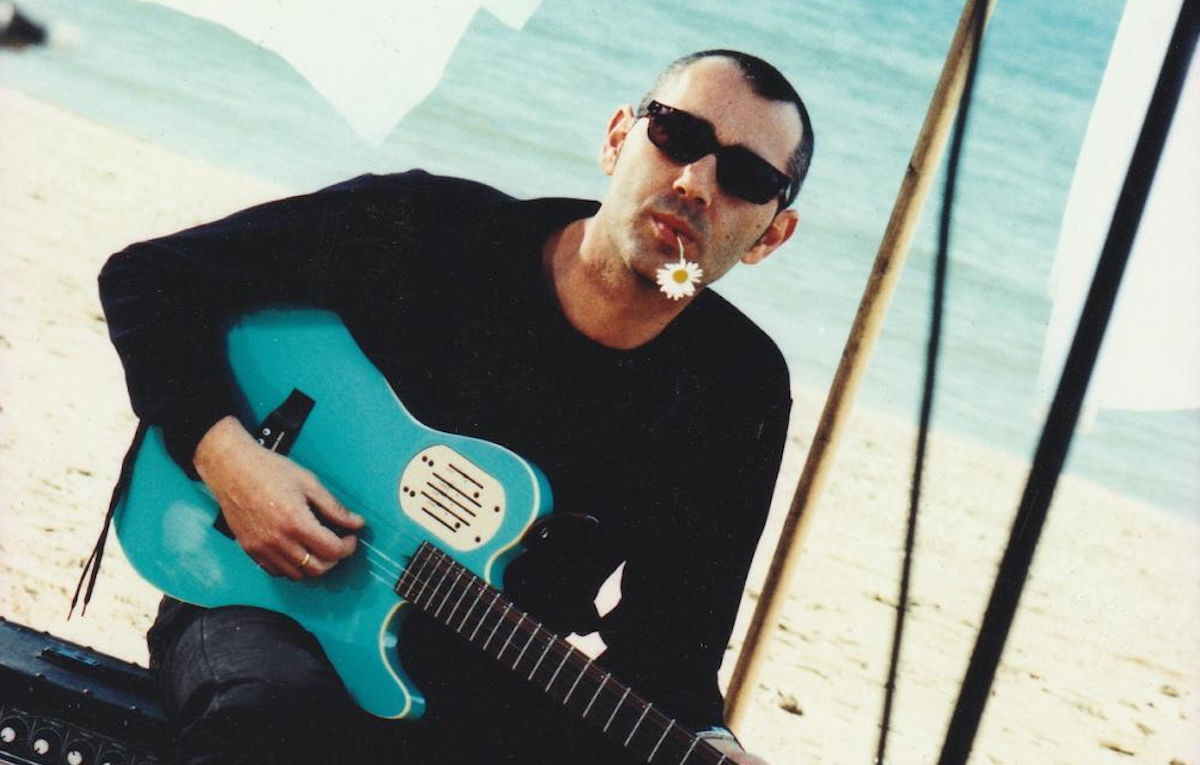
“Luca, on the other hand, never spoke” is a verse from Silvia you knowone of Luca Carboni's best-known songs. AND Luca never spoke is the title of the autobiographical book that the singer-songwriter is publishing today and in which he traces his story. In this excerpt he explains how his songs are born (“It's something that happens magically, and I'm not sure I know all the mechanisms that cause it”) and recalls in particular a delicate period, the early 2000s, full of losses from which he was born Lucathe album in which he talked about «the need for humanity and truth compared to the cold of a restless and automated time». Carboni will present the book on Sunday 17th at the Turin Book Fair. Then, between July and September, he will tour Italy Rio Ari O Live (dates here) accompanied by an eight-piece band. First date on 7 July at the Arena del Mare in Genoa, the last on 13 September at the Sferisterio in Macerata.
They often ask me how and why a song is born. I always reply that deep down I don't know either. It's something that happens magically, and I'm not sure I know all the mechanisms that cause it. I only know that there are moments, or periods, in which I feel I have to make myself available for inspiration, that I have to play, dedicate time to the piano, the keyboards, the guitar, until something comes along, something that excites me. Then it is the music that searches for the right words: they call them, they invoke them. Sometimes they respond immediately, or a few moments later, other times it can take weeks, months, or even years, as happened for Sea sea or It takes a beastly physique.
It is always music, its wave, its rhythm, its harmony, its melody that chooses the text, chooses the topic, the story and the language. Sometimes I have important, urgent things to say, things that I feel, that I live, but the music doesn't allow me. They force me to postpone. When I wrote You really love me I felt the same thrill as Butterfly or of It takes a beastly physique. It immediately seemed like an important song to me. I felt that I had managed to tell what I didn't like about my time, about our society, in a new way, through a true love song.
On December 13, 2000, my mother died. Suddenly. A heart attack. For a while I don't write anything, I paint Madonnas with orange backgrounds, then I write songs like Want to cry, People's problems, Our history. Want to cry it was born because, even though I didn't do it often, I cried aloud. Sometimes surprising me, with joy and pain, without being able to stop. It was like once I unlocked it, I also cried for all the times I hadn't. People's problemsinstead, she arrived walking in via San Vitale, under the arcades in Bologna, in the center. I was struck by the look of a woman, which sounded like a cry of desperation, it seemed The scream by Edvard Munch. It got inside me and provoked me to write lyrics about music that I had had there for a while.
So, song after song, it was released in 2001 Lucathe first album made in my new La Home Studio: an electric and acoustic album, with lots of guitars, and strings. An album of real and warm sounds, in which I tried to talk about the need for humanity and truth compared to the cold of a restless and automated time. Listening to it again now, I find a hypothetical connection with REM Automatic for the People. I think it is the album with the most autobiographical ideas of all, perhaps also for this reason the title is simply my name, “Lu.Ca.”. Naturally, I also played with the fact that the name contained the initial of the surname.
Self-portrait, Our history, Close your eyes, Want to cry, The words, Stellina (of singer-songwriters) they are very intimate, very personal songs. I called the guitarist of my first albums, Bruno Mariani, already producer of Silent people. The idea was to write down as much material as possible in my studio and go to the new Fonoprint, in via Bocca di Lupo, just to record drums, strings, some voices, and do the mixes with Maurizio Biancani. The sound engineer was always Ignazio.
In Stellina (of singer-songwriters) I think that death entered, unconsciously, and at the same time the future, the new millennium. The recent death of Fabrizio De André (January 1999), that of Lucio Battisti (September 1998), then of my producer Renzo Cremonini, to whom I dedicated it. That song, which closes the album, had within it the awareness that a generation was ending, passing, and that another was beginning, just as I sang in It will be a man. A generation was passing away from which I wanted to distance myself, but which had nevertheless given me so much, and undoubtedly enriched and stimulated it, because it had changed our society. Stellina (of singer-songwriters) it is a tribute to the songwriters, and at the same time a prayer that that spirit, that conscience, that great inspiration always remains alive even in the music of the future.
My father, in the 2001 diary, writes: From 4 June to 8 July Luca, Marina and Samuele on Elba. And in July: Luca a few more days in Bologna at Fonoprint. From August 2nd to September 2nd: Luca, Marina and Samuele in Mazzin di Fassa. However, and I learn this from his notes, I returned to Mauro for two days, at the Clock Studio, to sing and mix with Ignazio Orlando The wordswhich up until that point I thought I'd leave off the record.
The record was ready. On Tuesday 11 September in Bologna we left Renzo Cremonini's funeral and discovered, shocked and incredulous, that there had been an attack on the Twin Towers in New York. In the diary, a few days later, my father writes: Saturday 15 September Luca in Milan to shoot the video of You really love me.
The single will be released on Friday 5 October You really love me on the radiohe writes. In a climate of anguish, I add. In fact, two days later, on October 7, 2001, the war began, the Bush administration ordered the invasion of Afghanistan with the aim of destroying al-Qaida and capturing or killing Osama Bin Laden.
The album was released on Friday 26 October 2001 Luca. My father notes: Wednesday 7 November, album 1st in the charts. On November 12 he writes: Listened to Luca's interview on Radio Digei. He writes it exactly like that.
At the beginning of the new millennium, my first album as a father was released, in which I also sang a lullaby for my son: Close your eyes. Pop, rock, rap, music in general, in my imagination, has always been produced by children. Because music, song, is always rebellious. It's revolution. A bomb. It excites when it provokes change, when it just provokes, when it is new. It's not true that he has no age. Bob Dylan, the Beatles, Mozart, Elvis and a thousand others were mostly in their twenties while they were making history.
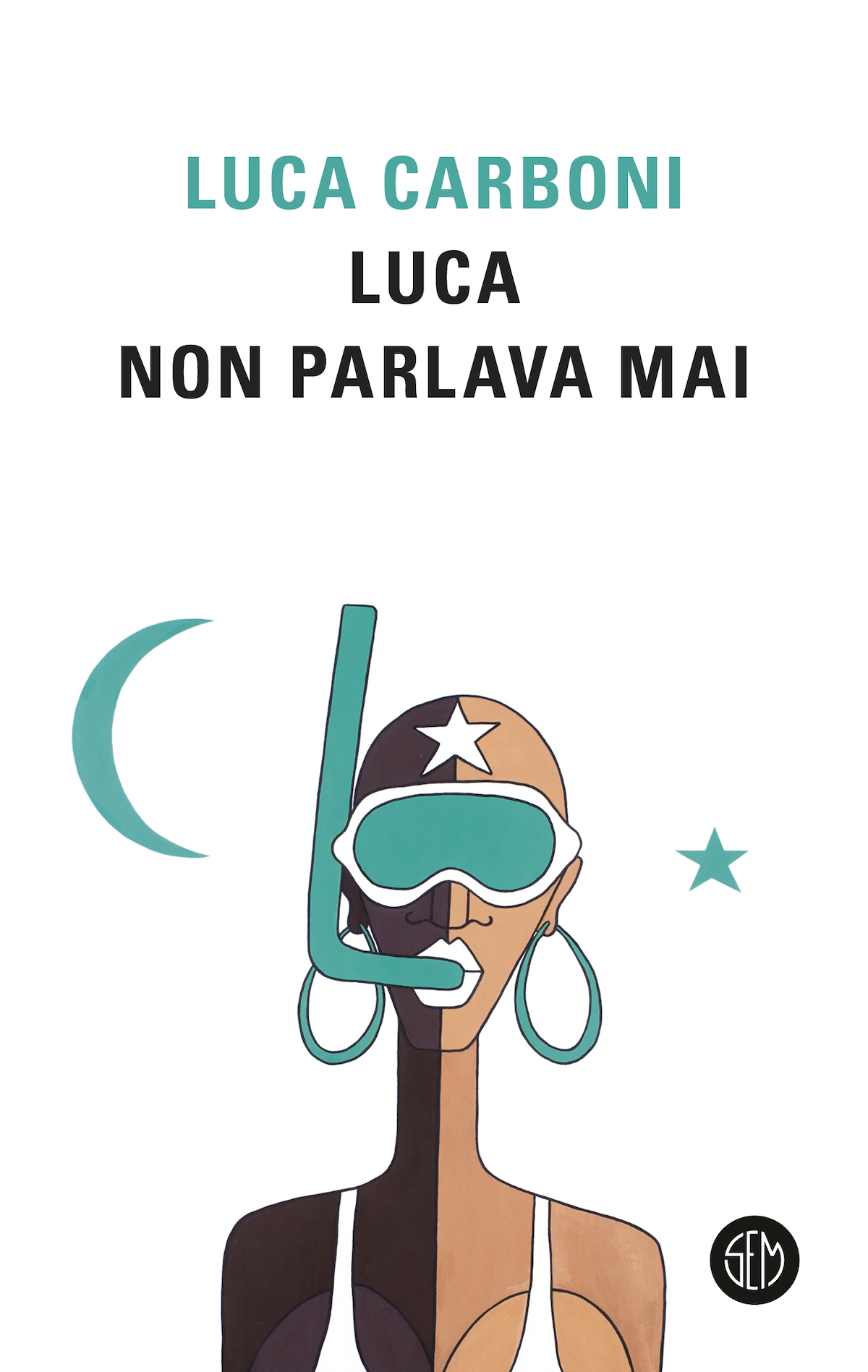
Taken from Luca never spoke by Luca Carboni (Sem).