
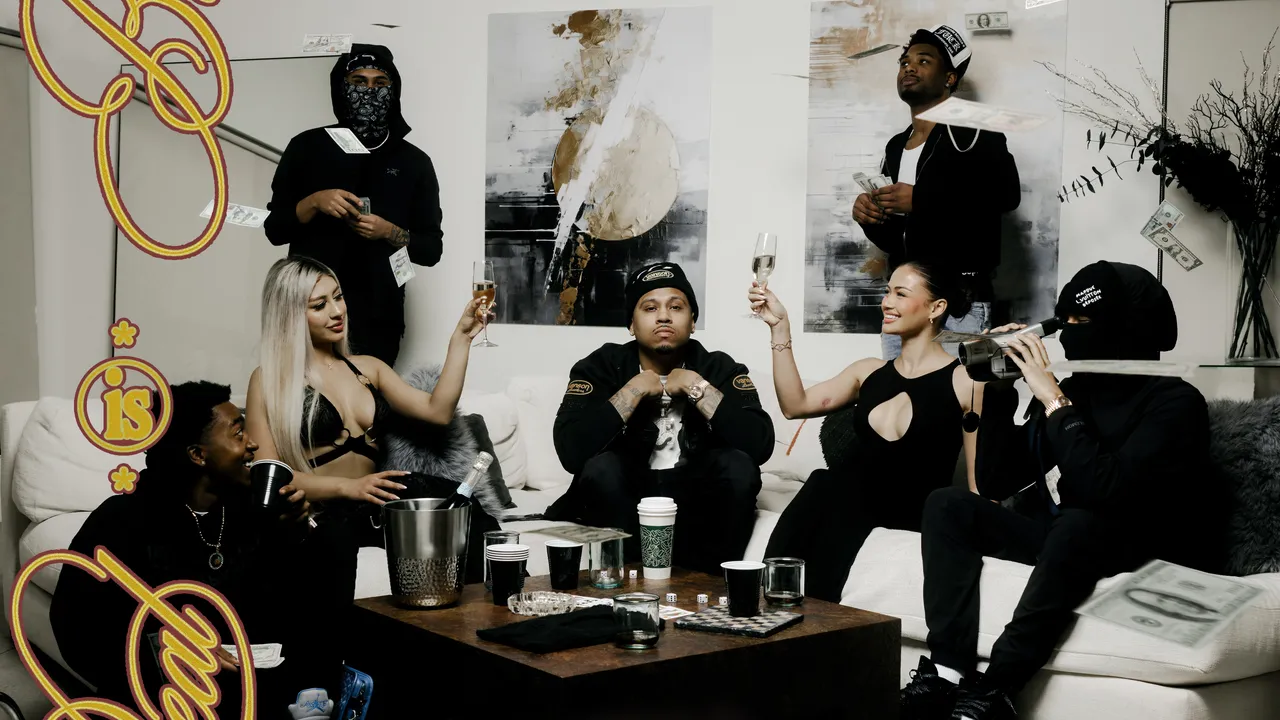
For a decade, Lil Pete has been holding down the Bay Area with sensitive, post-Jacka mood music. He’s the kind of melodic truthteller essential to the regional hip-hop ecosystem, one that can capture hyperlocal anxieties of where they’re from, one in which the appeal isn’t due to one specific song or mixtape, but the relationship you build with their music as they get older. Think Kevin Gates’ unfiltered struggle ballads tracing his antics in the Deep South or the confessional anthems of Lil Durk—“The Voice,” as he likes to be called—that hone in on the emotional contradictions of drill. When I first heard Pete’s ragged sing-raps on 2017’s “In This Life,” he was writing stories of principled hustling and finding his way in the Fillmore District of San Francisco. Over the years, his lyrics haven’t changed much, but the perspective has shifted from observant kid caught in the mix to pushing-30 vet cutting memory tracks on the days when life was a lot simpler.
Conversations about change have been happening for generations in Fillmore—the old stomping grounds of Bay Area hip-hop royalty like JT the Bigga Figga, Andre Nickatina, Rappin’ 4 Tay, and Messy Marv. The neighborhood was one of the most artistically flush, self-sustaining Black communities on the West Coast until a 1949 urban renewal plan kickstarted the displacement and neglect still going on today. Lil Pete’s new album, REAL IS BACK, might not have anything explicit to say about legal policy or infrastructural racism, but it is an evocative collection of laid-back Bay slaps about staying true to yourself in a place that’s constantly being fucked with, to the point that it’s unrecognizable.
No score yet, be the first to add.
Pete gets on that wavelength by talking about his authenticity and moral code more than Omar Little. On the smooth hook of the intro “Still Love Me,” he runs down a list of all the people that still have faith in him—his block, his girl, his bros—which sounds basic on the surface, but the perseverant edge gives the words meaning. He has a knack for making the ordinary seem deep, like the way he kicks off “Sober Thoughts” with “Time’s get hard, but we don’t run from it” as the pitched-up R&B sample and Northern California drill laser beam effects heighten the walls-closing-in drama. If I was the type to repurpose pain rap lyrics as overly emotional Instagram captions, that would be my pick. Not every undercooked bar gets the benefit of the doubt, though, for instance the obligatory acoustic guitar one-off “GBG” features the line “Real niggas never say they real, that’s facts,” which is hilarious coming from a tape titled REAL IS BACK.
His occasional reliance on platitudes isn’t too big of a deal, but I do wish the lyrics were more colorful. He instead prioritizes the intimate vibe, which comes from his mellow speak-sing that feels almost as if you’re eavesdropping on him humming and tapping out a rhythm to himself on the porch. It’s an effective touch that deepens the repentance of “Thinking Out Loud” and blows up the self-improvement promises of “2AM in Beverly Hills” (the wonky mix of thudding West Coast party anthem drums and the cloudy Drake sample is hypnotic) into full-on motivation rap. The regional rap stars passing in and out latch onto the sentimentality. “Man the hood ain’t the same, I don’t get the same feeling,” lilts Babyface Ray on the first track; on “Sucka Free City,” Larry June drones, “I been feeling changes in me/Everything’s changing for me/Everything changed in the streets,” like visions of new and old San Francisco are colliding before his eyes. By the time Pete croons “I miss the life before we start to beefing, had to tote guns” on “Miss The Old Days,” it’s hard not to catch the reflective bug yourself.