
With the publication of “Beflean: An Alternative History 2002-2023”, Jim Moray had ideally closed the circle of a twenty-year career by reinterpreting his repertoire in an acoustic key. That project seemed to be the definitive balance of a journey that began with the dazzling debut of “Sweet England” and continued over time with a production that was discontinuous in rhythms, but studded with pearls of absolute value.
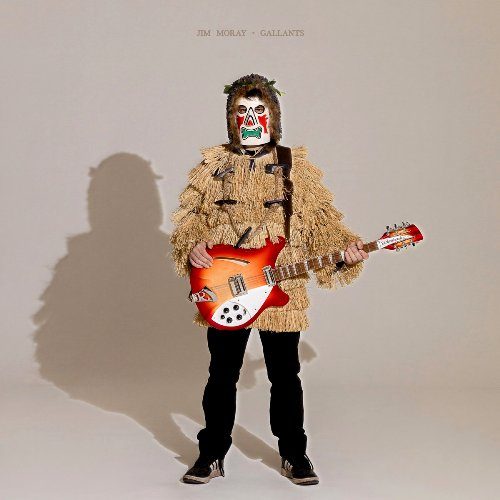
Today the wait for his return is over. The new album “Gallants” fills a creative silence that lasted seven years – a prolonged absence even by the standards of an author who has always been less than prolific. With this new work, the British multi-instrumentalist marks a clear return to the classic structures of folk-rock. The new compositions clearly move in the wake of historical groups such as Fairport Convention and masters of modern songwriting such as Martyn Joseph, reconnecting Moray with the deepest roots of the genre.
“Gallants” is a mature and unusually bold album, in which tradition and innovation coexist with impressive naturalness. Consisting of just one unreleased song and eight archive songs, the project develops along unexpected variables. The well-known seafaring ballad “Nightingale” – embellished with a refined flute solo and an unusual sweetness – Jim Moray alternates the surreal and lesser-known “When I Was A Little Boy”, reinvented through a jazz horn section and a pressing rhythm section. Finally, he tackles the classic “Spencer The Rover” with equal ardor, transforming it into a chamber-folk carousel with infinite nuances.
It is clear that what has been described so far falls within the canons of a certain auteur folk rock, but “Gallants” is a record that mocks the dichotomy between tradition and innovation: the almost eight minutes of “Omie Wise” are exemplary in this sense. The protagonist (Omie Wise) is a young woman from North Carolina who is the victim of a brutal murder, a story from the early nineteenth century which in the hands of the musician becomes an epic and poignant ballad with a fine string arrangement and full of pathos.
However, Moray chooses to rewrite the ending, transforming the news of the time into a bitter contemporary reflection: gender violence, today as then, continues to claim victims. Omie's drama thus becomes the symbol of a never-healed wound, denounced in the final verses: “Now thousands of others like her still suffer in the same way, with different faces and names whose lives were ended when they had just begun, killed by the anger and violence of men”.
“Gallants” is a record that consolidates the growth of an artist who, from his first exciting debut lo-fihe then developed an increasingly cultured musicality, moving from the use of traditional instruments to contaminations with rock and electronic music with a coherent creative approach. He has thus achieved a personal expressive figure in which the protagonists are the songs and the stories they tell, in full respect of the term folk, and at the same time modern and current: the only song written by Moray, “Three Gallants”, is a ballad that seems to belong to another era.
Jim Moray's is an immersive album, perhaps niche for those who don't like these sounds, but of a rare elegance. Songs like “Train On The Island” enchant with a sound narrative that layers piano, mellotron, dulcimer and guitars, while “American Stranger” amazes with a guitar scratch that electrifies a madrigal atmosphere noir. The emotional culmination coincides with the finale: the choice to perform “Fortune Turns The Wheel” by transgender folk singer-songwriter Louisa Jo Killen, supported by Maddie Morris and the Trans Choir. With this gesture, Moray is deeply rooted in the folk tradition while claiming a stimulating intellectual heterodoxy, demonstrating that the true essence of this genre lies precisely in its ability to welcome and deviate from the rules.
07/15/2026
Daniel D`Amico for SANREMO.FM