
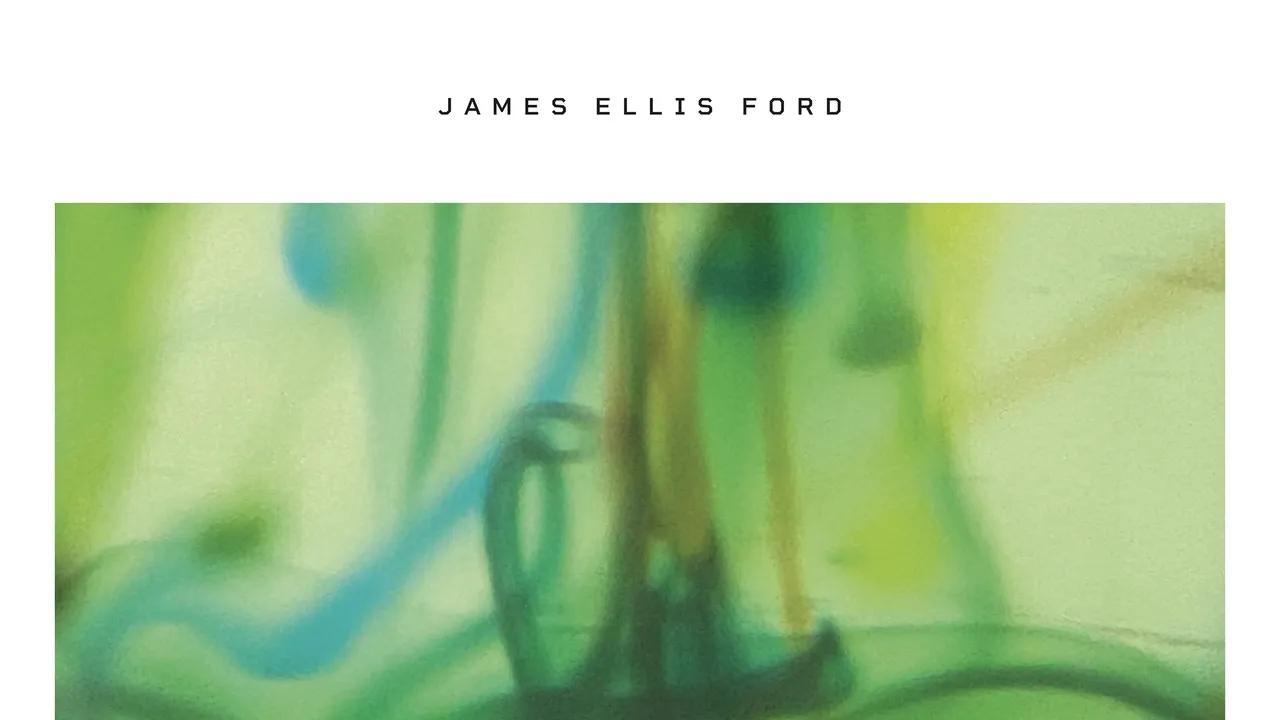
On Christmas Eve 2024, James Ellis Ford fell mysteriously ill. The chameleonic UK producer—who has carved out a reputation for being as skilled at reinvigorating known entities (Arctic Monkeys, Depeche Mode, Beth Gibbons) as buttressing new ones (The Last Dinner Party, Geese, Fontaines D.C.)—had built a quietly successful life in music since his early days in noughties psych-pop group Simian. But an intense fever led to a leukemia diagnosis with a 30% chance of survival. Through punishing rounds of chemotherapy, he began making music on his laptop, tinkering at a bedside table crammed with gear and singing softly into a mic to avoid disturbing other patients. Today, he is reportedly out of the woods and back to working with other artists from the wings. But the transcendent album he wrote, recorded and produced from his hospital bed, Lost in Another World, reveals him as a remarkable artist in his own right.
In its title and uncanny weightlessness, this luminous synth-pop record recalls Brian Eno’s Another Green World, likened by Robert Christgau to “a park on the moon.” Ford’s own sci-fi analogy, crooned near the record’s halfway point, is just as illustrative: “I fell into a parallel dimension.” Confronting death at 46 and witnessing loved ones prepare for a world without him, Ford uses these songs to become a disembodied voice, trapped in a strange, imagined world. And yet, he speaks with total clarity about the reality of his situation. An unguarded honesty suffuses everything: the restricted palette afforded by his bedside setup, the frailty of his voice, the unrestrained sweetness of his arrangements, and the childlike mix of wonder and candor in his lyrics. The result is an achingly poignant album about life at the very end.
No score yet, be the first to add.
From the opening bass note of “Overtones,” conjuring an astronaut’s first bounce across the moon, Ford’s music immerses us in his “other world”: a painless sci-fi landscape of pillowy synths and gently burbling arpeggios. But the fantasy also magnifies his reality, mixing the clinical, futuristic environs of the hospital with the drifting feeling that accompanies forced convalescence. Japanese Koto synths and New Wave piston hisses summon the sound of pop music in the ’80s, the decade of Ford’s childhood, but there’s a time-hopping mix of song styles underneath: “Silver Lining” takes its cue from ’50s doo-wop, while “The Ever After” is an acid-techno track. It all contributes to a sense of being untethered from reality, in a space where time is flattened rather than disappearing.
Ford’s greatest skill as a producer is that he adapts seamlessly to whatever style he’s working with, hence his ability to fit equally well with Beth Gibbons and Fat Dog. His 2023 debut album, The Hum, marked our first introduction to his charmingly odd musical voice, which struck a similar chord as his singing voice: prim yet tender, like a concerned butler. The tauter Lost in Another World amps up the sentiment and the eccentricity, while the sound of Ford’s voice itself helps strengthen his story of being caught between worlds. The ghostly vocal layering illustrates the speaker’s state of limbo, but there is enough frailty to signal the weakened man singing softly in his hospital bed, trying not to bother anyone. “Waving but nobody sees,” he sings, half-whispering the high note, on “People Just Don’t Know.” “There is a bubble for you, and a bubble made for me.”
