
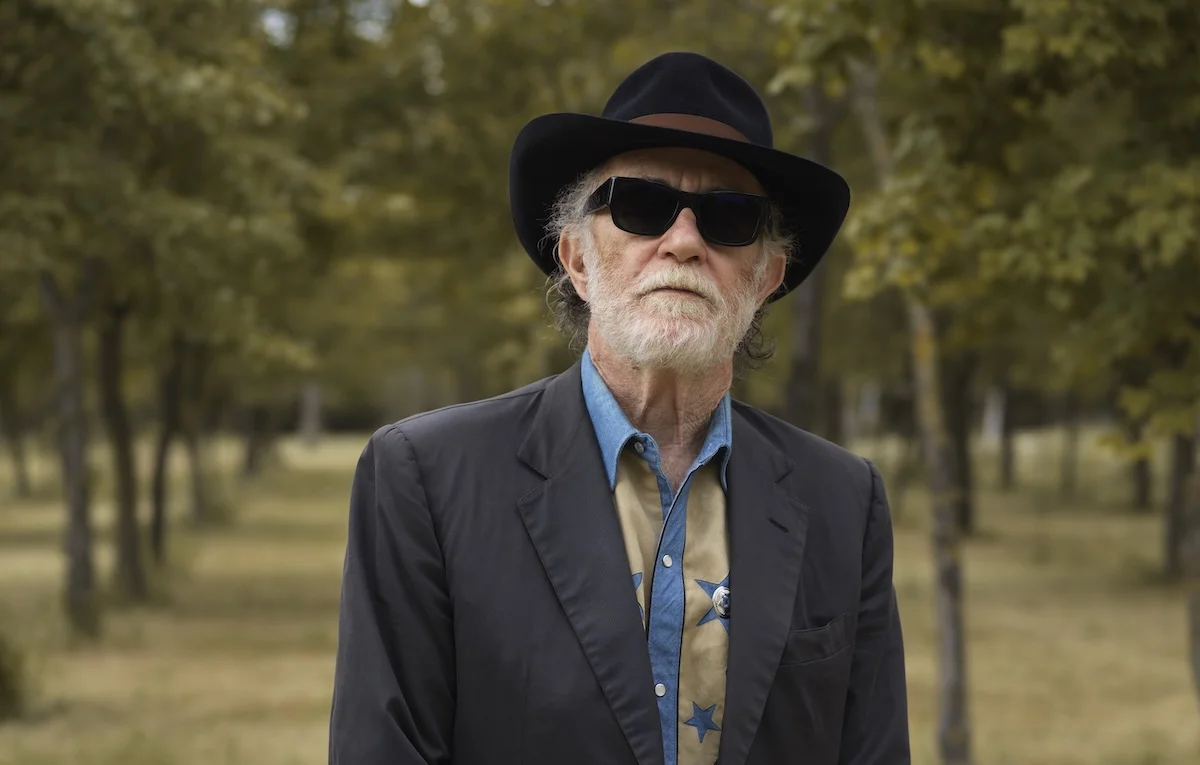
If you want to understand who Francesco De Gregori is today, look Nevergreen. Perfect strangersthe documentary that airs this evening on Rai 3. The film directed by Stefano Pistolini says nothing about the history, the biography of De Gregori's ideas and this is the point. He tells the story dryly residency at the small Out Off Theater in Milan where between October and November 2024 De Gregori held 20 concerts in front of 200 people at a time, eight rows of chairs, the sensation of being able to “touch” the music. With a few exceptions, in that theater De Gregori performed not his most famous songs, but those that English speakers call deep cutsthose who never became evergreenand therefore nevergreenthose he calls perfect unknowns even if they are such up to a certain point. You will hear yes Alice and the final waltz of Goodnight little flowerbut also Two gypsies, San Lorenzo, The chef from Salò.
With its dry style, the absence of face-to-face interviews with the protagonist, the lack of comments and “readings” of the spirit of the performances, Pistolini's film ends up being the portrait of a singer who wants to stay away from the ceremonies that taint certain concerts, from the idea of stardom and the cult of the artist, from any attempt at intellectualising music and its protagonists. Watch it to understand that for De Gregori music is first and foremost a profession that he practices outside the rhetoric of the masterpiece, of the leader of the people, of the venerable thinker who shows the way. This is exactly the idea that many have had of De Gregori for years, an idea that he has been trying to get out of our heads for some time by politely telling us “look, it's not me”.
Nevergreen it's not a great show, but it puts us in front of a question: is this an idea of music that we have put aside, buried under thousands of “iconic”, “event” and “sold out”? It is musical craftsmanship from which phenomenal songs emerge that are the center of everything and from which the author steps out. We don't have to know everything about him, who he is, who he hangs out with, what he thinks of the world. There are the songs, he knows how to do them well and we take those, with great satisfaction. Or, on the contrary, do we want artists who love emphasis, who express themselves even outside the perimeter of the song, who communicate continuously, who fill our timelines?
That's why watching Nevergreen perhaps we understand better where the words that De Gregori said about ten days ago during the press conference presenting the new dates of the residency which will be held in Rome and Milan between October and December. I transcribe them because they have not always been reported faithfully. Responding to a question from the journalist from QN Andrea Spinelli regarding Springsteen's “political” tour, De Gregori said that «I always feel a certain embarrassment when an entertainer who therefore has public visibility wants to take sides in such a clear and apodictic manner on international issues, because the world around us must be analyzed with extreme care. The proclamation thrown off a stage or even written in an appeal leaves me quite indifferent. Artists who want to raise awareness among their audience, but why? They are not sensitive enough [le persone] on their behalf? Does Springsteen need to tell him he's against the Trump administration? I do not believe. It's a role that I don't feel like sharing.”
Then responding to a question from Renato Tortarolo of 19th centurywho asked him to explain why it would be wrong to raise people's awareness and why such a position comes from someone who has always raised people's awareness, De Gregori said: «In spite of myself. If I do it, I do it through the songs I write, not through the things I say. I don't make proclamations because I don't feel superior to anyone to teach how to live, how to read a newspaper article or what position to take on Gaza or Israel or Iran. I don't feel capable of giving lessons, I have confused ideas too and it seems honest to me to have confused ideas. To quote Dylan, or rather to quote Whitman before Dylan: I contain multitudes. What does it mean I contain multitudes? That my thoughts are not totalitarian and therefore I don't feel capable of giving lessons to anyone and I don't even feel like taking them from anyone, especially from a singer or a man from the cinema. If I have to go to someone's lesson, perhaps I read a philosopher, not an entertainer. What qualifications does he have?
Nevergreen it is a small documentary which, however, demystifies the cult of the great singer-songwriter and, coincidentally, the broadcast on Rai 3 comes at the tail end of the debate on these words. It is clear that rhetoric, proclamations and claims have long been excluded from De Gregori's world. It's a precise effort he made and you can also tell from his tone Nevergreen. The only authority he recognizes for himself is that of the author of music and words. He's just a singer and there's nothing wrong with that. He's been saying it for years, many haven't listened to him or understood him and are surprised to hear him say that it's honest to be confused in this time, that he doesn't feel capable of giving lessons to anyone and those who do so with an out-of-scale emphasis create a hint of embarrassment for him. Maybe he's the perfect stranger.