
Dance-music producers are notorious for mellowing in middle age. With enough bangers under their belt and enough sunrises burned into habitually widened retinas, many ultimately decide it’s time to get presentable, responsible, grounded like a barefoot Rick Rubin sipping green tea. But what do you do if you were pretty mellow to begin with?
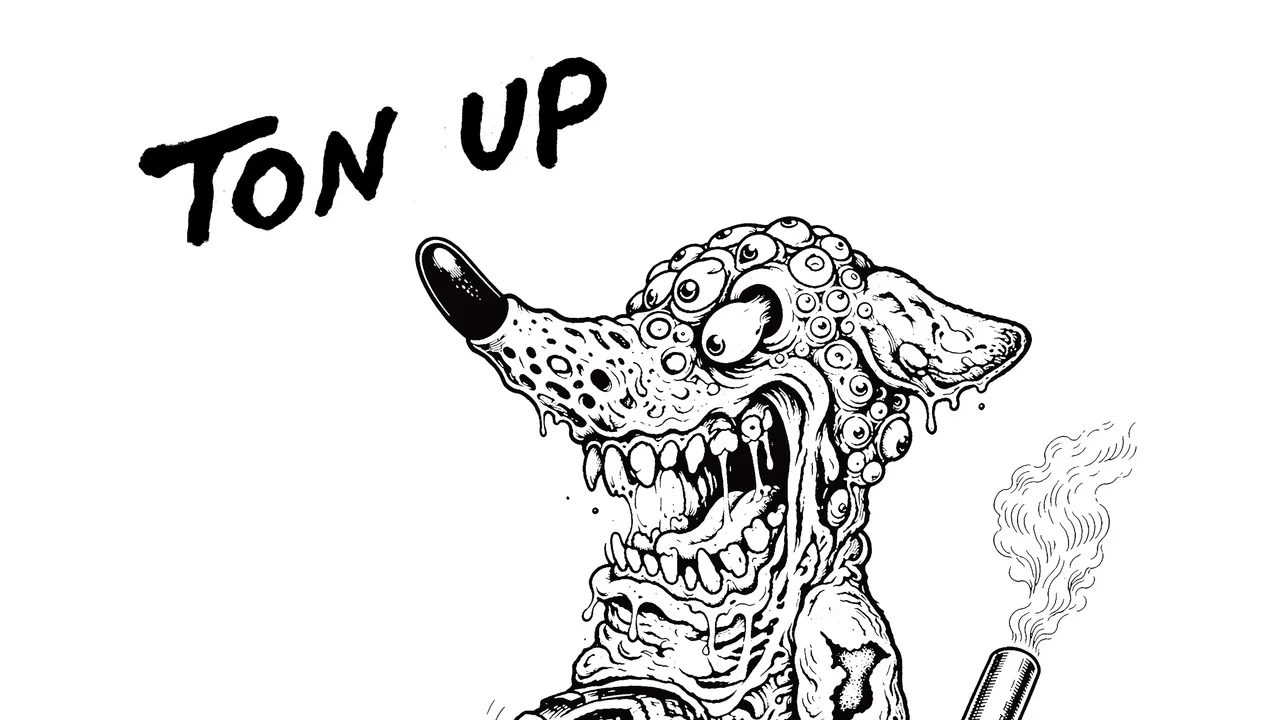
Since 2010, Gold Panda’s Derwin Dicker has been making opalescent, gossamer-tufted tracks in the tradition of Four Tet, J Dilla, and Susumu Yokota. And while he has cut loose on occasion, the emotional gravitas of his music—suffused in wistful sample flips and winsome harps and chimes—has always made it seem more grown up than your average comedown soundtrack. Gold Panda’s last album, 2022’s reflective The Work, was inspired by midlife strides in therapy and sobriety, which are already admirably adult themes. All that makes his new album, TON UP, a delightfully unexpected left turn. Rather than yet another nuanced collection of contemplative home listening, it’s a 35-minute grab bag of antic, automotive-themed house jams that hug their hairpin turns with the wanton precarity of a teenager’s first dirt bike: fast, cheap, and dangerously close to careening out of control.
No score yet, be the first to add.
Dicker has been in a clubby mood for a minute. Between 2019 and 2022 he released a string of late-night house jams under aliases like DJ Jenifa, Mole Map, and Grid Man, then teamed up with Fort Romeau on a pair of blissful, eyes-closed floor-fillers. The closest antecedent for the new album might be Gold Panda’s “Untitled 1000”/“500 Tool,” a pair of hard-charging DJ tools banged out on the MPC and released a year ago, just in time for silly season. There was practically nothing to them, just cut-up machine beats, scraps of hand percussion, and tension-stoking disco vamps; their genius lay in their bone-headed simplicity. On TON UP, Dicker takes the formula and runs with it: eight no-nonsense house jams, two downbeat interludes, zero pretension.
All eight club tracks follow the same basic template, one cribbed from Midwestern producers like Boo Williams and Paul Johnson, as well as early, ravey Daft Punk and, in particular, the take-no-prisoners cutups of Germany’s Soundhack. A one-bar snippet of skeletal drum programming—usually some no-frills configuration of kick and hi-hat, clap or tambourine optional—supplies the metronomic forward drive; on top Dicker layers loops of rollicking hand percussion, for the requisite looseness. Stubby bass hits and truncated piano licks supply the hooks, while overdriven string vamps amp up the drama, stabbing like lightning bolts. The mix runs almost dangerously hot, bruising kicks and red-lining riffs threatening to overwhelm the whole thing, and the sounds of revving engines at the beginning of most tracks underscore the sensation that we are gathered here today to burn rubber.
They’re all paced around 140 BPM, a speedy tempo for house music, and there’s little to distinguish them from one another aside from the particular texture of a given sample or the precise way each track’s rhythmic blocks nestle together. Development is limited to the way that Dicker rearranges his slim handful of elements to build tension, or maintain a ceaseless groove; he structures his tracks less like songs than miniature DJ sets, slapping the fader back and forth between parallel streams of rhythm.
