
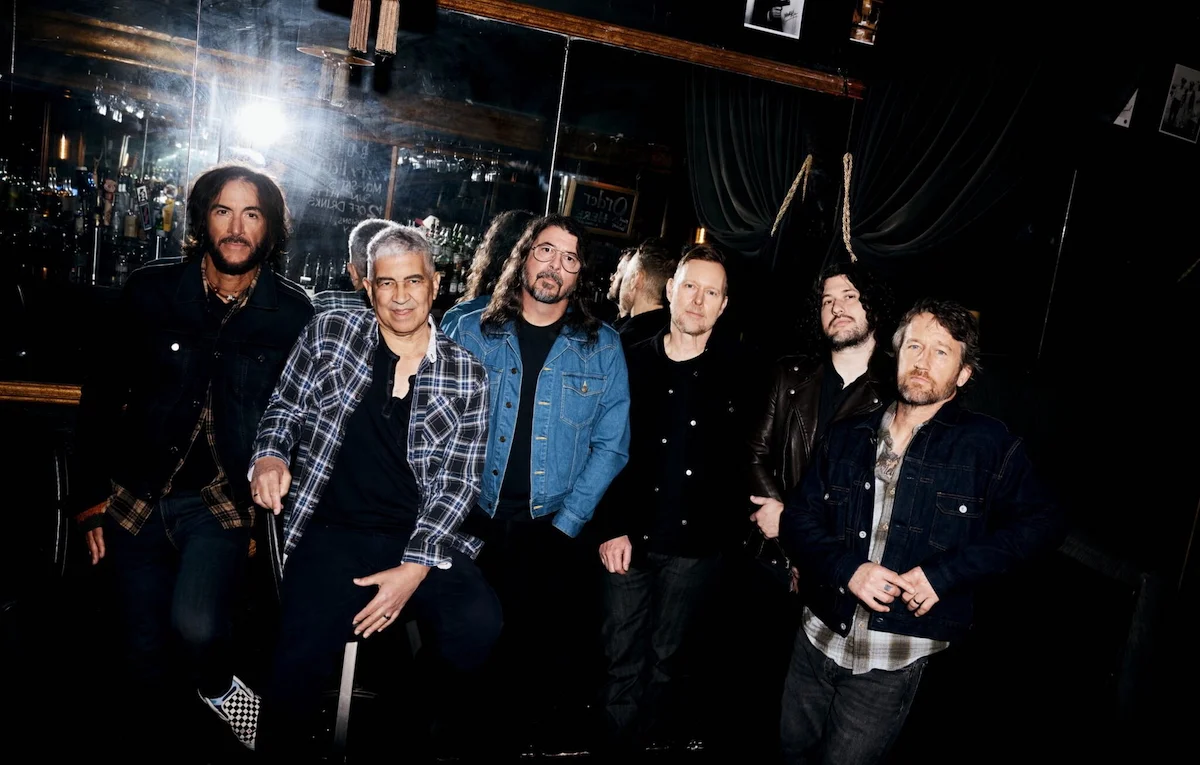
But Here We Are revolved around the mourning of the Foo Fighters, who had lost Taylor Hawkins a year earlier. “Someone said I'll never see your face again, part of me just can't believe it,” sang Dave Grohl in Under You. Listening to that record made by a band that went ahead despite everything, a band that made music for thirty years while maintaining a surprising mental balance, was from an emotional point of view the most intense experience one could have while listening to their discography. Until today.
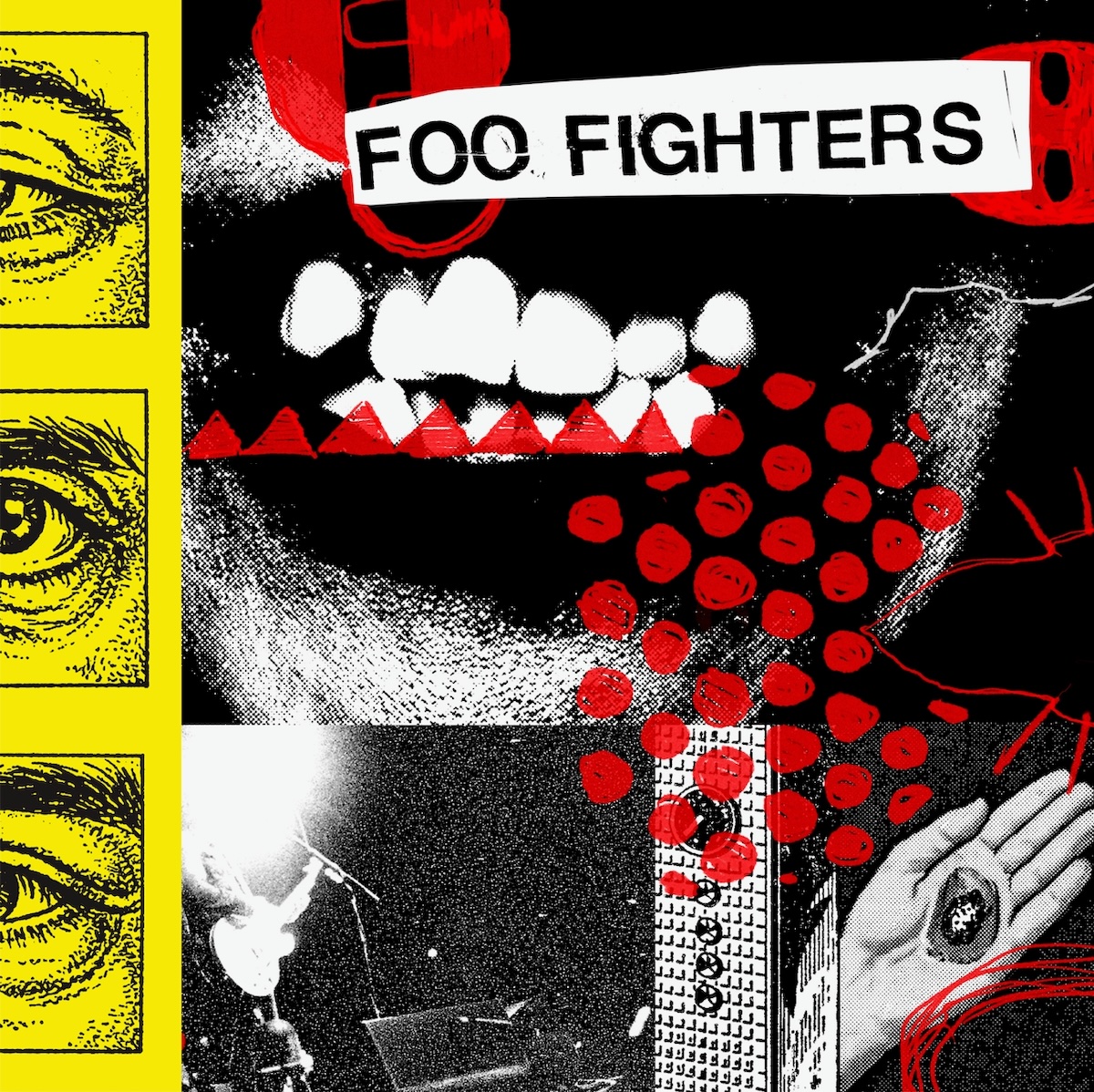
The Foo Fighters' twelfth album tells what happened next in their struggle with pain, with an eye towards the future. If the tone of voice used in But Here We Are he was often reflective, in Your Favorite Toy the group aims for a garage rock catharsis achieved with a burst of energy: locking yourself in a room, turning up the volume, letting yourself be guided by the noise.
In Caught in the Echo which opens the album Grohl repeats “Do I? Do I? Do I?” with his distorted voice taking on a vengeful blur. It's a question, yet it seems like an order, it's the indecision that becomes a call to arms. Caught it hits hard, the three guitars fit together in a punkish riff that could come from a Fugazi album, with the propulsive energy of the new drummer Ilan Rubin. The tension builds until the “Do I?” from drill sergeant Grohl they transform into a more direct question: “Who can save us now?”. It is the theme that the rocker addresses in many songs on the album.
“I'm a puddle on the ground,” Grohl sings on the pounding Windowbefore the guitars let in a little light and he lights up seeing the face of a person he loves. In Your Favorite Toythe song, takes on superficial distractions in a glam-grunge vortex, adding a pinch of rockstar wisdom. “Try not to suffocate in the sequins” is not a central phrase of the song, but it has a strong meaning in light of his personal story. Yet when he sings “Ain't it a shame, ain't it a shame?” in the Black Sabbath track If You Only Knewhe does so sarcastically, as if the idea of being slowed down by the past isn't an option, at least not for him.
It doesn't mean ghosts aren't scary anymore. The most touching piece on the album is Of All Peoplewith Grohl falling in with a drug dealer who once supplied rock's elite. The 80s Los Angeles punk-style riff has a melancholic quality and evokes the nihilism of that scene, but also the horror of seeing that guy still around: “You know you should be dead / But you're still alive”. It's a universal moral conundrum: why don't bad things often happen to people we consider evil, while good ones leave us too soon? It's deep stuff considering we're talking about two and a half minute power-pop. The answer to the question comes in Spit Shine in which Grohl emerges from the chaos of guitars and drums to remind us: “Don't forget, we're lucky if we make it out alive.”
Your Favorite Toy sometimes it is raw and sharp, sometimes decidedly dark, as in the melancholic reflection on fame Child Actor or in the pessimistic and vaguely political Amen, Caveman. With its 10 fast and irresistibly catchy songs, it flies by in an instant and begs to be listened to over and over again. Songs that start out surprisingly aggressive then open into big choruses. They are the work of those who firmly believe that alternative rock, the heroic, muscular and mainstream one, can save us from the advance of darkness.
The album ends with the strongest piece from an emotional point of view. Asking for a Friend it is a declaration of intent that starts as a power ballad and ends up launching towards a horizon of hope. “I'm looking for a reason to pray / Words I can use / To ease your worries,” Grohl sings. He found those words right here.
From Rolling Stone US.
Daniel D`Amico for SANREMO.FM
