
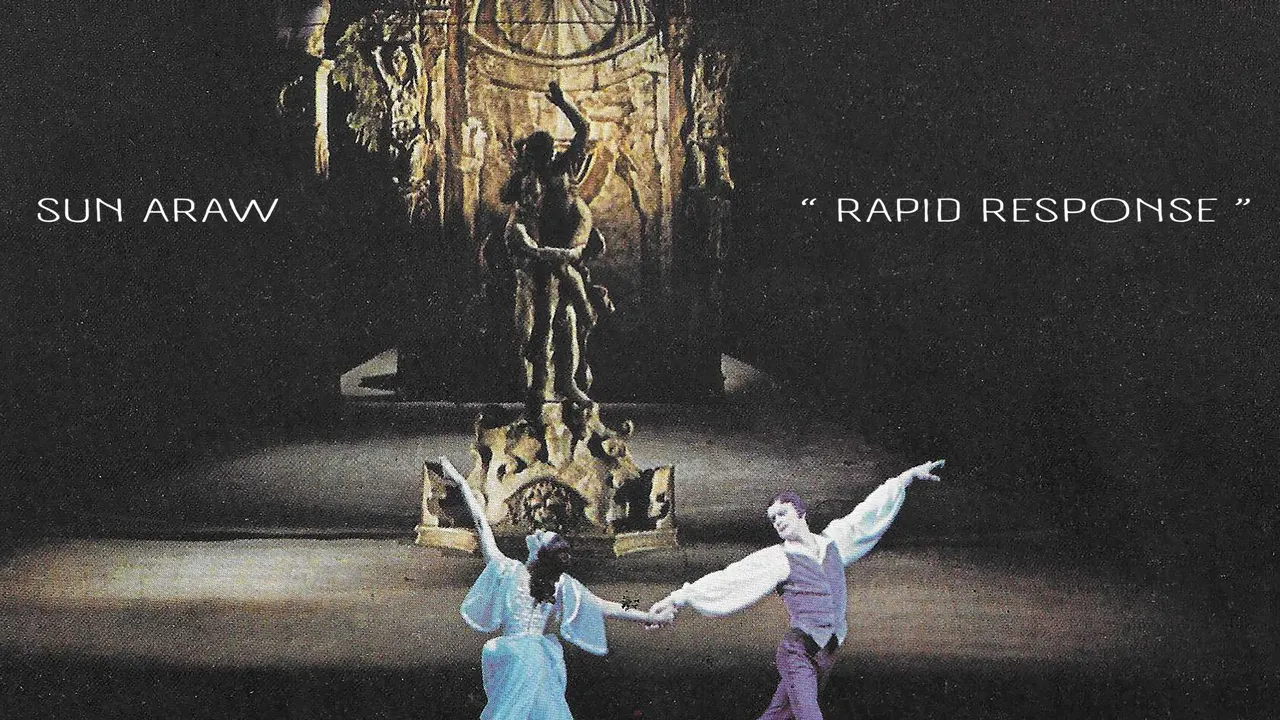
Two minutes and 30 seconds into “Proper,” the first track on Sun Araw’s new Rapid Response EP, Cameron Stallones is beside himself with glee. The L.A. jamnaut has long peppered his endless psych-rock sprawls with distant affirmations, sort of like a deeply sedated Lil Jon, as if he’s encouraging himself to keep the vibe going for another one or two or 10 minutes. But as he lands on an especially promising synth chord on “Proper,” he throws all decorum to the wind, sounding like someone getting high or tripping on acid for the first time and hearing an especially mind-blowing piece of music: “That’s the angels singing!”
It would seem that way. In a 1989 study, a Plymouth University professor named Joel D. Funk determined that the music of new age artists like Iasos and Jonn Serrie most matched what people who’d had near-death experiences heard in their head while they were dying. That’s exactly the vein Stallones taps on the three-song, half-hour Rapid Response, and while Sun Araw’s music has always pledged a deep fidelity to the dark and heady side of ’70s funk and rock, it’s also fluttered just faintly at the edge of the good-vibes universe that emerged once hippies got money and moved north of the Golden Gate Bridge. There’s a reason Stallones is equally comfortable collaborating with the Congos and Laraaji.
No score yet, be the first to add.
The new age revival is a little stale at this point, but Stallones can take any style and make it do flips. His 2017 album The Saddle of the Increate even anticipated the ambient-country wave and has aged remarkably well. And every moment of these 29 minutes is imbued with Stallones’ distinct sensibility, which beckons toward those apprehensive feelings you might’ve had looking at your weird uncle’s record collection as a kid. Even “Clear Tint Ether,” which ends the album with 12 minutes of comparatively tame and unadventurous synth music, features a pervasive effect that sounds like someone clomping on a wooden floor with a pair of hunting boots. Not the kind of thing you want to hear during a massage. And the guitar solo that barges in two-thirds of the way through is instantly evocative of Manuel Göttsching’s E2-E4, as neat a link between the ’70s and ’80s bliss-out cultures as you can conjure.
Daniel D`Amico for SANREMO.FM