
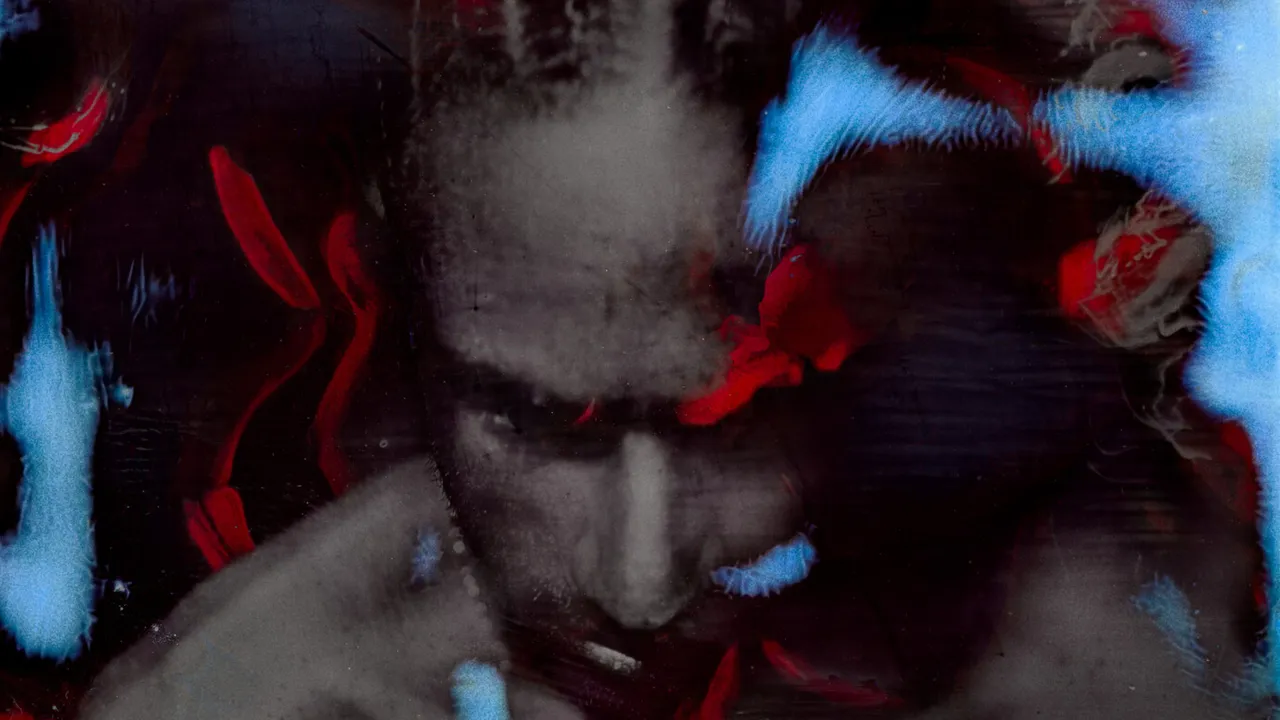
Shortly after moving to Baltimore three years ago, Ian Mugerwa, who records muted and experimental R&B under the name Dawuna, suffered a traumatic brain injury in a car accident. Effectively bedridden, he was unable to make music for a year. When he did sit down to write and record what would become African Family Laptop Musick, made in his earliest recovery phases and released this past summer, then-undiagnosed amnesia meant he was only able to commit fragments of it to memory.
Where that release was a refashioning of the creative groove, a semi-conscious catharsis, Love’s Arp, his fourth album, is a more intentional and considered record—one almost impossible in its ambition. It is a self-conscious attempt to place himself on a continuum of Black music, from spirituals through to R&B, and to present a roadmap of future-soul marked with what he calls “diasporic twists.” But for all of its nods to diasporic traditions and explicit references to wildly extroverted music from history, Dawuna’s output since that accident is often remarkably quiet, as though all that history is being filtered through a thick membrane of cerebrospinal fluid.
No score yet, be the first to add.
It’s only on the album’s fourth song, “Love Jaunt,” that the skin of an acoustic snare drum spits through the mix, and it’s another half-hour after that before it happens again. For all that the first single “Love’s Ekongo,” with its beautifully arpeggiated thumb harp, suggests space and light, “Love Wants a Family,” the following track, falls back inside. The percussion on “True” is so compressed that it sounds industrial. It’s music made at and for midnight, a rhythm still thrumming through the heart and resisting sleep. Dawuna’s voice croaks and crackles on “Love Wants a Family” and “Love Is…” as though he’s in a reverie.
He hasn’t always sounded so distant. On the deeply melancholy soul song “Govinda P” from 2024’s Naya, he sounded crystaline, voice cutting through the spartan arrangement. On the first side of Love’s Arp, the arrangement wins out over his lead vocals. His backing vocals—particularly the wordless and monastic lines that close out “Love Wants a Family”—remain prominent, Dawuna’s voice succumbing to itself. In these choices, it’s easy to hear the legacy of gospel music, the all-encompassing choirs, as many voices (even from one man) consume a soloist. But again, it seems to have been buried. If artists like Pastor T.L. Barrett were channeling the voice of God directly through human lungs, Dawuna is hearing the sound of their lungs through layers of tape fuzz and revoicing it in a dimly lit room.