
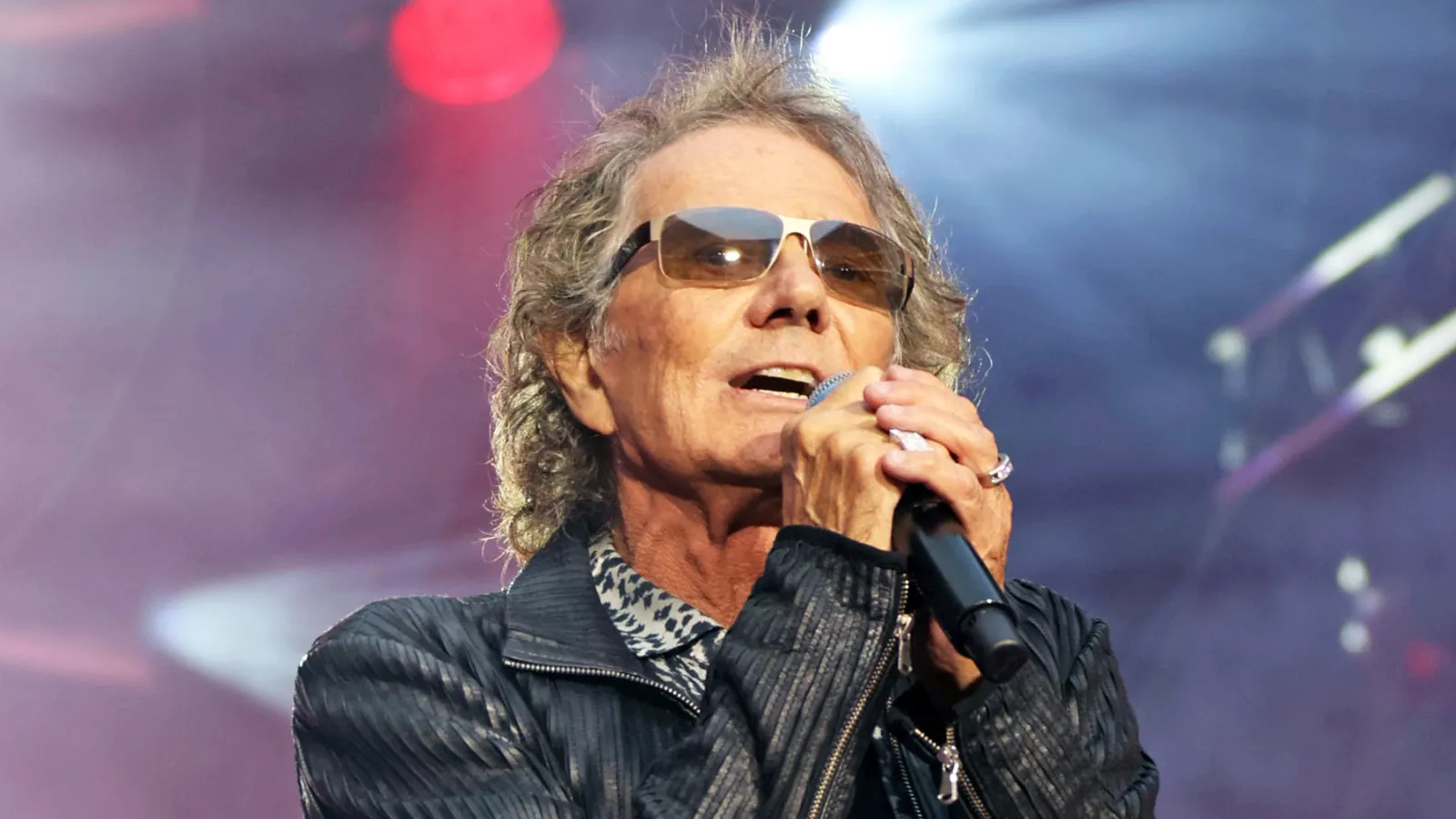
Rolling Stone‘s interview series “Last Man Standing” features long-form conversations between senior writer Andy Greene and musicians who are the last remaining members of iconic bands. In some cases, they are the only classic-era member in the current touring lineup. In others, they are the only ones still alive. In either case, the task of keeping the torch lit has fallen onto their shoulders, whether they wanted that responsibility or not.
The gradual evolution of the 1960s psychedelic group Jefferson Airplane into the 1970s arena-rock band Jefferson Starship, 1980s pop hitmakers Starship, back to Jefferson Airplane for a hot minute in 1989, and finally two competing entities — Starship Featuring Mickey Thomas and Jefferson Starship — is a story so long and complex it would require a PowerPoint presentation to just go over the basics. And that’s not even delving into the six-decade saga of the Jefferson Airplane spinoff band Hot Tuna.
Most classic-rock fans know at least the backstory of Jefferson Airplane in the 1960s (“White Rabbit,” “Somebody to Love,” Woodstock, Altamont), but they may not realize the group had significantly more commercial success in the 1980s as Starship thanks to mega-hits “We Built This City,” “Sara,” and “Nothing’s Gonna Stop Us Now.”
That doesn’t mean it’s been an easy ride for Starship frontman Mickey Thomas, the voice behind all of their 1980s hits and the 1979 classic “Jane.” Co-lead singer Grace Slick quit the group at the absolute peak of their popularity in 1988, leaving a void that’s been difficult to fill. And once the alt-rock revolution of the early Nineties dawned, Starship became an easy punchline for many critics.
The backlash peaked in 2004 when Blender labeled “We Built This City” the single worst song of all time. “It purports to be anti-commercial but reeks of ’80s corporate-rock commercialism,” said Blender editor Craig Marks. “It’s a real reflection of what practically killed rock music in the ’80s.”
“That Blender list came out 15 years after the song had come out,” Thomas, 76, says today. “So initially there was not all that negativity attached to it. But the mid-Eighties was a time in music of change, a segue between analog and digital. And there were a lot of people that didn’t want to go into that digital world. ‘We Built This City’ sort of became the poster child of what a lot of people didn’t like about the way music was changing in the Eighties, that whole sound.”
Forty-one years after “We Built This City” hit Number One, and 22 years after Blender denigrated it, Mickey Thomas makes a very nice living for himself taking “that whole sound” to concert venues all across America as the leader of a reconstituted Starship. They play not only the big Starship hits of the 1980s, but also the Jefferson Airplane classics “White Rabbit” and “Somebody to Love” and the Jefferson Starship tunes “Find Your Way Back” and “Layin’ It on the Line.”
Also on the road is Jefferson Starship, which includes 88-year-old singer David Freiberg, who was a core member of the evolving band from 1974 and 1984, and early Eighties drummer Donny Baldwin, who hasn’t spoken with Thomas since they allegedly had a violent altercation in 1989. (Much more on this later.)
They play a very similar set of vintage hits by every version of the band, including “We Built This City.” “You can perform any song live if you want to,” says Thomas. “But when they use the songs from Starship with my voice in it to promote their shows, that gets under my skin a little bit. It’s not to the point to where I really want to get down that road of legal action because you know how that goes. Nobody ever wins. I’ve tried to just say, ‘I know you’re going to play the songs live, but please just keep them out of the radio spots.’”
Radio was very important to Thomas as a kid in Georgia back in the 1950s, just as rock was starting to take over the airwaves. The first record he latched onto was James Brown’s Live at the Apollo, but everything changed for him (and just about every kid his age) when the Beatles hit in early 1964. “Beatlemania took over my life,” he says. “I was actually fortunate enough to see the Beatles perform live in 1965 at Atlanta Stadium. The main thing I remember is that the girls were screaming much louder than the Beatles were able to play because the sound was so rudimentary at that point in time. And it was like everything you see on the black and white newsreels from that time, it was just complete pandemonium.
The experience caused a 15-year-old Thomas to form his first band with friends from school, hoping they could find a way to make girls scream for them. “I wasn’t on the football team,” he says, “so we had to do something to get some attention.”
But his high-school band couldn’t quite compete with another local group consisting of two brothers with the last name Allman. “I remember their first big national tour where they did some shows with the Dead at the Fillmore,” Thomas says. “When they came back from that tour to Macon, the big deal around town was that the Allman Brothers were bringing back some Owsley Stanley acid from San Francisco. Everyone wanted to get their hands on it.”
Thinking music was little more than a fun lark, Thomas enrolled at Valdosta State College in South Georgia and planned on getting a degree in history before heading to law school. But in December 1971, totally out of the blue, he got a call from gospel singer Gideon Daniels of the group Gideon and Power.
“He came down south looking for a white male Southern tenor to be in his band to round out the image that he was going for,” says Thomas. “It was not just musically, but it was very important to Gideon to have sort of a multiracial look to his band, to his group. There was an Italian piano player, there was a Filipino singer, a Japanese singer, and so he wanted a white male Southern tenor, and that was his mission. He came down south looking for that guy, and he found me.”
Thomas passed the audition, and soon found himself moving out to California at the tender age of 21, without much of a plan and knowing almost no one. “It was frightening,” he says. “When I told my parents what I was going to do, my dad had a fit. He was like, ‘You’re going to do what?!’”
His brief time in Gideon and Power was like a musical boot camp that allowed Thomas to discover his singing voice. It also led directly to a position as the background vocalist in Elvin Bishop’s band, and a chance to sing lead on an enormous hit, “Fooled Around and Fell in Love,” that forever altered the trajectory of his life, and put him on the path to Jefferson Starship.
Most people don’t realize you actually sing lead on “Fooled Around and Fell in Love.” How did that happen?
When I was still with Gideon, in early ’73 probably, we would hang out with Elvin, go jam at his shows, and then sometimes the party would continue back to Elvin’s apartment in San Francisco until the wee hours of the morning, just sitting around the living room, jamming and singing songs and having fun.
One night, he played a real rough version of “Fooled Around and Fell in Love” for me then, and it kind of stuck in my head. But he put it on the shelf and never did anything with it. So now cut to 1975, two-and-a-half years later, we’re in Miami Beach recording the Struttin’ My Stuff album with the great Bill Szymczyk producing, and we pretty much thought we had the album finished, and Szymczyk said, “Everything’s good, but I think we’re missing a piece. We need something to complete the picture here, something of maybe a little bit of a different color.”
So I remember “Fooled Around and Fell in Love,” and I brought it up to Elvin and he goes, “Oh yeah, that old thing,” in his inimitable way, “That old dog,” or something like that. So we played for Szymczyk, and he really liked it. And he said, “That’s it. This song’s got something. Let’s cut it.”
As we were cutting the track, Elvin was trying to sing it, but his voice just obviously didn’t seem to suit the mood of the song and the lyrics. And we wanted it to have a bit of a tender side to it, which was not necessarily Elvin’s forte. So Szymczyk said, “Well, why don’t you give it a shot, Mickey?” And of course, I was champing at the bit to give it a shot because for years, since I first heard it, I just had this special place in my heart for this song. I can’t even explain what it was, but I just knew there was a connection between my voice and this song “Fooled Around and Fell in Love,” and sure enough, it happened.
The urban myth was that we cut the lead vocal in one take, but it was actually two. The first part of the song leading up to the solo is one take, and then the vocal after the solo is the second take.
The song became this enormous hit, but everyone naturally assumed Elvin sang that. That must have been weird for you.
Yeah, it was a little strange, but looking back on it, I think it was almost a blessing in disguise because it got to be a real story in the business. The song was a mega-hit, but especially people in the business knew, “Well, that’s not Elvin Bishop singing.”
So everybody wanted to solve the mystery. “Who is the mystery voice behind Elvin Bishop’s mega-hit?” I think in a lot of ways that led a lot of people to discover me who maybe otherwise wouldn’t have.
I remember Rolling Stone back at that point in time, they had something called the Red Suspender Awards. They would just make up these little odd categories and give people the Red Suspender Awards, and you would actually get a pair of red suspenders from Rolling Stone. And so my Red Suspender Award was “The Invisible Man.”
How was this handled on tour? Did you take center stage when it was time to do the song?
Yeah, I mean, I was singing other songs as well in the set. The original intent when Elvin brought me into the band was not to be strictly a background vocalist, but to do some leads on my own and to share some leads with Elvin, we would do some duets on things. I was already doing a few leads, so we would just trade off and share leads during the set.
Not long after this, you made the solo album As Long As You Love Me.
That is a terrible title. I wish I could have a do-over on that one. I think the album’s pretty good. I would’ve just probably picked a different title. I had this female vocalist that actually sang on “Fooled Around and Fell in Love” with me, a gal named Reni Slais. We were recording the album in Los Angeles, and in passing mentioned to her that, “Man, if I could just have Steve Cropper play on one cut, it would be a dream come true for me.” And she’s like, “Well, I know Steve from Memphis. I could call him.” And she called him up and he goes, “Oh yeah, sure. I’d love to get involved.” So he not only comes down to play on the track, but he brings Duck Dunn and Booker T. with him.
You basically had Booker T. and the MGs.
Yeah, except for the drummer, Al [Jackson Jr.], who had already passed away at that point in time. So Booker T. and the MGs cut half the tracks on my first solo album, and they enhanced it with these two hot, young session cats at that point in time in L.A. who were really, I think maybe 20, 21 years old, David Paich and Jeff Porcaro.
Wow. Toto.
Yeah. That was a hell of a band.
Moving onto the next chapter of your career, were you a fan of Jefferson Airplane in the 1960s?
Just the hits. I remember in college listening to “White Rabbit” and “Somebody to Love,” and I was aware of those songs because they were pretty stoner songs. When I was in college, everybody was getting stoned. But I couldn’t say I was a real fan of the Jefferson Airplane. And then of course, neither the Jefferson Starship either.
How did you wind up joining in the late 1970s?
I left the Elvin Bishop Band in 1978. I was getting ready to go back to Miami again to record my second solo album with Bill Szymczyk, and put together another great band for me on that one. So I get one of these phone calls out of the blue. It’s Paul Kantner saying that…and this is early 1979, so Grace [Slick] and Marty [Balin] obviously had both left the band. He said, “We want to continue on.” Paul and [guitarist] Craig [Chaquico], [bassist] Pete Sears, David Freiberg. And they had just brought in Aynsley Dunbar on drums. “You live right here in the Bay Area, so maybe you’d be interested in coming by. Let’s see how it goes, get to know each other, jam a little bit, smoke a joint.”
I was kind of hesitant at first, because as I mentioned, I was getting ready to go do my solo album, and I’m like, “I’m just coming out of the Elvin Bishop Band and R&B and gospel and soul is my thing, and how’s that going to fit into the Jefferson Starship?”
All I knew about them too was the singles, the Marty songs like “Count on Me” and “Runaway” and “Miracles,” and I didn’t quite see how this was going to fit, but they called me a few times, so I thought, “Well, I should at least go over and meet them and see what they got to say.”
So I did. We’re hanging out in Paul Kantner’s living room, and we’re talking, getting to know each other, and they said, “Here’s where we’re at.” They started playing me a rough version of “Jane,” which was totally not what I expected to hear from the Jefferson Starship. It was so different and so much of a harder edge and real strong, big chords. I’m like, “Wow, I wasn’t expecting this.” So I started singing along a little bit, jamming a little bit on “Jane,” and in my back of my mind, I’m starting to think, “This might work. This is so crazy enough to where we might actually have something here.” The next thing I know, we’re in the studio recording.
You missed being a part of the Star Wars Holiday Special by just a few months.
That’s true, though that was probably a good thing. But we did play a party a few years after that for Steve Wozniak. I think it was the launch of one of the first big computers, one of the Macs or something, probably ’82, ’83. He actually gave me a crystal apple, Wozniak when we played that show. But anyway, I digress.
What do you remember about recording “Jane?”
“Jane” was a song of firsts. It was the first song I played with the band and the first song we really rehearsed and worked up. It was the first song we cut for the Freedom at Point Zero album, and it was the first single from the album, and it debuted at Number One on the rock track.
It had a big second life when it was used in the opening of the Wet Hot American Summer movie and TV show. Did you see that movie?
No, I honestly haven’t, but I’m aware of it.
It has an enormous cult following. It’s where many people my age first heard that song.
I should watch that. It was also in Cocaine Bear. And somebody told me, I don’t watch wrestling or anything, but somebody told me there’s some big time wrestler [Orange Cassidy] that uses it as his walk-in music.
It was sort of a weird time because punk had just happened. A lot of the older bands were being pushed out, and without Marty and Grace and the band, I’m sure people were skeptical that there could be a future for Jefferson Starship in the late Seventies.
Yeah, I’m very sure. I knew it was going to be tough, especially going on tour, going onstage with no Marty and no Grace. And me standing up there and people were like, “Who the hell is this guy?” It’s one of the reasons we named the first album Freedom at Point Zero because we knew we were back at square one starting all over again.
What was it like at the first few shows when you had to play songs like “Somebody to Love” without Grace?
It was kind of tough, but we were pretty smart in the sense that we didn’t try to bite off more than we could chew originally. The first couple of tours, we played smaller places, little theaters and stuff, as if we were kind of an up-and-coming band with the first album, just trying to get a foot in the door. I think because of that, the crowd was more receptive and responsive. I don’t recall any extreme negativism from the audience during the first tour.
How did Grace make her way back to the band after that tour?
The second album I did with Jefferson Starship was Modern Times. We were towards the end of recording that album, and Grace started coming by and hanging out, because obviously she and Paul still remain close, and they share a daughter [China Kantner] together, so they were always going to be connected in that sense.
She’d come by the studio, and one day she said, “Man, you guys look like you’re having fun. It wasn’t like this when I was in the band.” It was like a soap opera. Everybody was fighting and everybody hated each other. The band literally crashed and burned in Germany with the riot at Loreley. So she said, “Boy, this feels different.” And she sort of jokingly said something like, “Hey, do you guys want a female background vocalist in the band?”
We got a chuckle out of that. The last song we recorded for Modern Times was a song called “Stranger,” and we were just getting ready to do the overdubs and vocals on that, and Grace happened to be in the studio, and we said, “Hey, why don’t we make this one a duet and let Mickey and Grace sing it together?”
That was the first time we ever sang together, in the studio for that song. And we realized that our voices had a real interesting blend to them. Because when we would sing in unison, it was like it created a third voice. John and Paul always had that, I think. They used to sing a lot of unison lead vocals, and then of course we did some harmonies together too, but that went really well, and we just really enjoyed singing together. She was at a real positive place in her life.
The fans must have loved seeing her back on that tour.
Oh yeah. That was the biggest part of having Grace back. Obviously that’s going to elevate the live show.
This was also the start of the MTV era. Music was changing very quickly
Yes. People used to say back in the Seventies and early Eighties: “What’s going to be the next Beatles? Who’s going to be the next Beatles?” And the next Beatles turned out to be MTV.
We were fortunate, very fortunate enough that our manager, Bill Thompson, was very good friends with Les Garland, who was one of the founders of MTV. So that kind of helped us get a little extra foot in the door when it came to getting videos placed on MTV.
There wasn’t a big hit on Winds of Change, but it was still moving the band forward.
“Be My Lady” I guess was probably the biggest hit from that. Not that it was a hit. I think it might’ve made the mid-twenties or something on the charts.
From everything I’ve read, Paul started to get very frustrated around this time.
Yeah, he started to get frustrated that he wasn’t getting his fair share of songs and space on the albums. But really the straw that broke the camel’s back was during Nuclear Furniture [album] when we were back working again with Ron Nevison, who was another great producer. And we felt that we had some interesting songwriters in the band. Paul kind of had his style, his sort of sci-fi, protest, futuristic revolution, whatever you want to call it sound. Pete Sears had some interesting songs, but nobody wrote anything that would be considered a hit. And radio was changing then. It was very important to be able to have a presence on what was called CHR Radio, which was contemporary hits radio, the Hot 100. So we didn’t feel like we had that.
Nevison suggested a song that was written by a guy named Peter Wolf called “No Way Out.” And so he brought Peter in to play on it and sort of co-produce it. That song that was the first single. And it did pretty well for us. There was a very weird, interesting video that we did of that song. And so the rest of us then started thinking maybe we should be a little more open to some outside writers if we really want to have a presence on the Billboard Hot 100 radio.
Paul was adamantly opposed to that, to having any more outside writers. So he started making threats. And while we were actually in the process of recording the Nuclear Furniture album, he stole the tapes. He went over to the studio on a Sunday afternoon or something when we weren’t working. He went in and actually stole, at that point in time, two inch log tape. And so it got to be a little hairy there.
I’m sure for Paul, who came of age in the 1960s, the idea that a band wrote their own sings was instilled pretty deeply within him. Using outsiders surely felt very inauthentic.
Absolutely. I totally get that. And obviously a lot of bands who were evolving at the same time as us just happened to have better songwriters in the band. Journey had great songwriters. A lot of others did. And I really think that we probably could have found a compromise there with Paul, but Paul was not the kind of guy that was always prone to compromise. He was very confrontational and he would be the first to tell you that he was like that. There seemed to be no compromise in sight. But I get it. I see his point of view though. I get where he’s coming from too.
He also had huge success at a very young age. That surely also made it less likely he’d be open to this way of thinking.
And he felt that music was more about just getting played on the radio too. It was more than hit singles. The music had to represent more than that. It had to stand for something bigger, more substantive. And I appreciate that too. But if we wanted to have any success or to continue as a band, I think we needed to have both things.
How did David Freiberg feel about all this?
David was a guy who would just kind of go with the flow. A very easygoing, one of the nicest people you ever want to meet, David. And Grace came from the same place Paul was coming from in the Sixties, but she was onboard obviously with wanting to change and progress and try new things.
We knew that the next album we wanted to have Peter Wolf involved more. He ended up co-producing the whole album. And she was onboard with moving forward because we were segueing from the analog age into the digital age. The digital age opened up a lot of opportunities for us as far as the recording process with all these new computers and machines and gadgets and sequences and samples and all the things we could play with and use to our benefit.
Do you remember first hearing “We Built This City?”
Yeah, it was sent to me as a demo from my good friend Martin Page, who would send me a lot of songs back at that point in time, and I loved his songwriting. He did a couple of songs with Bernie Taupin. He sent me that one. And when I first heard it, I thought, this is real interesting little song. It’s kind of quirky. I love the lyric. I mean it’s Bernie Taupin, first of all, so it’s got to be good. And I thought that was one of his better lyrics ever.
The thing was, it didn’t have a chorus. The demo that I received, it went from the part where it goes “Don’t you remember we built this city. We built this city on rock & roll,” and then immediately back to the second verse. So there was none of that, [sings] “We built this city!” That didn’t exist.
I love the lyrics, because there was so much going on with it lyrically. There was a lot of different songs to me in the lyric of “We Built This City.” And so I brought it in and the producers, Peter and Dennis Lambert, they were like, “Yeah, it’s an interesting little song, but there’s no chorus.” I said, “I hadn’t really thought about that.” But I mean, “Jane” didn’t have a chorus. A lot of songs don’t have a chorus. So they went out into the studio. We sat at the piano and came up with the anthemic chorus, which became the double-edged sword of the song.
In what sense?
Well, because that’s what made it a gigantic hit, but it’s also the part that alienates people a lot, polarizes people, purists and so.
People to this day are confused by the line “Marconi plays the mamba.”
It’s Bernie again. Obviously we know who [radio inventor Guglielmo] Marconi is. Mamba, as we all know, is a snake in Africa, a poisonous snake that lives in the trees. And I think maybe he meant to say mambo.
The night that the song went Number One, we were touring, we were in Kalamazoo, Michigan. And so we’re calling everybody we know because we just got the Number One song in Billboard and we’re pretty thrilled. And so I said, “Let’s call Bernie.” I get on the phone with Bernie and say, “Now, Bernie, now more than ever, everybody’s going to be asking me, what does ‘Marconi plays the mamba’ mean?” And he didn’t miss a beat. He goes, “I have no fucking idea. It sounds good to me.” It reminded me of something that John Lennon said once, “Sound over sensibility.”
I spoke to Bernie about the song a bunch of years back. He said he wrote it about rock clubs closing in Los Angeles.
Yeah. That’s obviously a part of it. It was about the people trying to tell you where to go, what to do, what to listen to, what to wear. And they were closing a lot of the classic clubs.
That gets us back to that problem of the chorus, because it’s “We built this city on rock & roll,” and everyone then started assuming that the “we” must be Starship and the city must be San Francisco, which obviously that was never the case. I didn’t have any particular place in mind, any particular city. It was more of a concept to me. It didn’t have anything to do with bricks and mortar and walls and stones. It just had to do with communities of people coming together. To me, Woodstock was a city. That’s the kind of city I was thinking of.
I think the backlash to the song came in part because the group began as Jefferson Airplane. That meant a certain thing to many older fans.
That is exactly right, because the stakes were higher for Starship, because the roots of the band run back into those romantic times of the Sixties that people still clung to: “Hey, we’re going to change the world. We’re really going to do it.” And hey, I was there. I mean, I remember that. I was part of that too, but things change.
How did “Sara” happen?
That was written by Peter Wolf who was producing the album. And he called me on the phone first and he’s Austrian, so he said, “My dear Mickey, I have a fantastic song for you. It is going to be so great. You’re going to love it.” And I’m like, “Okay, great. I can’t wait.”
He played the demo for me, and at first I’m kind of like, “I don’t know. It doesn’t kill me.” I was married at the time to Sara, and the song is obviously a breakup song, it’s a sad song, and so it didn’t seem like it. He said, “No, I just wanted to write something with Sara’s name in it. It’s not about you,” or anything like that. I go, “Okay, I get it.”
So we recorded it. The recording process went really well on it. The song’s got a lot of atmospheric things to it that were really nice, a lot of Peter Wolf’s real intricate voicings and chords. A lot of my friends, musician friends in L.A., when they first heard it, they’d call me, “Wow, how’d you get that sound? What is that? What chord is that?” And I’m like, “I don’t know. I’m just a singer.”
But it was initially during the process of making Hoopla, we always thought “Sara” would be the first single. That was kind of what was in our heads during the process of making it. Then we finished the album, and this fantastic A&R guy from RCA, a guy named Paul Atkinson, who was originally the guitarist in the Zombies, so he had a real great ear for music and a good sensibility. He came as we were playing the album, “We Built This City” plays, and he immediately goes, “That’s your single.” I went, “What?” Because I had never heard it as a single, and he goes, “Absolutely. That’s your first single.” I’m like, “Well, you know more than we do.” He was right.
Having two Number One hits in a row must have been surreal.
It was surreal. A lot of people, a lot of great artists go their whole career and never get one. Here we come out with back to backs.
You were once again in a weird place where your voice is all over the radio, but still many people don’t know your name.
Yeah. A lot of bands from the Eighties were what they call “faceless bands,” and that seems to have worked out pretty well for Foreigner. They don’t have an original member, but a lot of people either don’t know or just don’t care. But the videos helped a lot though with the identity because our videos are very popular and of course then comes “Nothing’s Gonna Stop Us Now,” which is even bigger than the other two.
Tell me how that one came about.
We’re in the middle of a tour after the success of “City” and “Sara” and the album, and Paul Atkinson sends me this little demo of this song and he says, “They might want to use this in a movie. What do you think? Are you guys interested?”
I thought it was an interesting change of pace musically for us because it had a little bit of an R&B feel to it and a good vibe. The demo was just a male voice, but I thought the way the song is structured and the way the lyric unfolds, it could be a great male/female duet for Grace and me.
I was thinking about it and I kind of flippantly said to Atkinson, because one of the most popular producers at that point in time was Narada Michael Walden who was producing Whitney Houston, Aretha. I mean, he kind of had cornered the whole pop R&B market. So I flippantly said, “We’ll do it, but only if Narada Michael Walden produces it,” never dreaming that he would actually say yeah. But they approached him with it and he goes, “Yeah, sure, I’ll do it.”
So now Narada Michael Walden’s onboard. He was going to put down a little basic track, because we’re on the road and we got about a three-day break coming up where we’re going to be home. We could go in the studio and do the song, but he wanted to have a bed down already, so we have the right key to overdub to and all that. So he said, “We got to figure out the key.” So we arranged a time, no cell phones, to pull the tour bus over to the side of the road so I could get into a phone booth and call Narada. And then we arranged it. I sang to him over the phone, he played the piano, and we figured out what key to cut it in over the phone.
That’s crazy.
Yeah. So then we get home for three days, we go in the studio, we knock it out, probably the quickest thing we’ve ever recorded from start to finish, and it became gigantic.
What’s funny is the movie it was in, Mannequin, is a pretty silly movie that’s been half-forgotten.
It is kind of a cult film. People all the time tell me how much they love that stupid little movie. And it’s still obviously on some of the cable channels.
The group was never bigger than at this moment. Why did Grace walk away?
Well, what she said to me was that she was just tired of being Grace Slick, and I kind of get that. She was always in more demand than the rest of us as far as publicity and TV shows and radio interviews and this and that and the other thing. She’s an icon. She said to me, “My favorite time of the day is after the show when I get back to the hotel room and I can just take off my makeup and take off all my clothes and just let everything hang out and just be relaxed.” And I said, “Oh, I understand.”
So I think that was part of it. I also think that after the success of “Nothing’s Gonna Stop Us Now,” the record company and most people in the business, they wanted the son or daughter of “Nothing’s Gonna Stop Us Now.” They wanted us to keep on having those male-female, romantic duets. And we said, “No, once was a charm that just happened, but that’s not something we want to try to keep on doing. That’s how we want to present ourselves personally.” So I think that pressure might’ve been one factor, too, where she just said, “Well, no, I’m not doing this anymore.”
She walks away, and pretty quickly reforms Jefferson Airplane. That must have surprised you.
Yeah, it did kind of, because I thought she was done with it, and that was rather short-lived. And then since then, she’s been absolutely retired.
She’s one of the few rock icons in history to truly walk away, and leave a ton of money on the table.
Yeah. There were a few times in the Nineties and maybe the early 2000s where it might be a special occasion or some kind of a… Maybe we got to do a halftime show at a big game or something where we only do two or three songs, and I think this would be special if Grace might want to just come and do this one, but she was never interested.
Well, just a couple of months after she left the band, we were offered to go perform the song at the Academy Awards. And that was only within a couple of months after she had left the band.
She wouldn’t do it?
No, she wouldn’t do it. And the Academy wanted the song performed as it was originally recorded with a male-female duet. So I said, “I can just sing both parts if you want us to.” “No, no, no, we want to have a female.” So that was when I called Gloria Estefan. She stepped in and sang Grace’s part with us at the Oscars.
You gotta respect it. She’s stood by her principles.
Yeah, I do too, because she stuck to her guns, that’s for sure, when she did walk away. The only thing that kind of perturbs me a little now is sometimes in interviews or whatever, she’ll get on the bandwagon about bashing “We Built This City” a little bit, actually more than a little bit. Grace never does anything a little bit. And because I know that’s not how it went down when we were making the song.
When’s the last time you spoke with her or had any contact?
It’s been a while, and I’ve tried three or four times over the last few years. Her husband just passed away last year, and I really wanted to talk to her then. But it was funny, I talked to her manager and I said, “Hey, I’d really like to talk to Grace. I’ve been trying to get ahold of her, but she’s not returning my calls.” And he goes, “She doesn’t return my calls.” Okay, I don’t feel so bad. And in all honesty too, her health is not great right now. Physically, it’s tough for her.
Not long after Grace left the band, you allegedly had a physical altercation with Starship drummer Donny Baldwin. What happened there?
Well, there’s what happened that night, but then there’s a lot that led up to what happened, something that had been festering. He always kind of harbored this…Well, first of all, we were best friends. I got him into Jefferson Starship when Aynsley Dunbar left back in 1982, and then we were great friends, but he always kind of harbored a resentment towards me for some reason. And there were a few times on the road where we would just have times when we were pretending to sort of fight, like a fake wrestling match or something, and then a couple of times it got out of hand, he got some ribs cracked or something. We fell into a railing of a balcony. So things like that had happened.
And then one night we did a show right before the bad incident happened, maybe a couple of weeks before, and the stage volume was just terrible. It was killing me. And we came off-stage after the set, before we went back to do the encore, and I was complaining about the volume onstage and how it was killing me, and everything was loud. I said, “Even the drums,” I said, “The drums were killing me, man. We got to do something about this.”
He had his drumsticks in his hand, so he hit me in the head with them. The road manager happened to be standing right there, so he jumped in the middle. And then later on, I said to Donny, “We’re going out to dinner tomorrow night.” We had a night off. I said, “We have to resolve this because we know we love each other, and this is crazy what’s going on.” So we did. We went to dinner, we cleared the air, and I thought, “That’s it. This stupid shit’s not going to happen anymore.”
About two weeks later, we were on the road. It was in Wilkes-Barre, Pennsylvania, and our show got canceled because there was a hurricane in Pennsylvania, believe it or not, in 1989. So we were all in the bar and we were drinking, and I went to my room kind of early, and so I’m in my room, I’m in bed, just my underwear on, and I hear this glass shatter on my door from the hallway, and right away, I know who it is.
Donny?
Right. Him and the rest of the band are all down the hall partying in one of the other rooms, and so I get up, I march down the hall in my underwear, knock on the door, and he comes to the door, and I said, “What the fuck? I thought we resolved all this, and why did you do that? And what is going on with you? What now?”
He had a Heineken bottle, so he hit me with it, and then that kind of stunned me, so I kind of backed into the hallway, and I was kind of bent over, and then he came at me with his cowboy boots, and he kicked me in the face a couple of times with cowboy boots, and I had multiple facial fractures. Some cracked ribs. My eye was forced out of orbit. The occipital lobe was fractured.
The really crazy thing was I’d never lost consciousness. I walked back down to my room, got in bed and went to sleep. So then I got up a few hours later, I had to go pee and I get up, I walk in the bathroom, pee and I turn, I look at myself in the mirror and went, “Oh shit.”
It was like the Rocky movie or something. And I thought I better go to the hospital. So I called the road manager and he took me to the hospital for multiple fractures and all this and the other thing. I had to fly home for reconstructive surgery. And that was the end of me and Donny.
Did you ever make peace or talk to him again?
No. It just crossed a line that we couldn’t go back over. And I know in my heart that if we did try to make amends, something would happen eventually. Something bad would happen.
[Editor’s note: In an email to Rolling Stone, Donny Baldwin said: “Mickey and I go way back, we were like brothers. We did pretty much everything together, made great music together in various bands. I did not always harbor resentment towards him, though those feeling did come much later on as Mickey began to change.
Regarding Mick saying I hit him over the head with my sticks…. I recall the show, the sound was really loud and he was complaining about it, he walked off stage and left us out there, that’s what I was upset about. He said that the drums were loud, I play the drums, I’m not the sound engineer.
I remember being upset about what happened that night, but I don’t recall all the details.
As far as the night in Pennsylvania when everything happened, Mickey and I have very different recollections of what went down and why. The one thing I believe to be true is that we both regret everything that led up to it and wish that we could turn back time. I feel terrible that he was hurt, I wish that I could change that.
I do have one other regret, that I didn’t come forward and tell the whole story, that was a mistake because it’s taken on a life of its own, it doesn’t go away and it gets embellished with each person that passes it along. There is so much misinformation out there. Right after it happened our label and management asked both myself and my wife to not talk about it to the press, they wanted it kept quiet.
I wish Mickey the best, I miss our friendship, always will and if he ever wanted to put this thing to rest and connect I’d always be willing to.”]
Music changed a lot not long after that with grunge and alternative music. Was that hard to navigate?
Not for me, because I’ve always loved changes in music. I was a soul man and a Beatles freak, and then the Elvin Bishop band, blues and gospel and soul. But I loved punk rock. I loved the punk scene when it first came out. In 1976, ’77, I used to go down to this place called the Mabuhay Gardens in San Francisco, which was the local punk venue where the Dead Boys would play and all those kind of bands. And I loved it. I loved the attitude. And so I loved grunge. I liked the attitude of that too. It was so anti-rockstar, that was cool.
You put out a compilation album in 1991 with two new tracks, but there was never even a proper followup album to Love Among the Cannibals.
No. Grace had left before we did Love Among the Cannibals, although we did have a pretty decent hit off of that album with “It’s Not Enough.” And we were just getting ready to go to Europe for a promotional tour when this incident with Donny happened, which kind of derailed the album a bit as well.
So I think that coupled with a few other things and the label was kind of like, “Well, I don’t know. I don’t know if we want to proceed on with these guys.” It’s funny because I used to use the phrase a lot that I was “the last man standing.” Craig Chaquico and the bass player, Brett Bloomfield, they were kind of interested in their side band called Big Bad Wolf, which was more of a kind of hair-metal pop from that time. And that was more the direction they wanted to go in. My keyboard player went back to L.A. and before he joined our band, he did music for TV shows and movies and stuff.
I truly am the last man standing. And the label said, “Well, you still owe us money though.” We were in red. There was always a lot of advances going on back in those days. They were like, “Okay, we’ll forgive the debt, but put together a greatest hits album and give us two new tracks.” So I said, “Okay, I can do that.”
I asked Craig to come back and play on the new tracks with me to help me do that. He wanted no part of it. I had to get some studio musicians and I cut the two new tracks and put together the greatest hits and delivered it to the label and the debt was forgiven. So when I get royalty checks now, sometimes I would want to say “a thank you card would be nice.”
It’s amazing that just a few years earlier, you had these three enormous hits, and now it’s all just over.
It was. It was very abrupt. At the time I thought, well, I guess that’s it for now. I moved to the mountains in Lake Tahoe and built a house, not me personally, but had a house built and just spent a couple of years just skiing and doing nothing, raising my daughter who I hadn’t had a lot of time with when we were busy touring and recording. I spent about probably two years just doing that.
To jump back a few years, didn’t you come close to joining Chicago?
It was put out there to me to join. We were in the process of making the Knee Deep in the Hoopla album, and [Peter] Cetera left the band, so they were looking for somebody to replace him and they spoke to me. I actually flew to L.A. I had a meeting with the band, big boardroom because they were a pretty large band, so there was a lot of people and some of their representatives. I couldn’t say there was a formal offer made, but it was pretty close to that.
I was invested in Knee Deep in the Hoopla album at that point in time. I knew that we were reinventing our group then as Starship, and it was an exciting time. The process of making that album was just a lot of fun and a lot of excitement, a lot of creativity going on in the studio. I just felt that my heart’s in the Starship right now, and if I go to Chicago, I’m just going to be a side man anyway, so I decided to stay where I was.
In 1992, Paul Kantner reformed Jefferson Airplane the same time that you started gigging as Starship Featuring Mickey Thomas. It must have confused promoters that there were suddenly two versions of this band out there.
Yeah, it did. It still does, as a matter of fact. Because the thing was when Paul left in 1985, part of the settlement agreement with Paul was that the name Jefferson Starship would be retired forever because that was a big deal for him. He didn’t want us to continue on as Jefferson Starship. We thought, as I mentioned, we were kind of reinventing the band anyway, and quite often people would just refer to the band as Starship, not Jefferson Starship. So we kind of worked that into the settlement agreement that the name Jefferson Starship would be retired forever and no one would ever use it again.
But then in 1992, Paul decided that that was no longer working to his advantage, so he wanted to un-retire the name Jefferson Starship. So he got Grace to go along with it and agree to it because there were three people that really owned the name back then, Paul and Grace and Bill Thompson, the manager, who was manager of Airplane, Jefferson Starship, Starship.
They agreed to let him unretire the name and start performing again as Jefferson Starship. I thought, “Okay, well, we don’t really need to sue each other over this.” Paul and I had a meeting in 1992 and said, “You do your thing, I’ll do my thing. Let’s just try to make a conscious effort to educate the fans and the ticket buyers that these are two different things here, two separate entities.” He’s going to do the old stuff, Jefferson Airplane stuff, early Jefferson Starship, his solo stuff, and I’ll do everything I did with Jefferson Starship and Starship.
And it kind of went on that way for a while and it was hunky-dory, and then Paul passed away and I thought, “Well, that’ll just be the end of it. After Paul passed away, they won’t continue as Jefferson Starship.” But lo and behold, not only have they continued as Jefferson Starship, but now they do all the Starship songs in their set as well. That gets under my skin.
David is going to turn 90 in a couple of years, and he’s still up there singing those songs.
Yeah, he is. And as I mentioned earlier, I love David Freiberg. He’s a sweetheart of a human being, but it’s a little ridiculous to hear him singing “We Built This City” onstage.
He wasn’t even in the band when that song was created.
Right.
Donny is back on drums in that band though. That must feel a bit weird.
Yeah, it does because at the point in time back when all the stuff happened, I could have probably had him arrested if I wanted to. But it was a weird thing. We actually even tried to cover it up as to what happened. I think I was just sort of embarrassed by it more than anything. By the fact that we were that kind of crass as a band or as a group of human beings for something like that to happen within our band, I thought we were kind of a little better than that.
When is the last time you spoke with David Freiberg?
Oh gosh, it’s been a long time. Probably maybe the Nineties. I think I saw him at a baseball game.
You finally made a new Starship album in 2013, Loveless Fascination.
Yeah, the sort of forgotten Starship album. It’s not available on Spotify or anything like that. I’m thinking about trying to get it out there because it’s actually kind of an interesting album. I went back and listened to a little bit of it just recently, and I thought it was pretty cool. It’s pretty rocky. It’s more like a Seventies record, Nineties record.
The feedback I always get from people who see your show is just shock at the strength of your singing voice. What’s your secret?
I don’t really have a secret. I guess, as I tell people, I’m fortunate. My parents gave me these vocal cords. I guess it’s the genetic makeup, and I try to do things that… I mean, I don’t do drugs anymore. I still like my chardonnay. I like a glass of wine, and I try to hydrate a lot. Water, massive amounts of water are real important, especially on the road. I try to visualize what the voice is going to be like, what the notes are going to be like. I tell myself little things sometimes before I go on stage, “You’re a gospel singer, damn it.”
To me, what that says is you’re a true singer and what you’re doing comes from another place, an emotional place, a spiritual place, so just let it come through you. Just let it out. Don’t restrict it or inhibit it. Steam showers on the road are important, but mostly I’m just lucky.
I’ve seen singers in their 50s whose voices are totally shot. It just happens sometimes.
It does. What we do isn’t easy. I saw Sammy Hagar a couple of years ago and we were talking and I hadn’t seen him in a while, so it’s like, “Hey, what are you doing? What are you up to, man? You touring, you gigging, this, that, and the other.” He goes, “Yeah, I’m gigging. Man, singing’s hard now.” I said, “Yeah, tell me about it.”
It gets harder and harder. And for me, I take a lot of pride in the fact that I think I have set a really high bar for myself. And so people will say, if I’m having vocal stress, someone will say, “Well, can’t you just kind of go half speed tonight or can’t you take it easy?” I’m like, “No.” It’s like an on and off switch for me. It’s all or nothing because the only way you get those notes is you got to push really hard to get there. And I feel like I just owe it to the fans to get them there.
You have Chelsee Foster and August Zadra in the band now.
Chelsee’s been with me almost two years now. I think it’ll be two years in November, and she is absolutely awesome. She brings so much energy to the stage. She’s very animated. She has not only a background in singing and dance, but she almost made the Olympics as a skater back in the 2000s, I think. So she has that background and she kind of brings that sort of athleticism to the stage too, which is really cool. And then August is brand new, and he’s great. He brings so much energy and so much just good vibes. This is a guy who’s always smiling, always laughing, and nothing but good energy.
What’s it like playing at non-traditional venues like cruise ships or Epcot Center?
Cruise ships are kind of a love-hate relationship with me. I love being out on the ocean. I love just the idea of being out there. I love being on a ship, and most of them usually occur in the tropics in the Caribbean or Mexico or somewhere, and I love that climate. But you’re sort of trapped a little bit when you’re on the cruise ship. It’s not like you can go and hide away from the fans, you’re kind of at their mercy a bit, but that’s part of it. It’s part of that whole process, and you sign on for that when you come on.
The Epcot experience is so different because the first few times we did it, I kind of hated it because I thought it’s three 30-minute sets. So you play 30 minutes, then you’re off 45, then you play 30 on. This is weird because you got to warm up and cool down, warm up and cool down. So I didn’t like it, but I’ve learned to like it a lot more over the years because we’ve played it so many times. I think this year will be our 24th year that we’ve played at Epcot.
So what’s happened is we have this whole group of people, of fans who come back year after year to see us, and they’ll plan their trip to Disney World around when Starship’s playing. So you see all these familiar faces in the audience every time we play there, so it’s like old home week. It’s quite unique in that regard.
Do you still want to be doing this in your 80s and beyond?
I don’t see why not. I mean, as long as my voice continues to be good to me, and I love doing it. I mean, if you can, why not? Sometimes people say, “When are you going to retire?” I said, “I guess when I can’t handle my luggage anymore.” But I was talking to my friend Ed Roland from Collective Soul, and he’s younger than me, obviously, but he said people are always asking him too, “When are you going to retire?” And he said, “Well, the way I look at it, I get to do what I love. I get to travel all over the world. I get to get on a stage almost every night and see beautiful people and different faces, and I get to connect with them. I get to see great cities. I get to see beautiful vistas. The way I look at it, I’ve been retired for about 40 years.”
How do you feel as you’re singing songs like “Sara” or “Nothing’s Gonna Stop Us Now” that you’ve done countless times?
Unlike a lot of artists, I know because I hear it from a lot of them, they get so sick of having to do the same songs they’ve sung 10,000 times or whatever it might be. But I’m not though, because I always try to put myself in the perspective of the audience. And so when I see the reaction of the audience every night when we go into “We Built This City,” I mean, I have to smile. It brings a smile to my face. It makes me feel like we’re connecting, and that’s really what it’s all about. And it’s funny too, because with all the abuse that that song has taken, I always tell people, and this is honestly true too. I mean, every time we go into it, I’ve never once seen a person in the audience go, “Oh no, not that song.” It’s just the opposite of that.
It’s interesting that you and Grace are forever linked because of your time in the band together and those duets, but you couldn’t possibly have more diametrically opposed views on playing shows later in life.
Yeah, I feel bad for her in that regard sometimes. I feel bad for her in the fact that when she puts down “We Built This City” or “Nothing’s Gonna Stop Us Now,” I’m thinking, man, you should embrace that because look what you did. You completely reinvented yourself. You went from the Acid Queen of the Sixties to one of the most visible figures on MTV when you were in your late 40s. And she was the oldest female vocalist to have a Number One single until Cher beat her. Man, embrace that.
You clearly embrace it.
Yeah. I mean, not too many people get to say they share the stage with Grace Slick and Elvin Bishop. Opposite ends of the spectrum.