
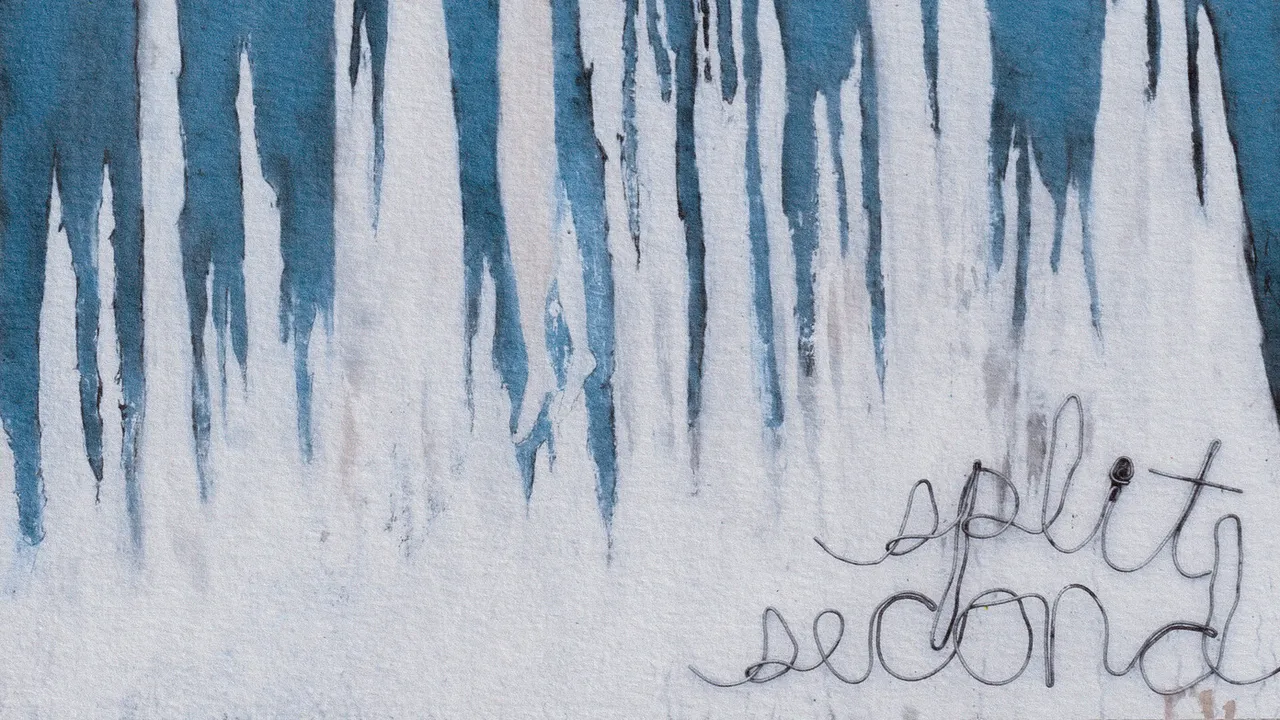
Towards the end of the twilit “San Francisco, 2005,” in the middle of Renny Conti’s new album, Split Second, the steady drums and slide guitars stutter to a halt and Conti situates himself precisely: “Prospect Park/I’m sitting up straight/With the knowing posture of a monk/It’s May of 2024, and I am writing to get myself out of a death-induced funk.” It’s a strikingly direct line dead in the middle of an album stuck in a dreamstate, one that unfolds like a series of hazy recollections. There in the park, Conti’s edges are briefly clearer, the image sharper.
Split Second can sound, on first listen, as though it is drifting. These songs were written in the months following the death of Conti’s older brother, Andrew. The two grew up sharing a love of music and playing in bands together, but, as addiction tightened its grip on Andrew, the brothers diverged. Renny started bands with other kids, and by the time he was in college, he was making music on his own. His self-titled album, released last year, was dedicated to Andrew, and its closing instrumental track was named for him.
No score yet, be the first to add.
As Conti comes to realize in Prospect Park, upright and monastic, grief is rarely as sharp as we expect. It lacks the visceral sensations of fear and anxiety, the immediate agony of a broken bone or heart. More often, it is concussive. The feeling that someone is present conflicts with the reality that they’re gone.
Split Second captures much of the resulting fogginess. It is often somnambulant, heavy as tired eyelids. Conti’s voice is hushed and fragile, and he strums his acoustic guitar so slowly that it’s often easy to pick out each individual string as it’s struck. On the title-track opener, he sings that he feels, “Stuck between the world and something magic/Stuck between the dream and something fabric.” Lead single “Mona Lisa” lives in that middle space too, a little bite entering Conti’s near-whisper as he disorientingly flickers from an image of a knife-sliced lemon to one of a city in ruins. “Leaving the Zoo,” with its slow, sliding violins and lullaby repetitions, crescendoes into a fuzzy guitar outburst but settles back into torpor.