
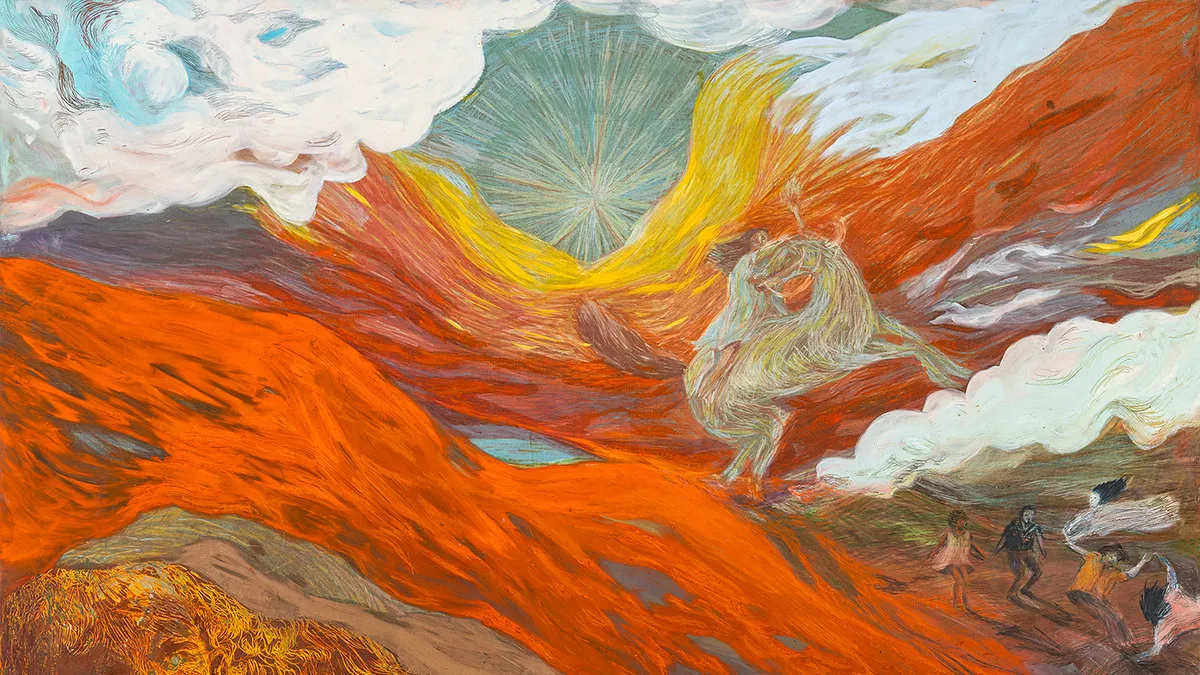
Hailing from João Pessoa, the easternmost city in South America, Papangu are part of the latest wave of bands incorporating the sound of Brazil into heavy music. The tradition may have reached its greatest international visibility with Sepultura back in the 1990s, but it has continued to spark new iterations in the generations since. Compared to their contemporaries, Papangu have always been a bit more inclined toward MPB (Brazilian Popular Music), tending toward sweeter melodies and catchy choruses. Celestial complicates this formula. Compared to their debut, 2021’s Holoceno, and its 2024 follow-up, Lampião Rei, the new album is brighter and more colorful, a quality that allows for greater contrasts with the longer, experimental jams.
Writing music and lyrics is a collective effort for Papangu, shared between bassist Marco Mayer, guitarist Pedro Francisco, and keyboardist Rodolfo Salgueiro, and they all seem to love the sprawl of classic progressive rock. The record begins with its most direct statement, the three-minute “Mau-Olhados.” Apart from the requisite “Outro,” it’s the shortest track on the record, with a linear structure and vocals presented in a more straightforward delivery. But the lyrics are anything but quotidian, listing herbs and protective rituals to keep oneself safe from the evil eye. The band builds the track from a base of analog synths, and the tension against their darker impulses spreads slowly, growing in intensity as the song progresses.
No score yet, be the first to add.
This opening sets the tone not only for the superstitious and fantastical themes of the record but also for its production choices: Celestial was recorded entirely in analog on magnetic tape: “No computers whatsoever” were involved in the making of the album, according to their Bandcamp page. The vintage sound is both a strength and a shortcoming. Sometimes, it can be a bit too reminiscent of its points of reference—specifically, the psychedelic music made by Northeastern Brazilian artists like Ave Sangria, Hermeto Pascoal, and Lula Côrtes. But Papangu are giving the sound a darker spin: In songs like “Calado (de Olho),” a ’70s-ish psychedelic pop ballad is played with heavier instrumentation than expected. Meanwhile, more metal-inclined songs like “Taxidermia” are complemented with theatrical vocal performances and whimsical passages of keyboard.
The lyrics are where Papangu most distinctly show their personality. Building collages of imagery from natural landscapes, the group paints an impressionistic portrait of 21st century Northeast Brazil—one that exudes beauty but also describes corroded faces, exposed thorns, and dried flowers. In “Fechamento de Corpo,” the subdued vocals soften the harshness of the words being sung, describing a desire to seal oneself away from the world.
Magical realism has been running through Latin American art for long enough that it can feel like part of the cultural identity. Celestial finds a way to filter ordinary life through Papangu’s own mystical language. The structure of the album is tight and self-contained—lyrical and musical themes recur, tracks build off each other in intensity—but it still leaves enough space for jamming and experimentation. In the instrumental tunes “Bode Expiatório” and “Celeste,” the band seems to shift between moods and motifs at lightspeed. They may sound like they time-traveled to get here, but they also sound newly energized. Who needs modern technology when all of this is at your fingertips?
Daniel D`Amico for SANREMO.FM
