
When I started working in music media around 10 years ago, I thought Taylor Swift was underrated, which seems like a ridiculous statement to make now. This was in the post-1989 and pre-Reputation days, when each album seemed like an expansion and continuation of its predecessor, each defined by a particular set of influences and imagery, all constellating around an increasingly confident style of writing that felt distinctive in any landscape she placed herself: country, singer-songwriter, pop. We didn’t use the term “eras” yet, but the evolution was clear. And with some notable exceptions, it seemed like the publications I was reading either ignored her completely or engaged in a kind of hyperbolic fan-born language that left me wanting something more substantial.
Taylor Swift is no longer underrated, but there are qualities of her songwriting that have been overlooked amid her transformation to an NFL-affiliated megastar whose commercial success is all but guaranteed. Believe me when I say there was a time when her enduring success did not feel like a given, when she seemed to be walking a tightrope between her increasing pop bona fides and the ongoing, introspective personal narrative she threaded through each album. The tension escalated with each of the increasingly indefensible red herrings of lead single choices she made up through 2019’s “ME!,” a goofball theater-kid anthem, which marked the last time she pre-released any music ahead of an album.
I think Audrey Hobert knows what I’m talking about. The first time I listened to her debut album, 2025’s Who’s the Clown?, my initial thought was: These sound like the lead singles Taylor Swift doesn’t release anymore. Or maybe more appropriately, SNL Digital Shorts inspired by those singles. I could practically see the sketch forming around opener “I Like to Touch People,” hear the laugh track signaling when it switches from a well-written pop song into a surprisingly catchy novelty track. And by the time the second song, “Sue Me,” kicked in—with its “Run Away With Me” momentum and pathetically escalating narrative (“And I’m sorry that your dog died”)—I was sold. What a joy to hear a pop songwriter with a genuine sense of humor and, as bolstered by her friendship and creative partnership with Gracie Abrams, confidence in how to make the song stick after repeated listens, once you know the punchline is coming.
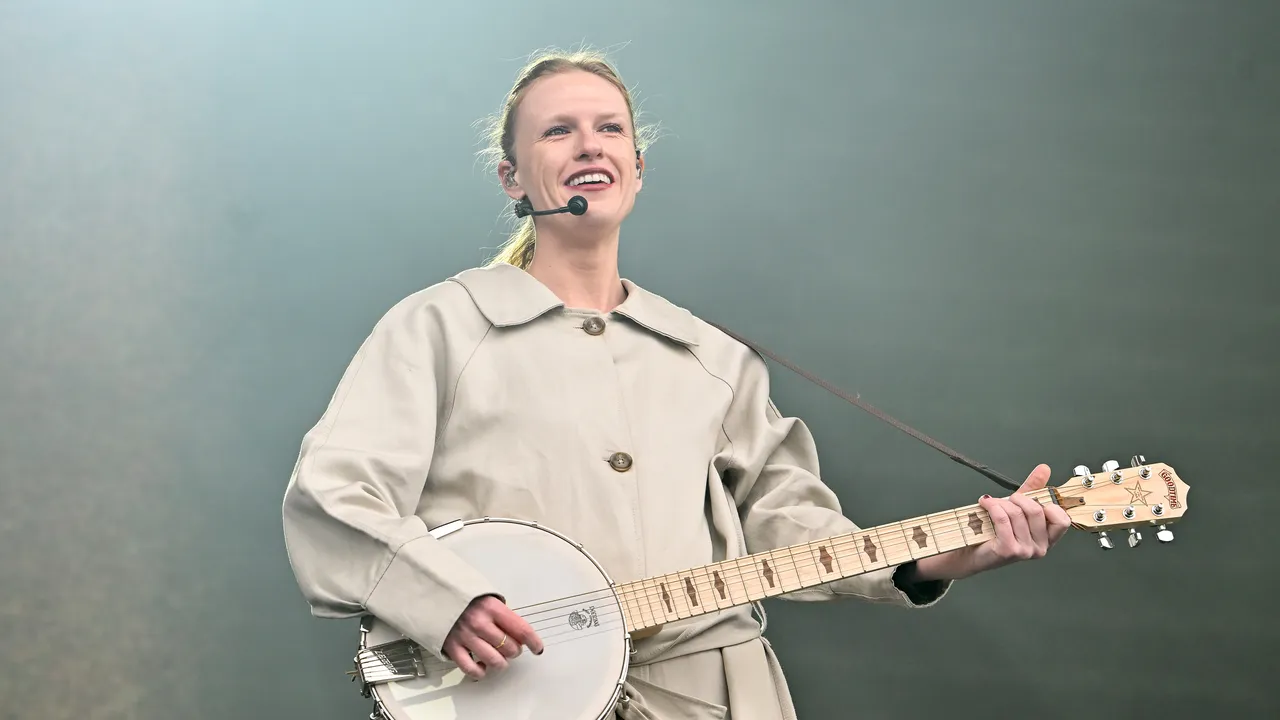
This blend is not for everyone, as evidenced by the bewildered response to last week’s Tiny Desk performance, which transports all the quirked-out energy of her debut album to a stage mostly associated with stripped-down, earnest delivery from established performers. (Some of Hobert’s previous viral moments came from her music videos, which complement her deadpan delivery with visual gags to help situate you in the worldview of the songs.) Much like Saturday Night Live performances, which can also be unforgiving to up-and-coming artists whose skill sets are slightly unconventional and out of time, the setting benefits traditionalists: a virtuoso instrumentalist or singer, a bandleader orchestrating the chemistry around her, a lyricist who specializes in sustaining a feeling of intimacy—magic tricks that seem more impressive the closer you zoom in.
Hobert is not this kind of artist. But she might be something better. Lately I’ve been noticing the general reappraisal of Ween—coinciding with loving reissues, rumors of a reunion, and Reddit threads from die-hards bonding over the sea change. Here was a rock band with no interest in the decorum of being a rock band, no reverence for cohesive albums with legible emotional narratives or pursuing a stable career. This was a band who sang gleefully about sex and drugs and lent one of their songs to SpongeBob. But they also made art that felt immersive and evocative and personal, and their discography holds up remarkably. Listen to Quebec from 2003, which got a dignified 7.7 on this site, next to Radiohead’s Hail to the Thief—released the same year and awarded a glowing 9.3 (another thing you’ll just have to believe me on). The latter can’t help but feel stodgy and mopey and old-fashioned by comparison. Obviously, both records are great, and you don’t have to disparage a band like Radiohead to enjoy a band like Ween, but the larger point is this: Everything has its time.
Daniel D`Amico for SANREMO.FM