
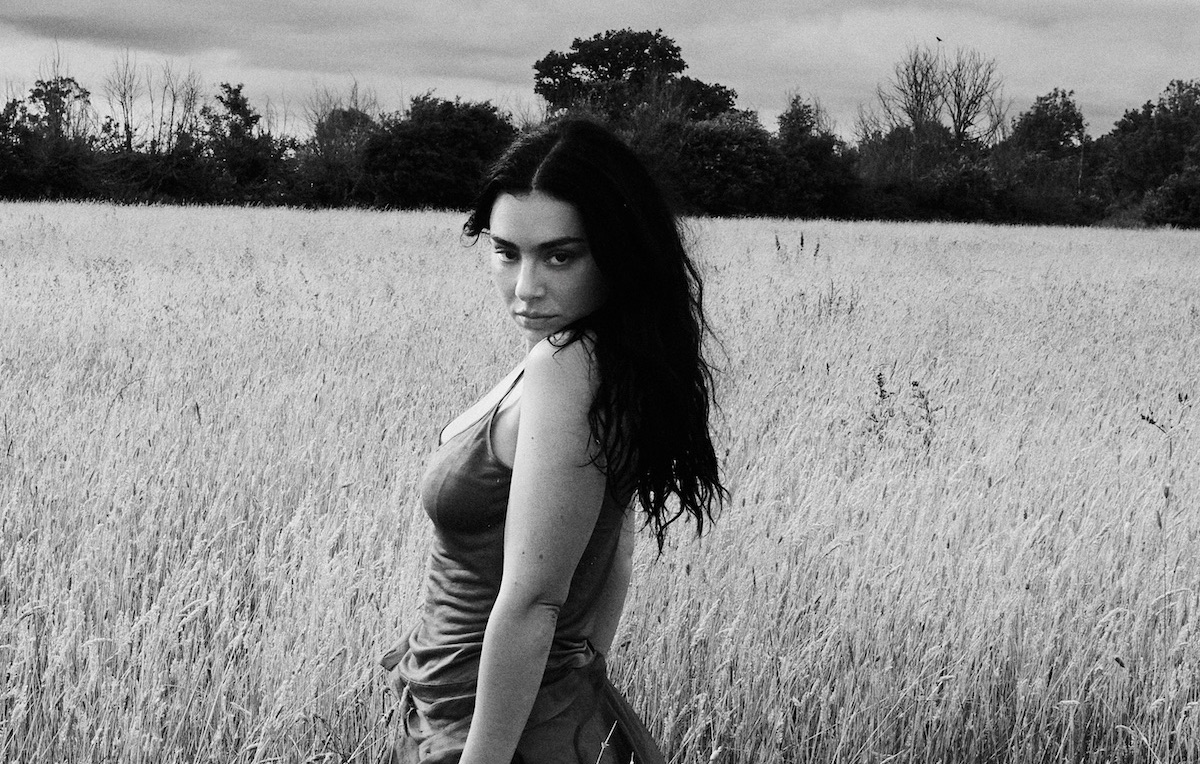
“I think the dancefloor is dead, so now let's make rock music” was the first phrase that, months ago, we could hear from Music, Fashion, FilmCharli XCX's new album released tonight. Sold as statementto then be recalibrated as a joke within the anti-marketing professed by the pop star, the phrase on which the first single from the album is built is actually the true key to understanding this work. Because Charli is right: the dancefloor is dead (and killing it was the enormous spotlight on clubbing in recent years which has polluted and dried up the environment) and she and her close collaborators have really given themselves over to rock.
In the last two years Charli XCX has done everything to shake off the weight of the legacy of Brat. Ultimately, for her, it was a matter of (artistic) life or death. In fact, it had taken over ten years of her career, and a series of unique sonic pirouettes, to finally give credit to Charlotte Aitchison and her mission to bring pop into the future. Rather unexpectedly, with a record that flirted with the club culture of the 90s and 2000s, she had succeeded: we were all brat in the Brat Summer of 2024. But once the parties, the booze and the drugs in her honor were over, in the hangover headache Charli was clear enough to understand that the moment (to which she will also dedicate her first mockumentary as an author and actress, The Momentwith the faithful Aidan Zamiri) was ending and that there was a need to reinvent, reinvent ourselves. Save yourself.
“Some artists have created art that can survive for thousands of years, and that's great, but now they're dead, gone, and can't live through that. What I want to tell you is that oblivion is freedom,” are some words from director David Cronenberg's speech in No One Lasts Foreverthe final track, as well as the best in terms of performance, of Music, Fashion, Film. Among the usual British irony that permeates the album (“maybe I fucked your dad, no joke, I only said it for show” in Wink Wink or “Chase the stars, the ones in your eyes, let's be honest: I'm talking about the ones on the sidewalk” in Room) and the more emotional and personal moments of questioning (“Do I want to continue making music? I'm stupid if I want to try acting now that I'm about to turn 34” in Room or “What I feel is complicated, I know I shouldn't say it, but I have to vent so that I don't get consumed inside: all this pain makes me believe I'm a better artist, but it's an excuse I repeat to myself to behave selfishly” in I'm Afraid), the tension that keeps this anything but solid album going is precisely Charli's need to find her way around success, private life and art.
How do you survive success? How do we live with it? What can you take or leave? These are the questions that come back Music, Fashion, Film and which make interesting a work which – on a musical level – fails to match the sonic ambitions of his previous albums. But after all, it was Charli herself who warned us in an interview released between her various experiences on the big screen and the soundtrack created for Wuthering Heights/Wuthering Heights: she is not interested in art itself, but in the creative universe that an artist creates around himself and his works.
Strictly speaking, Music, Fashion, Film it is indeed a rock album, but made by people who love electronics and pop like AG Cook and Finn Keane, Charli's two adventure companions (a song on the album is also dedicated to AG, Magic Metal Montana). The drums are made on the computer, the guitars sometimes sound like plug-ins (and they could be) or are shaped in such a way as to always flirt with subsequent digital synthesis. That is, everything that doesn't fall within the purisms of rock. But no wonder: Cook and Keane published Thy Slaugther in 2023 Soft Rockan album in which we can find the sonic seeds (indie rock from the 2000s, post-grunge, alt-rock) that give shape to Music, Fashion, Film. If the dancefloor just died, rock has been defunct for at least a couple of decades. But Charli knows that if you want to become immortal, or disappear into oblivion, you must first consult the dead.
Music, Fashion, Film it's a fragile record, which only works if you read it within Charli XCX's creative and personal universe. It's not an album of great songs, in fact the songs often seem almost like demos, versions that aren't totally complete or developed. We are in the indie world of the noughties, but understood precisely as a bedroom rock dimension, in which everything is minimal in an almost violent way. Yet, in its own way, it functions as a work in itself. It works, yes, in an almost annoying way because it seems that the trio committed themselves to the bare minimum despite having a great starting idea in their hands which here is completed more in the world around it – the aesthetics of the project, the collaborations with David Cronenberg, Vincent Cassel (in the video for Camera), and the triple sanctity formed by Martin Scorsese, John Cale and Marc Jacobs of the artwork, the film of the album shown in cinemas, the b-sides published only on its secondary profile – than in the music itself. Just as Charli had anticipated: the new era of the pop star is a multidisciplinary universe.
So forget about it Bratsongs that will mark the months to come and feeds colored green. Music, Fashion, Film it is a black and white film that does not take its noisy and revolutionary nature from rock, but its more intimate and emotional one. Definitely the most indie one. Because “the world is ending and there is no hope, we are parading on a catwalk that goes straight to hell and nothing will save us, not music, fashion or films”. This is the Spring Summer '26not one Brat Summer encore. Prepare the black and white filters, as Charli intended.
Daniel D`Amico for SANREMO.FM
