
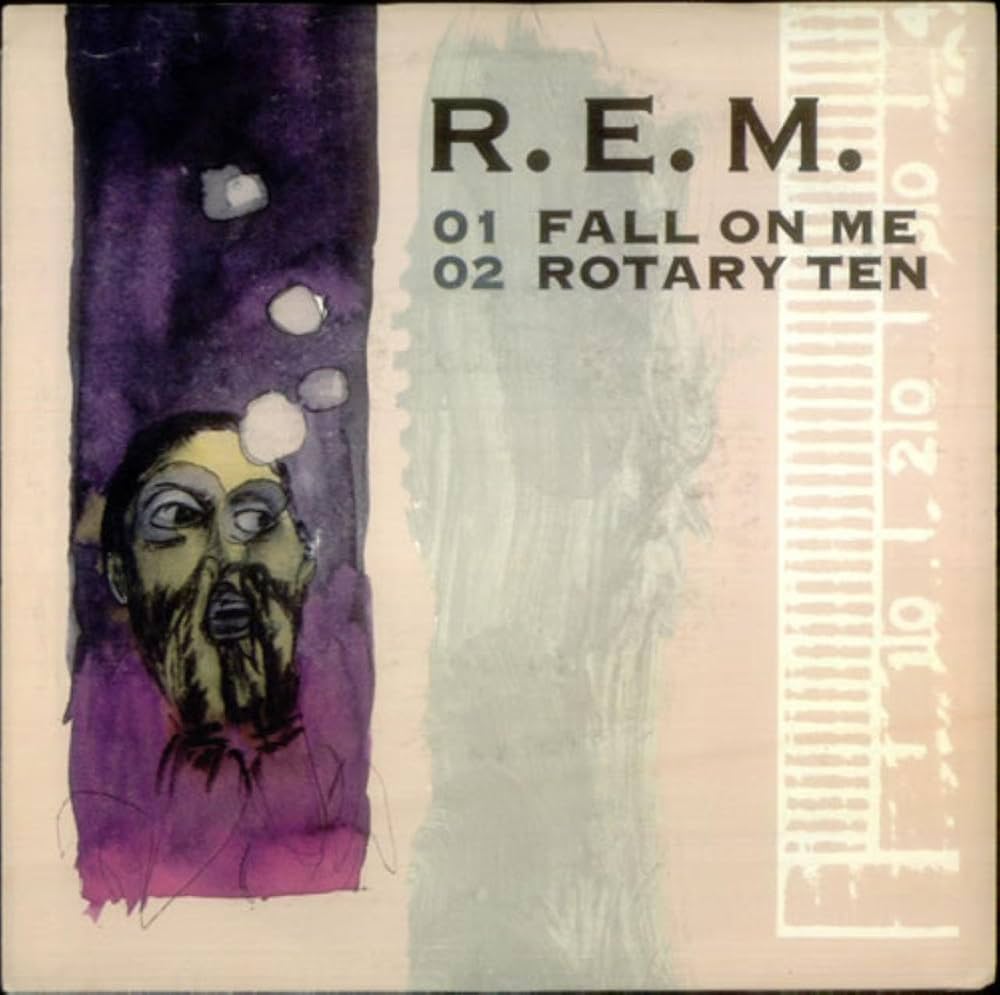
REM – “Fall On Me” (from “Lifes Rich Pageant”, 1985)
Often masterpieces are born in the darkest moments. When it seems like we have reached the brink of the abyss. It also happened to Rem at the halfway point of the 1980s. Stressed by the frustrating experience of “Fables Of The Reconstruction” and a nerve-wracking series of live performances, Michael Stipe and his companions had reached the limit and were in danger of truly exploding. The plastic image of the collapse is Peter Buck's Rickenbacker thrown towards one of the technicians at the Beacon Theater in New York, during the performance at the CMJ Awards. A set then continued, after Stipe's embarrassed apologies, with an a cappella version of “Moon River”. But the guitarist's abandonment on stage was only a sign of the malaise that arose day after day during the grueling Preconstruction Tour.
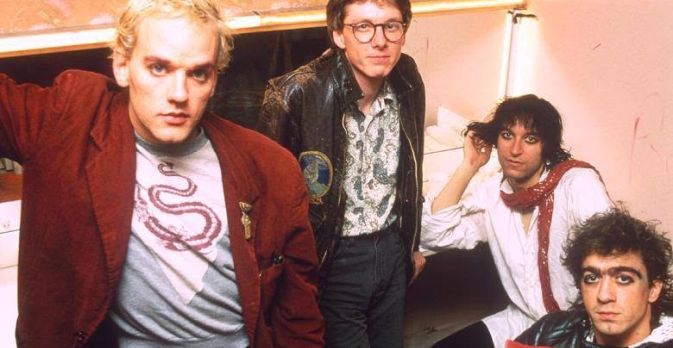
The real cracks lay above all in the disagreements between Mills and Stipe, with the latter increasingly relegating himself to the role of misunderstood intellectual. Mills, with his classical studies and a technical background crucial to the sonic balance of the group, showed signs of growing intolerance in the face of the egocentric attitudes of an increasingly solitary and restless Stipe, who demonstrated his extravagance even on stage, appearing wrapped in a gigantic overcoat with white spots painted under his eyes and his hands tied with duct tape. Solidity, however, was embodied by the determination of Berry, whose verve of performer behind the dishes he married the seriousness of the professional.
In short, the Rem had reached a point of no return: they could become one of a thousand indie band who managed to nail a couple of albums and then got lost in the mists of the underground, or raise their heads and look higher, trying to revitalize the magical sound of the beginnings and finally breaking through.
The turning point in the name of Peter Sellers
The man of providence will be Don Gehman, the producer who had already made John Mellencamp's fortune, focusing everything on a direct and no-frills sound. Rem identified him as the right person to get out of the shallows of “Fables”. “I couldn't listen to that album, it just seemed like a plaintive dirge,” Gehman said. “I wanted to make records that brought things into clearer focus… To make it possible to understand the words that Michael sang. I realized that even then it might be impossible to grasp the meaning of what he was saying, but at least the sensation that would be obtained from them would not be so impalpable!”. And Stipe will give him credit: “Don Gehman was the first producer to challenge me as a singer. It was a push to express myself better.” Although he later clarified: “He made me take a step too far and it took me several discs to go back and find myself. It was like throwing a child into ice water and leaving him there. It traumatized me.”
Even the location of the recording studios – the quiet Bloomington, Indiana, Mellencamp's hometown – was more suited to the group's needs than the metropolitan frenzy of London. Thus, little by little the Rem find harmony and good humor again. The taste for that “human comedy” that is life: “Lifes Rich Pageant”. A title that does not arise by chance: the phrase is in fact taken from the film with Peter Sellers “A Shot in the Dark”, a chapter of the Pink Panther saga. And it is – as in the film – the magic formula to exorcise all difficulties. Gehman manages to make the sound “both robust and transparent”, according to the band's indications. But also more full-bodied and catchy, to be able to resonate with the public. Energy and inspiration reignite. And an intriguing album is born, in which the Athens group partly abandons the more enigmatic character of their debut, without giving up their identity and also addressing social and political themes, with numerous references to current events and environmental issues.
Rem, however, never wanted to become one combat band. Neither in the lyrics – always filtered by a literary and humanistic approach – nor in the sounds, elegantly forged in the wake of the best folk-rock tradition. They are still sumptuous balladeerin short, and to remind us of this comes the single and masterpiece of the entire collection called “Fall On Me”. An intense and luminous ballad, built on a guitar arpeggio that recalls the folk-rock of the Byrds. The melody progressively grows until it flows into one of the most memorable refrains of Rem's repertoire, enhanced by the vocal intertwining between Michael Stipe and Mike Mills. The text, as often happens in songwriting by Stipe, proceeds through evocative and symbolic images, but clearly allows a denunciation against the destruction of the environment to emerge.
Airy and poignant, “Fall On Me” is a typical circular ballad that draws both on the songs of the fifties and on the psych-folk languors of Byrds and Crosby, Stills, Nash & Young, stupendous in the short double introductory arpeggio and exemplary in the growing linearity of the verse that meets a moving refrain, with Mills producing one of his magical counterpoints. It will remain one of the best tunes ever made by the award-winning Athens, Georgia company.
A perfect construction
“Fall On Me” opens with a delicate dialogue between an electric guitar in pickingpan on the left channel, and an acoustic guitar on the right. However, it is only an apparent introduction: the two guitars quickly withdraw, leaving room for the band to enter. Peter Buck's arpeggio remains the fulcrum of the piece, supported by bass and drums, while some minor chords give the harmonic progression a melancholic nuance. Stipe's voice enters in a collected and relaxed way, but progressively grows in intensity until reaching one of his most memorable interpretative moments in the phrase “before the weight can leave the air”, when the melody literally seems to free itself from gravity.
The pre-chorus further opens the sound, moving the harmony towards brighter tones, before the explosion of the chorus: the chords become predominantly major, the rhythm gains momentum and the voices of Stipe and Mike Mills intertwine beautifully, who is not limited to the choirs but develops an autonomous melodic line, making the refrain even more engaging.
In the second pre-chorus a pump organ played by Mills is also added, while the bridge represents one of the highlights of the song: Stipe steps aside, limiting himself to repeating the title, and leaves the center of the scene to Mills with the suggestive passage: “Well I'd keep it above, but then it wouldn't be sky anymore. So if I send it to you, you've got to promise to keep it home”. Bill Berry also joins in the last chorus with his “it's gonna fall”, creating a three-way vocal intertwining that gives the ending an extraordinary strength.
A song about oppression
“It's a song about oppression, you can apply it to anything you want,” Michael Stipe will explain. The text proceeds once again by accumulating images, it is allusive, but at the same time explicit in condemning environmental devastation, the progress that disfigures nature and bloodies the sky. The prologue, however, mentions the experiments of Galileo, who made objects fall from the Tower of Pisa, recalling that theme of gravity which had already been mentioned in connection with “Feeling Gravitys Pull”.
There's a problem, feathers iron
Bargain buildings, weights and pulleys
Feathers hit the ground before the weight can leave the air
Buy the sky and sell the sky and tell the sky and tell the sky
Don't fall on me (What is it up in the air for) (It's gonna fall)
Fall on me (If it's there for long) (It's gonna fall)
Fall on me (It's over it's over me) (It's gonna fall)
There's a problem, feathers are iron
Cheap buildings, weights and pulleys
The feathers fall to the ground before the weight can leave the air
You buy the sky, you sell the sky, say to the sky, say to the sky
Don't fall on me (why is he in the air?) (about to fall)
Fall on me (if it stays there long) (about to fall)
Fall on me (it's over, he's on top of me) (about to fall)
The j'accuse ecologist, however, emerges in the following verses, with a reference to acid rain, which corrodes the statues in the parks and bleeds the sky.
There's the progress we have found (when the rain)
A way to talk around the problem (when the children reign)
Building towered foresight (keep your conscience in the dark)
Isn't anything at all (melt the statues in the park)
Buy the sky and sell the sky and bleed the sky and tell the sky…
We discovered progress (when the rain)
A way to get around problems (when kids rule)
Building towering predictions (keep your conscience in the dark)
It's nothing after all (melt the statues in the park)
You buy the sky and you sell the sky and you bleed the sky and say to the sky…
In the time of Reagan's demagogy, of an America of well-being that is growing at a dizzying pace towards progress, the Rem stop to contemplate nature wounded by a blind and unscrupulous humanity (“keep your conscience in the dark”). A cry of pain that will rise even more vibrantly in the other anthem record ecologist, “Cuyahoga.”
Daniel D`Amico for SANREMO.FM