
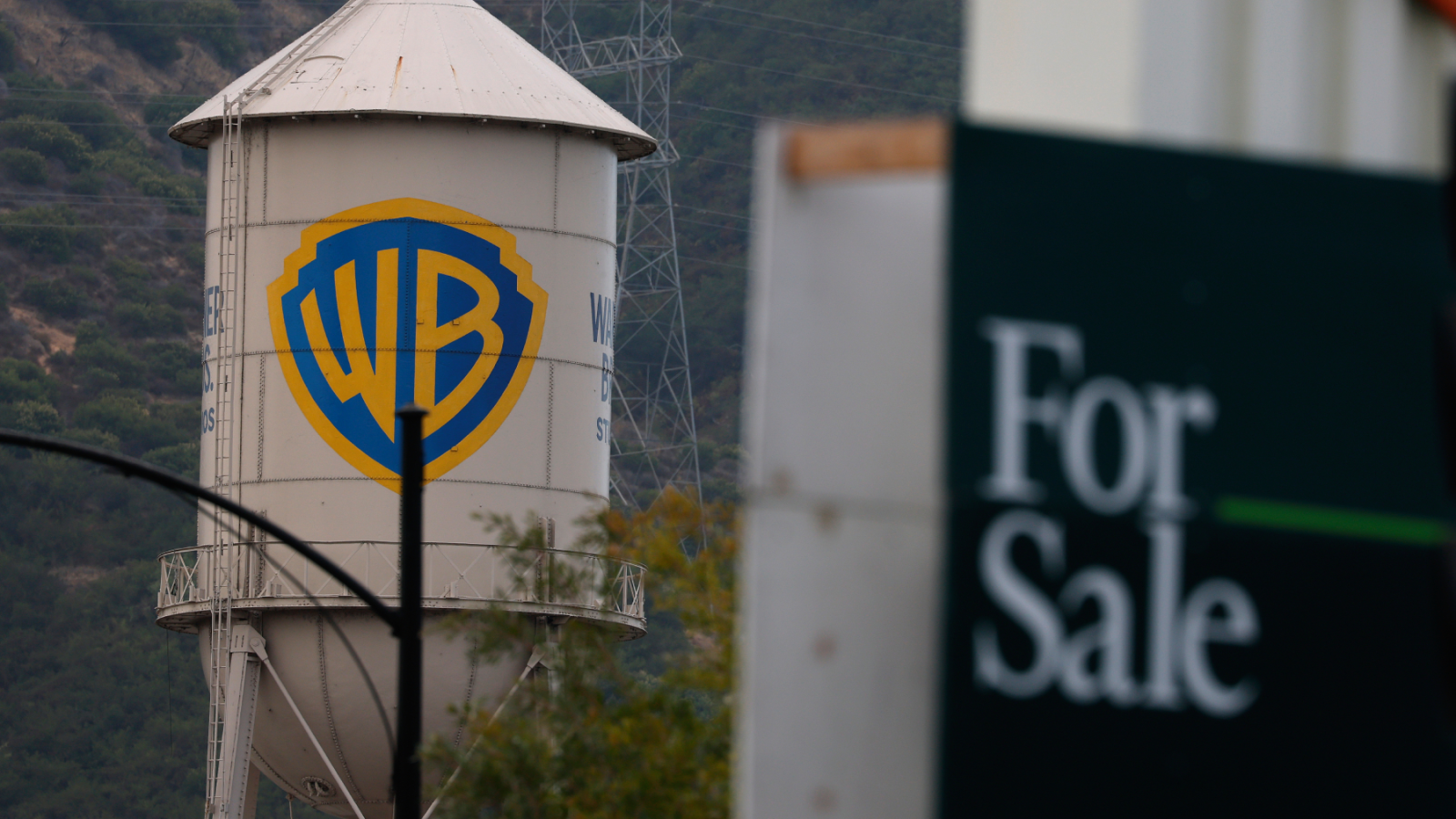
A judge in California has temporarily halted Paramount's $111 billion acquisition of Warner Bros. Discovery after a group of states claimed the merger violated antitrust rules.
California federal judge Araceli Martínez-Olguín issued the temporary restraining order Monday, just days before Paramount was expected to close the deal. (The company had previously said it would not complete the purchase before July 22.) The TRO lasts just 14 days, during which time the judge will hear arguments from both sides over whether to issue a preliminary injunction that would more concretely block the merger as the case moves forward.
A hearing on the preliminary junction has been set for Aug. 3. The TRO could be extended for up to 28 days, though, as Martínez-Olguín left open the possibility for scheduling changes if both sides agreed.
However, Paramount will be looking to have the matter settled by the end of September. As Reuters notes, if the deal hasn't closed by Sept. 30, a so-called “ticking fee” will kick in, forcing Paramount to pay out about $7 million a day to Warner shareholders.
California Attorney General Rob Bonta, who's leading the states' case, celebrated the ruling, calling it a “critical first win in our case to ensure this megamerger never sees the light of day.”
He continued: “History tells the tale of what happens when a few people have great power over markets that are central to Americans' lives: fewer opportunities for more people, worse products and services for all people. With our lawsuit, we're fighting for a free and fair market and a thriving film and television industry that serves creatives and audiences alike. We have a full tank of gas, the law on our side, and look forward to continuing to make our case.”
A Paramount spokesperson said, “We are confident the evidence will demonstrate that the State AGs' antitrust arguments are without merit as their alleged markets and claims of anticompetitive effects are without any basis in modern market realities. This merger is lawful, pro-competitive, and will benefit consumers, creators, workers, and the entertainment industry. We will continue to vigorously defend the transaction and will look forward to the hearings on the substance of the State AGs' action.”
The 12 plaintiffs states suing to block the merger under the Clayton Act similarly claimed that combining Paramount and WBD would harm competition in Hollywood. If it goes forward, the deal would bring together two of the “big five” movie studios, three major TV production studios, several big name streaming services, and an assortment of TV channels, including premium networks, basic cable channels, and the most-watched broadcast network CBS.
Paramount, meanwhile, has pushed back against claims that the merger would do little to harm competition in key areas like theatrical film production and cable programming. It further alleges that bringing all these entities together would actually create more competition in a new Hollywood era dominated by tech and streaming companies like Netflix and Amazon.
Paramount and Warner Bros. Discovery agreed to an acquisition deal in February, after Paramount beat out Netflix in a high-profile bidding war. But the deal has garnered intense scrutiny and pushback. In April, an array of Hollywood A-listers signed an open letter claiming the merger would “further consolidate an already concentrated media landscape, reducing competition at a moment when our industries — and the audiences we serve — can least afford it.”
The acquisition has also taken on a political dimension. Paramount's chief executive, David Ellison, bid for Warner quickly after his company, Skydance, completed its acquisition of Paramount in 2025. That deal garnered significant criticism after Ellison — son of tech billionaire and Republican backer Larry Ellison — implemented several changes ostensibly designed to appease Donald Trump and his administration. According to a Wall Street Journal report, the younger Ellison has also reportedly promised Trump that, if Paramount does buy WBD, he would make sweeping changes to CNN, a frequent target of the president's.