
The first thing that strikes you when talking to Suzanne Vega is the way she listens. It is not an obvious quality for an artist who has been used to being interviewed, celebrated and analyzed for almost forty years. While many artists end up mainly telling their own myth, she seems to focus on the details: a word, a memory, a scene. First comes the observation, then comes the music. It's a characteristic that has accompanied her since the beginning, when the Greenwich Village of the 80s was still a place where songs were born in small clubs before reaching the charts. Suzanne Vega belonged to that generation of authors for whom writing was the center of everything: before success there was a story to tell. Forty years later, that perspective hasn't changed.
In 1987 the autobiographical Luke brought into the American Top 10 a theme that pop had rarely addressed with that delicacy: domestic violence told through the voice of a boy who tries to hide what he is experiencing. It wasn't a song meant to provoke or offer easy answers: it was a portrait of a person. The same attention towards individuals runs through Tom's Dineran everyday scene transformed over time into a song capable of crossing different generations, technologies and languages. A woman sitting at a table, an apparently insignificant moment: in Vega's hands they become shared memory. His career was born precisely from this ability: finding the universal in the particular. He has never chased trends, even when his music entered deeply into pop culture, and has navigated the transition from vinyl to streaming while maintaining recognizable and personal writing.
After eleven years without an album of unreleased songs, she is back with Flying With Angelsa record that addresses recurring themes in his work: the relationship between the individual and society, human fragility in the face of history and the need to tell the present. In the meantime it has not disappeared. He worked in theater with Lover, Belovedhis show dedicated to the writer Carson McCullers, which also gave rise to an album and a film, he continued to perform live and built an increasingly direct relationship with the public through his own label.
Italy has always held a special place in his history: it was one of the first countries in which he played even before having a recording contract. Today he returns with the Flying With Angels Tour (from tomorrow to July 24, see dates below) confirming a bond built over time.
Next year Luke he will be forty years old. In 1987 it was one of the first pop compositions to openly talk about domestic violence without turning pain into spectacle. Looking at the world today, do you feel that it belongs to the past or that it has become even more necessary?
That song, unfortunately, is still relevant today. But I didn't write it to change anything or anyone. I wrote it as an expression of the truth. Every day I come into contact with the young woman who wrote it: she is still amazed by the affection and success that song was able to conquer around the world.
The audience applauds a song that talks about abuse and suffering. How do you experience this paradox on stage?
That's right. Every evening I sing it and there is a change in the atmosphere. I know, deep down, that audiences applaud not the pain of abuse, but the triumph of its expression through music. I always remember that when I come back on stage to get the applause after that song. But as soon as I put the hat back on, it's time to turn the page and move on to Tom's Diner.
You still feel that Tom's Diner does it belong to you or do you think it now belongs to the world?
Both. It's a little melody of mine, but others have welcomed it into their lives and made it something of their own. Everyone plays it in their own way, and that's really beautiful.
Between Tales from the Realm of the Queen of Pentacles And Flying With Angels 11 years have passed. It may seem like an absence, but in reality it has been full of activity: theatre, tours and new projects. What does a singer-songwriter do when she takes a break from the music business?
I worked in theater for much of that time. Between 2010 and 2020 I created two productions of Lover, Belovedmy show dedicated to Carson McCullers. We also released an album with songs from the show and, in 2019, we made a film broadcast in the United States. In the meantime I also continued to tour.
Many artists describe success as a peak to be reached. But often the hardest part comes later, when attention wanes and the noise of the industry recedes.
The transition from the 80s to the 90s was a surprise. Suddenly there was no one waiting for me at the airport and I had to take the taxi alone. In the '80s I used to get so many bouquets of flowers that I sometimes ended up putting them all in the bathtub. Then, they simply stopped arriving. In the end, however, what really matters is the time spent on stage and the bond created with the audience: that unrepeatable moment live. And this continues today.
What was the high point of your career? And which is the most difficult?
I've often thought that one of the high points was seeing Prince applaud me after that performance at the Grammy Awards. Another memory that I carry in my heart is the realization of 99.9F° together with Mitchell Froom (who was her husband, ed). The most difficult moment came in 2008, when Blue Note decided to end our relationship. I thought I had found a permanent home, but after two years I was let go. Starting over wasn't easy. Then I started my own independent record label (Amanuensis Productions, licensed to Cooking Vinyl, ed) and today that choice proved to be a winning one.
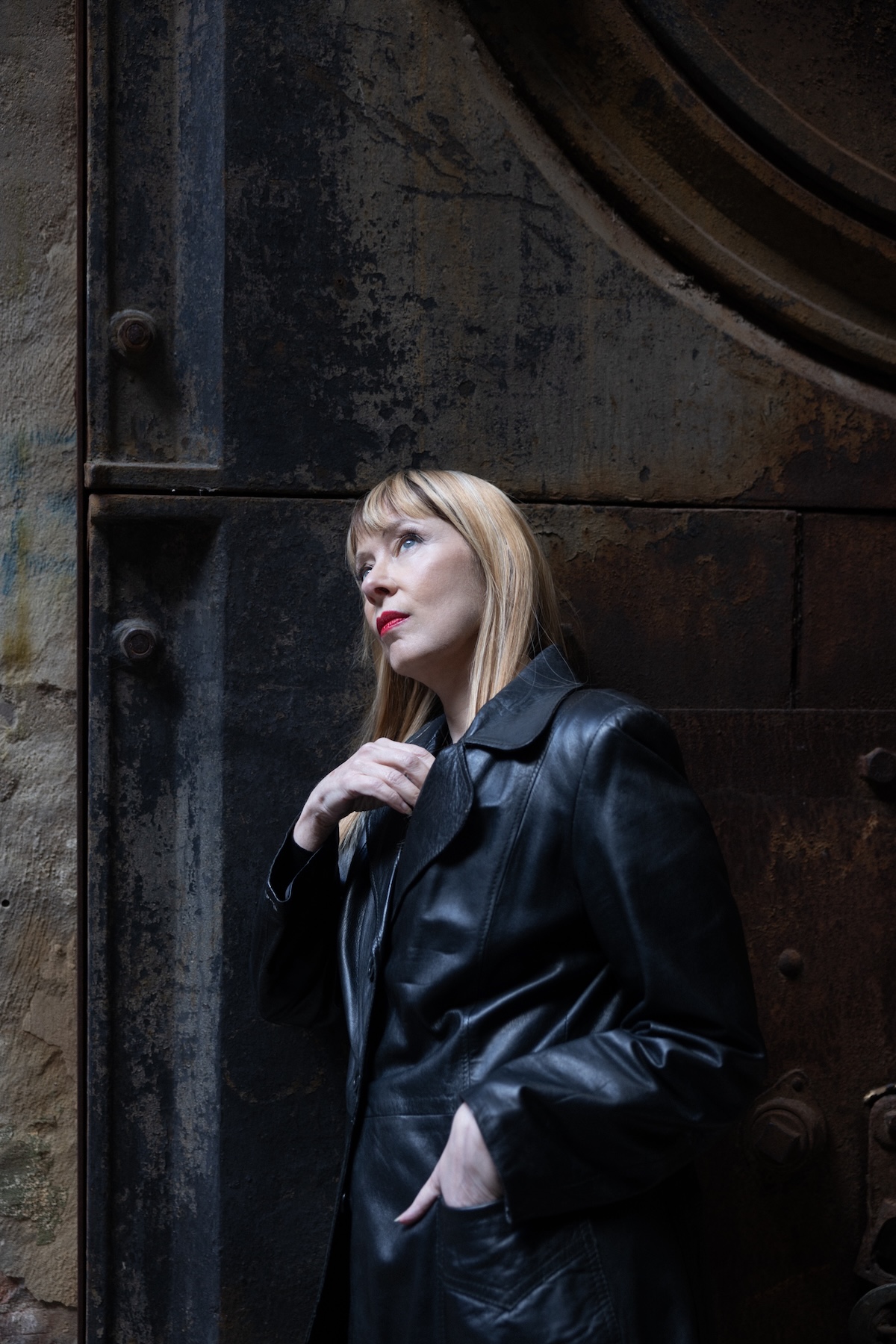
Suzanne Vega will be on July 18th in Padua (Piazza Eremitani), on the 20th in Rome (Casa del Jazz), on the 21st in Naples (Monumental Courtyard of Castel Nuovo, free entry), on the 23rd in Carpi (Piazzale Re Astolfo), on the 24th in Monforte d'Alba (Horszowski Auditorium). Photo: Ebru Yildiz
In Flying With Angels there is a song dedicated to the war in Ukraine, Last Train from Mariupol. As an American citizen, how do you experience the relationship between Trump and Zelensky and the current political climate?
Trump treats everyone like they are inferior. My feelings? He is not qualified for the role he holds.
Do you think the so-called American dream still exists? And, if so, what could it be today?
I believe the current administration has tarnished the American dream. Once it represented opportunities, today it seems to have transformed into greed. I can't wait to be able to look back on this period in hindsight when it's all over. There will be a lot to rebuild.
We live in an era where everything seems to demand an immediate reaction. Is there still room for slowness and silence in songwriting?
Absolutely. I think, for example, of José González, whose songs are like prayers. I often go back to listen to his music.
One of the most striking characteristics of your career is consistency. You have never changed your identity to follow a trend. Did this loyalty to yourself come at a price?
We will never know what the price was, because we cannot know what would have happened otherwise. I feel that my music is still relevant and that my audience is alive and involved. Perhaps, if I had made choices more linked to the fashions of the moment, I would have been consumed and then abandoned, but who can say?
Do you feel part of another era or do you think there is still room for more intimate writing, made of words, silences and stories?
Today there are many more possibilities for finding music. At one time you might have had five radio stations to choose from. Now there are many genres and micro-genres. However, each genre has a smaller and more specific audience. Despite this, I feel confident when I see people of different ages at my concerts.
You've met some of the most important musicians in American history, one being Jerry Garcia with whom you shared the Grateful Dead stage at Madison Square Garden.
I found that Jerry was surprisingly shy and even a little nervous. Between one set and another he refused to leave the stage: he remained in a sort of “cave” that he had created between his amplifiers, to keep the energy of the show alive and not lose its spirit. I thought he would be a more relaxed and informal person, but instead I sensed a certain restlessness. I felt a spiritual presence from him.
And Bob Dylan?
Backstage I felt a great calm and serene atmosphere. In the dressing room there was a simple fruit bowl, everything was clean and tidy. I was struck by the fact that he remained silently watching our entire soundcheck. Plus, in the 15 minutes we spoke afterward, he was surprisingly helpful and funny. I felt a special sense of connection with him.
You participated in the Lilith Fair, the traveling festival created in the 90s by Sarah McLachlan to give space to female artists.
Sarah took care of every little detail: she could be seen wandering around the parking lot in shorts, along with her dogs, and at the same time she arranged to donate $1 for every ticket sold to a local women's charity, with contributions reaching up to $20,000 for each evening. She was very young, but she had extraordinary vision and the ability to build a team capable of achieving it. It was a huge success, both artistically and in its generosity.
If a young singer-songwriter in forty years said she learned from Suzanne Vega that a song could change the way we look at human beings, would this be the artistic memory you would be most proud of?
If that's what they remember about me, I'd be grateful. But maybe, when I tell my story in an autobiography, I can also be an inspiration through my life.