
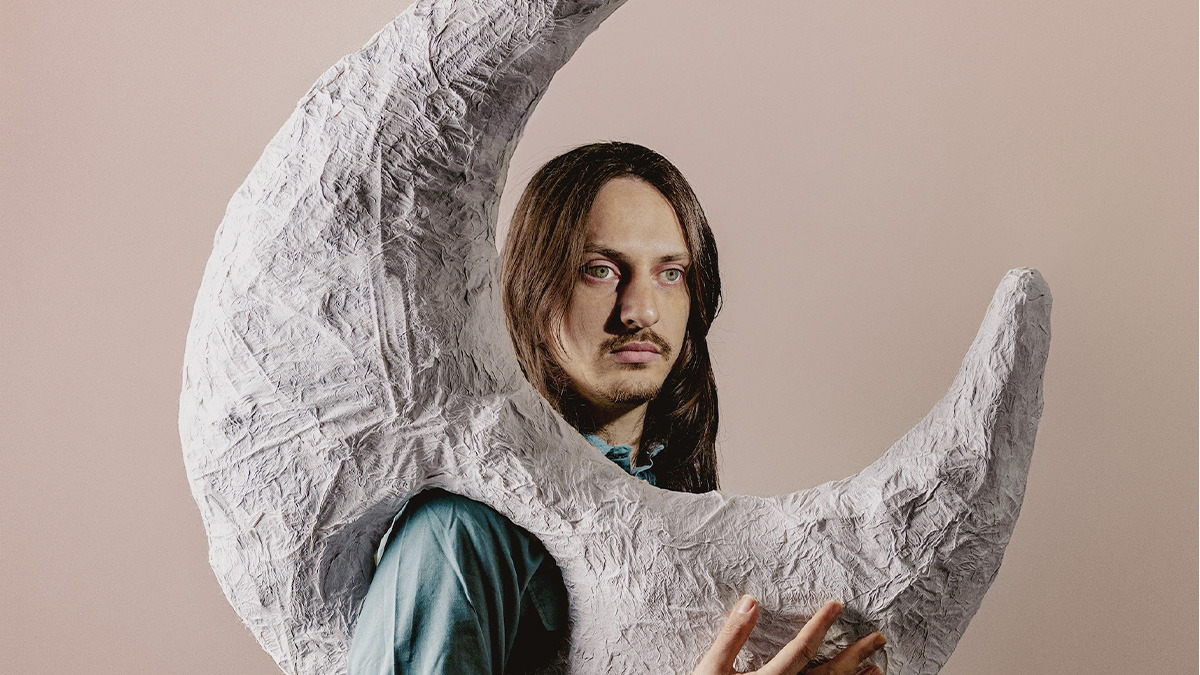
«Once upon a time» is the new EP by Tommi Scerdreleased by Pioggia Rossa Dischi: a work born between Italy and China, as if music were a way to hold distant places together and make them, for an instant, communicating.
We had a chat with Tommi to delve into the folds of «Once upon a time»discovering how imagination can become the sharpest tool to decipher our present, our roots and our precious imperfections.
Here is our interview:
In “Once Upon a Time” the fairy tale does not seem like a way to escape from reality, but a tool to read it better. How does imagination help you name the concrete things you experience?
For me the fairy tale has never been an escape from reality. Indeed, sometimes reality is so complex that you need images and symbols to be able to look at it better. Fantasy allows me to get closer to certain emotions without having to explain them directly: I often understand what I'm experiencing just as I transform it into a story.
Between Italy and China, this is a bridge between two worlds that are part of your family history. Was there a moment when you really felt that these two identities could coexist?
I felt very good when I was making dumplings at Yuan's grandmother's house, which is in the most rural countryside, and her little nephew called me “shushu” which means uncle. Very absurd and beautiful.
In “Pengyou / Mela 1” you describe yourself as an imperfect friend, someone who thinks a lot about others but isn't always able to be there. Was it difficult to expose yourself to such a less than “heroic” side of yourself?
Yes, it was difficult. I believe it is easier to describe yourself as a generous or courageous person than to admit your shortcomings. But I'm interested in telling my contradictions. Being present for others is a desire, but not always an ability.
Bands of friends, dinner parties, travel companions often return in your songs. As we grow up, do you think the way we feel part of a community changes?
I think that as the community grows, it becomes less spontaneous and more choice. As kids, it's enough to share a space or a moment in life; as adults we must work hard to keep bonds alive. Perhaps this is why tables and groups of friends often return to my songs: they are images that remind us how precious it is to build together.
“Piccioni” and “Sherdy” look at adolescence with affection but without nostalgia. If you could meet that boy today, what would you still envy him and what would you tell him to leave behind?
I envy that boy's recklessness. He had fewer tools to understand the world, but also less fear of jumping into it. However, I would tell him to stop judging himself so much and not to experience every mistake as a definitive sentence: many things that seem enormous at that age find a different dimension over time.
Speaking of “Elso”, you said that you started writing following stories that didn't seem like yours and which then turned out to be very close. Do you often understand something about yourself through the lives of others?
It happens to me often. Sometimes a story that seems to be about someone else becomes a mirror. I believe that writing works like this: you start from a person, from an episode, from an external detail and at a certain point you realize that you are talking about yourself. It is a discovery that comes later, not during.
In “Stella Maris” the star becomes a collective, almost political metaphor. Looking at Italy today, what are the points of reference we are looking for and which ones do we risk losing?
I have the impression that today there is a great search for orientation. We are looking for figures, ideas or communities that help us understand a very fast and fragmented present. The risk is losing the ability to listen to each other and imagine a common future. When a shared horizon is missing, it becomes more difficult to feel part of the same story.
“Hóng Shāo Ròu” ends around a table, which in the album becomes a meeting place between people, cultures and memories. If you could actually get all the characters from these songs together for dinner, what conversation would you like to hear?
I would love to hear a conversation where no one is trying to be right. People from different parts of life telling each other what they've lost, what they've found, and what they're still looking for. I think in the end they would talk about home, friendship and belonging. And they would probably laugh a lot more than I imagine.
Daniel D`Amico for SANREMO.FM