
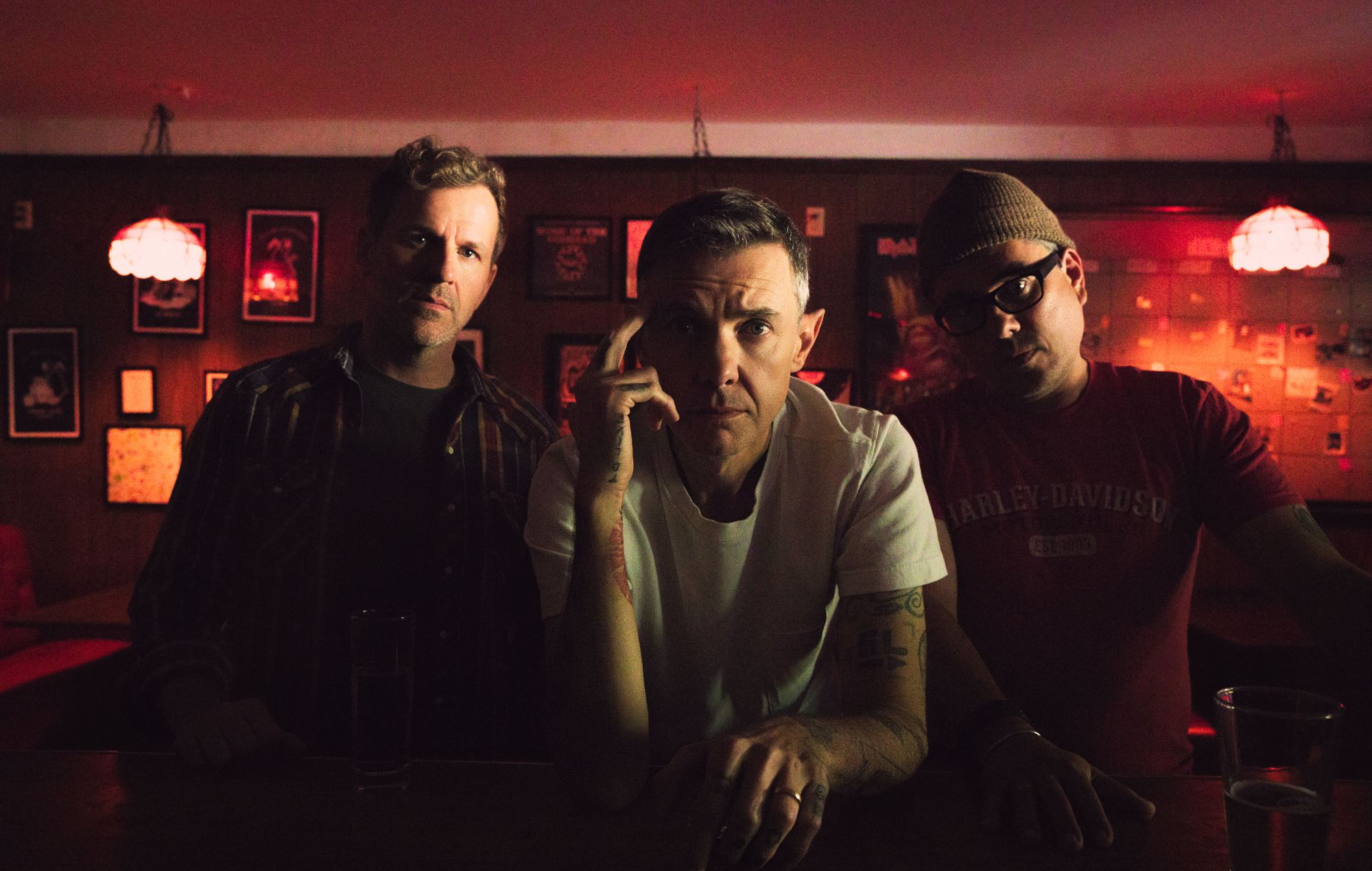
Sparta’s Jim Ward has spoken to NME about the band’s emotionally-charged, loved-up sixth album ‘Cut A Silhouette’, making peace with his past in At The Drive-In, as well as his respect for Kneecap and Turnstile.
At The Drive-In first broke up in 2001, shortly after releasing seminal punk album ‘Relationship Of Command’. The band’s Cedric Bixler-Zavala and Omar Rodriguez-Lopez went on to form prog rock group The Mars Volta, while Paul Hinojos, Tony Hajjar and Jim Ward formed Sparta.
“We came in with a giant chip on our shoulder,” Ward told NME about arriving with the searing ‘Wiretap Scars’ in 2002. “We definitely had something to prove. It’s hard to be somewhere and not feel like you belong there.” Two more furious Sparta albums followed before the band went on hiatus and At The Drive-In reunited in 2012 tour that included a headline set at Coachella and a performance at Reading & Leeds. However weeks before their later 2016 tour, it was announced that Ward would not be a part of the group going forward.
“I wasn’t in a healthy place. I just wanted to play loud rock music, sweat, scream and be in my community” he told NME from the back of a tour bus. So he revived Sparta without Hinojos and Hajjar. Last month, the band (Ward, long-time bassist Matt Miller and drummer Neil Hennessy) released their sixth album ‘Cut A Silhouette’.
“We’ve always been the underdog and I’m constantly told that we’re underrated. You can meet that with anger and by trying to prove something, or you can say, ‘Yeah, we are still here and we are a good band’,” explained Ward.
“I’m not trying to be on Top Of The Pops. I’ve done that and it was fun but it’s not my path. Instead, this album is a reintroduction to something that you love.”
Check out the rest of our interview below, where Ward told us about
NME: Hello Jim. How different is ‘Cut A Silhouette’ to other Sparta albums?
Jim Ward: “It feels wise to me. Before making it, we had just done a couple of celebration tours [playing Sparta’s first two albums ‘Wiretap Scars’ and ‘Porcelain’] and I reconnected with Tony [Hajjar, drums] and Paul [Hinojos, bass]. Between those heavy, emotional conversations and actually playing the shows, it cleared a lot of space for me to make a record that felt really representative of my life. I feel like I know I am. The imposter syndrome is at an all time low.”
You said you went back and listened to the records you grew up loving. Which ones inspired ‘Cut A Silhouette’?
“Fugazi is very much in my DNA, and so are Jawbox. I used to get a lot of shit for talking about Billy Joel in interviews, but I went back and listened to the records that made me love music before I found my tribe: Denny Goodman, Jefferson Starship. I also realised the stuff that really inspired me was never the hits. My favourite Beatles song is ‘Day In The Life’, my favourite Billy Joel track is ‘Scenes From An Italian Restaurant’. That’s the freedom of being in this band. We [could reference all those songs] and never thought, ‘Does this fit?’”
‘Cut A Silhouette’ is a love album. Why does that feel like an important energy to be putting out into the world right now?
“I think you know. We’ve always been a political band and I could talk ad nauseam about how fucked up the world is because of one man. The level of suffering in this world is unacceptable. There has to be a smarter way of communicating that than just ‘fuck Trump’ though. So what I say every day on stage is that this is a hard time period, and it hurts but I believe that if we extend love and empathy at every opportunity, then we’re going to be better for it.
“I kind of just leave it at that now because you’re not going to convince someone to change their political stance by yelling [at them]. I have a ton of respect for Kneecap. They, more than any other band, are putting their money where their mouth is. If you’re going to say something, put your bank account and livelihood on the line.”
Are there any other new bands that are inspiring you?
“Turnstile, because I feel like I was in their shoes at a certain moment in time [with At The Drive-In]. When we started getting big, we had people putting two-by-fours with nails under our bus tyres, because that’s how our community reacted to it. A lot has changed in 25 years and they’re from a different generation, but they’re still a hardcore band. The stuff that [crossing over into the mainstream] does to you emotionally has not changed. The traumas are all real. I have so much respect and empathy for them.
“I spoke to Bono when I was going through a rough time, and he took the time and energy to console a young, drunk and confused kid. It was life changing for me and I don’t know If I can ever thank him, other than trying to pass that on. So when I saw Turnstile backstage at Furnace Fest 24, I told them how much I loved their band. That’s my way of saying, ‘I got you. If you ever need anything, I’m here’. And they’re just such a great band.”
Is there any part of you watching what Turnstile are achieving and wondering what could have been?
“When I was younger and I’d look at my friends who were financially secure for generations, absolutely. But every decision you ever make in your life leads you to this moment, and right now I’m filled with joy, happiness and love. So I don’t anymore.
You didn’t do the 2016 At The Drive-In tour. Does that feel like unfinished business?
“It doesn’t. Even if all five of us talked about it, I’m not sure we’d understand what happened. What I do know is that I wasn’t in a good place mentally, but that doesn’t mean I couldn’t have done my job. But I think getting kicked out, as painful as it was, was probably a blessing in disguise. A lot of things have happened since that have been beneficial. It’s why I don’t hold any bad feelings. I still don’t speak to Omar and Cedric but if either of them called me and said they needed a kidney, I’d be on the first plane. I have a connection and a love for them that is beyond any drama.”
It feels like this era of Sparta, from working with Jawbox’s J. Malvin to co-writing ‘Crater’ and ‘Mouth Breather’ with My Chemical Romance’s Frank Iero, is about celebrating the punk community?
“When I was 15, I discovered [DIY punk label] Dishcord and that gave me the confidence and courage to go and make music. It’s like I could finally breathe. But Sparta was born on a major label and I never felt 100 per cent comfortable in that world. I spent years trying to compensate for that. When Dan [Sandshaw, label manager of indie label Equal Vision] asked why I wanted to release this album with them, I said that it’s because I wanted to come home to my community. My favourite shows are 250 cap rooms with sweaty, somewhat drunk people just having the time of their life.”
Is there anything you want to achieve with ‘Cut A Silhouette’?
“I never wanted to be famous, I just wanted to get the fuck out of El Paso. The craziest, most far out dream when you’re a teenager living in Texas is to play a show in Japan. Thank goodness that the people I was playing with at the time were busy with college or their girlfriends, so couldn’t tour because it meant I went out and found people who had nothing to lose. [At The Drive-In went out on a Japanese tour in 2000] and everything else has been icing on the cake. I’ve been really fortunate to have a career that’s shown me a lot. I can look back on that and appreciate that in its entirety. It just leaves you with a sense of gratitude.”
Why does it sound like this record might be the end?
“This is the final record in a chapter of a book that has been 25 years in the making. It’s the end of Sparta’s second act, but I just think that means there are a trio of records coming that will make up the new era. All the obstacles have been cleared and now we can move ahead with a full tank.”
‘Cut A Silhouette’ is out now. Sparta are touring North and South America throughout the summer into late September before UK and European headline dates in October. Visit here for tickets and more information.