
If you purchase an independently reviewed product or service through a link on our website, Rolling Stone may receive an affiliate commission.
Collagen has become one of the buzziest supplements in the wellness world, with proponents including biohacking influencers and celebrities alike. Jennifer Aniston has been talking up her collagen routine for years, Gwyneth Paltrow swears by it, and Kourtney Kardashian is a longtime advocate, to name a few.
But, like some other high-profile supplement categories, collagen's efficacy is actually backed by real science. A major review published earlier this year pulled together data from 113 clinical trials and found that collagen can provide meaningful improvements in skin elasticity, hydration, and joint comfort. Plus, new research suggests that collagen could have positive effects on muscle recovery and bone density, meaning the supplement's applications could very well extend beyond the beauty space.
If you've been hearing the buzz and want to know if collagen is worth adding to your routine, read on. Below is everything you need to know, including how it works, who it's for, and the best collagen supplements to try right now.
What Is Collagen and How Do Collagen Supplements Work?
Collagen is the most abundant structural protein in the human body. It's essentially the glue that holds everything together — skin, bones, joints, tendons, ligaments, and connective tissues — and keeps it resilient. Scientists have identified at least 28 types of collagen, but the most relevant for supplementation are Type I (found in skin, bones, tendons, and ligaments), Type II (the primary component of cartilage), and Type III (muscles, organs, and arteries). These three types comprise almost all of the collagen in our bodies, making them the most common variants in dietary supplements.
Although our bodies make collagen naturally, production starts to decline in our mid to late twenties. Besides age, sun exposure, smoking, high sugar intake, and other lifestyle choices can further slow collagen production.
Collagen reduction leads to many of the classic “I'm getting old moments,” like stiff joints in the morning, sagging skin, and cracking nails. Collagen supplements, which usually come in the form of hydrolyzed collagen peptides, work by supplying your body with the amino acids it needs to rebuild its own collagen fibers. These hydrolyzed peptides are small and easy for the body to absorb.
Numerous studies are finding that, once the body absorbs these peptides, users see improvements in skin hydration and elasticity, joint comfort, and muscle health. However, it's worth noting that these potential positive outcomes are gradual, happening over weeks or months of continued use.
Who Should Be Taking Collagen Supplements?
For years, collagen supplements were only used by older people seeking cosmetic anti-aging effects, but that's no longer the case. Younger people are finding the peptides beneficial, and those of us more interested in physical vitality — not just beauty — are also becoming customers.
People over 35 are the most obvious candidates for collagen supplements, since the decline in collagen production typically becomes noticeable around this age. However, younger adults (25-35) who put strain on their joints with high-intensity exercise and sports may also see benefits.
Women going through perimenopause and menopause represent one of the fastest-growing groups taking collagen. Estrogen decline accelerates collagen decline, which is why changes in skin texture and joint mobility often intensify during this stage of life.
On the flip side, some of us should not be taking collagen supplements, or at least be more wary. As with all supplements, people who are pregnant, nursing, or managing a chronic condition should avoid collagen supplements or speak to a doctor before taking them. Also, although collagen supplements are plant-based, most are derived from bovine, porcine, or marine sources, so vegans and vegetarians will want to be careful when shopping.
The Best Collagen Supplements of 2026
Here are some of the best collagen supplements you can buy online right now.

Best Overall
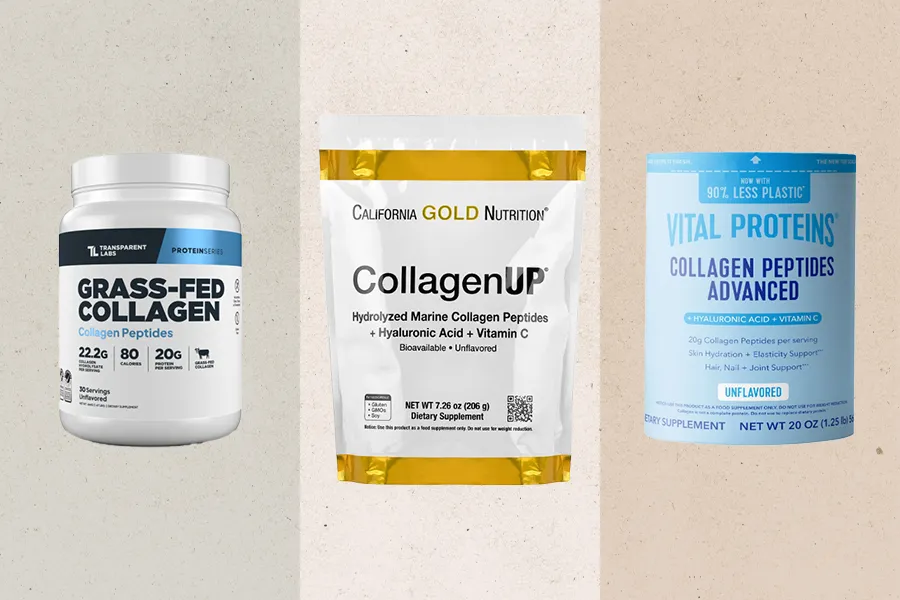
California Gold Nutrition CollagenUP®
Next: Top-tier quality control, hyaluronic acid and vitamin C, mixes easily, free of many allergens, very affordable
Council: Very slight fishy taste
CollagenUP from California Gold Nutrition ticks all the right boxes without breaking the bank. In fact, it's the most affordable pick on our list at just 36 cents per serving. But, despite its comparatively low price point, CollagenUP delivers a very high-quality product. The main ingredient is hydrolyzed marine collagen peptides, which are combined with vitamin C and hyaluronic acid for better absorption and added skin and joint benefits.
It's undergone extensive third-party testing from an independent lab called Swift, and it's produced in a cGMP-registered (certified) facility. That means you're getting a high-quality product and that the labeling is correct and transparent. The fine, unflavored powder mixes easily, although some users report a very slight fishy flavor when mixed alone with only water.
Runner-Up
Vital Proteins Collagen Peptides Advanced
Next: Widely trusted, premium collagen, dissolves easily, unflavored
Council: Bovine only (no Type II)
Vital Proteins (where Jennifer Aniston serves as Chief Creative Officer) is the industry leader for a reason. The brand sources its premium Type I and III collagen peptides from grass-fed, pasture-raised bovine hides, and the recipe includes vitamin C and hyaluronic acid for better skin health and absorption. Each serving contains a hefty 20 grams of collagen.
Vital Proteins also has one of the best collagen powders in terms of usability. The brand offers a few flavors to choose from, and also an excellent collagen plus creatine mix. The powder dissolves easily without any clumping, even if you're just mixing water. Because it's so popular, you can also buy assured that literally thousands of users have tried it, loved it, and seen real results from better joints to younger-feeling skin.
Best High Dosage
Transparent Labs Grass-Fed Collagen Peptides
Next: 22g per serving, extensive testing/certification, flavored or unflavored
Council: Pricey
For those who want a large dosage of collagen in each scoop and no ambiguity about what's in it, Transparent Labs' Grass-Fed Collagen is a great pick. Each serving contains 22 grams of hydrolyzed bovine collagen peptides sourced from grass-fed, pasture-raised cattle, making it the highest-dosage pick on our list.
As the brand name suggests, every product comes with clear and extensive third-party testing. On the site, you can view a third-party certificate of analysis, and the unflavored version contains exactly one ingredient: collagen hydrolysate. It holds certifications from Informed Sport and Informed Choice, which means it's been tested for hundreds of substances banned by major sports organizations.
Best for Joints
Ancient Nutrition Multi Collagen Protein
Next: Types I, II, III, V, and X collagen, grass-fed bovine, chicken, and eggshell sources, NSF Certified
Council: Mixed sources might not suit everyone, pricey
Most collagen supplements deliver only Types I and III. That's great for skin and basic structural support, but if joint health is your primary goal, Type II collagen (the dominant form in cartilage) can boost the effects even more.
Ancient Nutrition's Multi Collagen Protein delivers all five of the most well-studied collagen types in one serving, sourcing them from four different origins: grass-fed bovine hide (Types I and III), chicken bone broth (Type II), bovine bone broth (Type I and II), and eggshell membrane (Types I, V, and X). This combination covers a broader range of tissues, including cartilage, tendons, ligaments, bones, and gut lining, compared to single-source products. It's also NSF Certified and comes in unflavored or flavored options. For anyone managing joint pain, recovering from injury, or exercising hard, this is a great pick.
Best Liquid
Vida Glow Liquid Collagen Skin Health
Next: Convenient shot form, includes liposomal vitamin C, biotin, and B-Blend4 antioxidant
Council: Pricey
If you'd rather not deal with powder, these collagen shots from Vida Glow are a good alternative. Besides high-quality collagen peptides, the formula includes vitamin C, biotin, and B-Blend4 antioxidant. All of these work together to target skin health. The shots come in three flavors: berry, green apple, and tropical. They are slightly more expensive, per serving, than most powders, but the convenience might be worth it for some.
How Much Collagen Should You Take Per Day?
Research suggests that anywhere from 2.5 to 20 grams of collagen per day is effective, depending on what outcomes you're targeting. If you're looking to improve skin elasticity, hydration, and lines, studies suggest low doses will suffice. If you're targeting joints, muscle, and bone health, higher doses in the 10 to 20 gram range seem to produce better results.
If you're just starting out, a good approach is around 10 grams per day. This will cover a broad range of potential outcomes without requiring you to consume too much. Like many supplements, consistency is more important than dosage, so whatever amount you land on, be sure to stick to it every day. Timing also doesn't seem to have an effect with collagen, so you can consume your dose any time when you'll remember to do it. Also, keep in mind that collagen takes a while to start producing results, so stick to a routine for eight to twelve weeks before deciding if you'll continue or not.
Another important note: Collagen peptides are not a complete protein source on their own since they lack the essential amino acid tryptophan, so they should not be your primary protein source.
Do Collagen Supplements Have Any Side Effects?
Collagen supplements have a very solid safety record in healthy adults. Like most supplements, some users experience mild digestive side effects, such as bloating or an upset stomach, when first starting out, but these usually subside within a few days.
The only time collagen will have adverse side effects is if you have an allergy to a peptide's source protein (fish, eggs, or cows). If you're on any kind of kidney medication, have a history of kidney stones, or are pregnant, check with a doctor before adding collagen to your routine.
How We Selected the Best Collagen Supplements
The recommendations in this guide were developed by evaluating collagen type and source (with hydrolyzed peptides as the standard), serving dose relative to clinically-suggested ranges, ingredient transparency, third-party testing and certification, and value. We prioritized products with independent quality verification, such as NSF Certification, Informed Sport, or published certificates of analysis, and looked for clean labels that don't obscure dosing. We also considered format (ie, powder vs liquid).
Disclaimer: The information in this article is intended for general wellness and informational purposes only and does not constitute medical advice, diagnosis, or treatment. Supplements are not regulated by the FDA in the same way as prescription medications, and individual results may vary. Before adding any new supplement to your routine, consult with a qualified health-care professional, particularly if you are pregnant, nursing, have a pre-existing medical condition, or are taking prescription medications. The products featured in this article have not been evaluated by the FDA and are not intended to diagnose, treat, cure, or prevent any disease.