
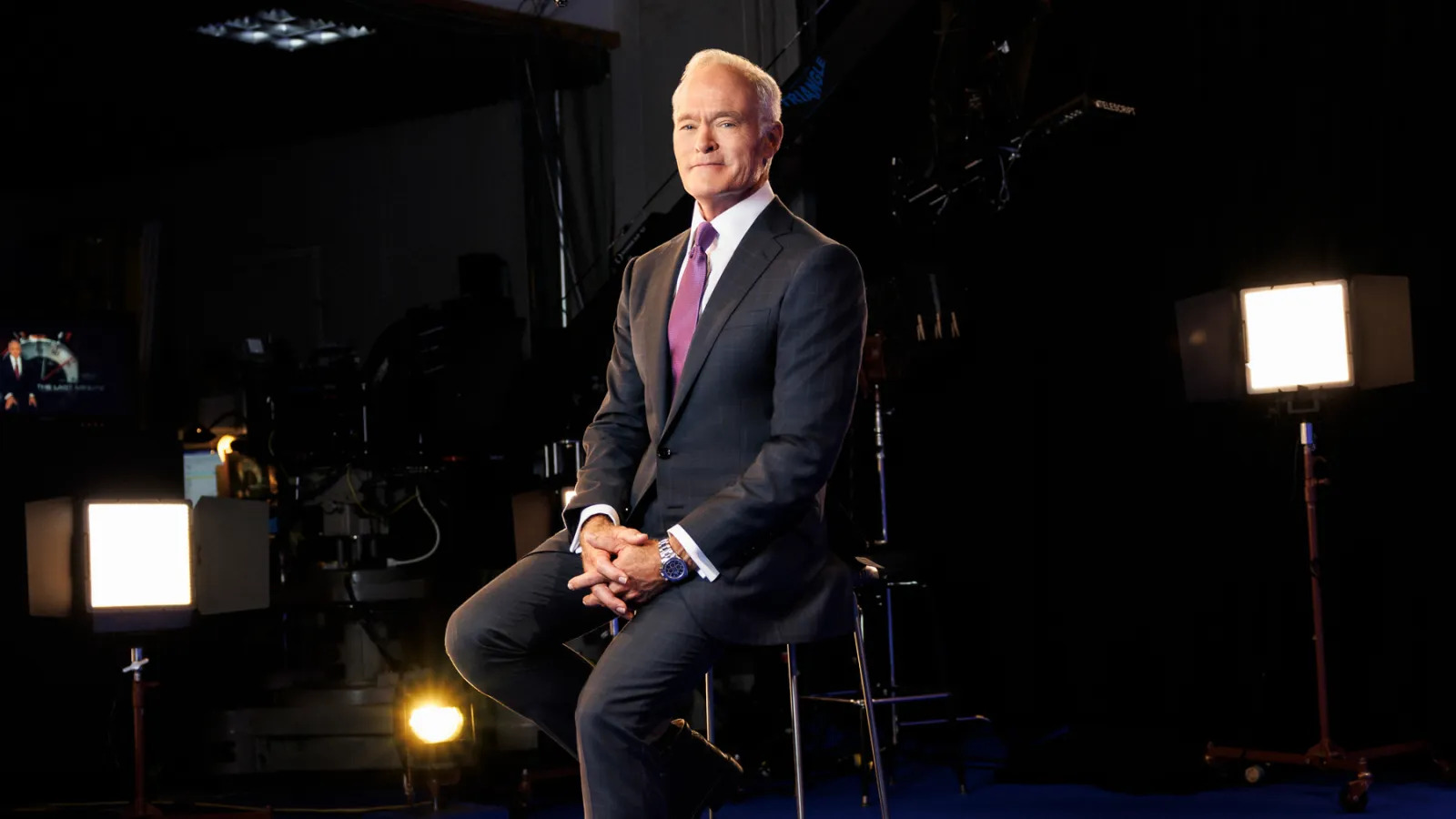
What began as slight trepidation among CBS News staffers when Bari Weiss was installed as editor-in-chief of the news organization last October has evolved into outright chaos in the wake of longtime 60 Minutes correspondent Scott Pelley's unceremonious dismissal on Tuesday.
It's the latest crisis to engulf the newsroom months after Weiss overhauled the flagship CBS Evening News program, bumping up morning host Tony Dokoupil to lead anchor. Last week, Weiss fired a slate of trusted correspondents and producers and hired tech journalist and filmmaker Nick Bilton as executive producer of 60 Minutes, the gold-standard television news program that has won more than 150 Emmys since its launch in 1968.
Bilton's arrival was immediately met with internal pushback from Pelley, who confronted the new boss during a heated all-hands meeting on Monday. An impassioned Pelley accused Weiss of “murdering” the iconic Sunday evening show and demanding answers from Bilton as to why four senior colleagues were “cruelly fired” on what he described as “Black Thursday.”
The outburst cost Pelley his job, Weiss said at a newsroom meeting on Wednesday. A foundation of trust had been broken, and there was no way back, Weiss said, according to the New York Times. “We didn't want that to happen, but that's the path that he chose.”
Yet, Pelley has already fired back, accusing Weiss of lying about the nature of their private conversation, and in a separate statement, claimed leadership had been “instruct[ing]” him to “inject falsehoods and bias into a politically sensitive story” and to “include assertions that are unverified.” (CBS did not immediately respond to Rolling Stone's request for comment.)
With three of its longtime correspondents fired in the past week, what an overhauled 60 Minutes will look like remains unclear. Here's what you need to know to get caught up on what's been happening behind the scenes:
Who is Bari Weiss?
Last year, David Ellison, son of tech billionaire Larry Ellison, acquired Paramount in a massive merger and appointed Weiss as editor-in-chief of CBS News. The decision immediately sparked criticism, given Weiss' background.
Before her appointment, Weiss served as a New York Times opinion writer before leaving to found The Free Pressan independent media company that “focus[es] on stories that are ignored or misconstrued in the service of an ideological narrative.” (As part of Weiss joining CBS News, Ellison purchased The Free Press in a $150 million deal.)
In January, Weiss shared her vision for the newsroom, emphasizing that modernizing how CBS News operated would be crucial to surviving the ever-changing media landscape. “Our strategy until now has been [to] cling to the audience that remains on broadcast television,” she said. “I'm here to tell you that if we stick to that strategy, we're toast.”
What was the first sign of trouble at 60 Minutes?
The first sign of trouble at 60 Minutes came in December 2025 over Weiss' decision to temporarily shelve a segment on CECOT, the El Salvador prison where the Trump administration had been sending hundreds of alleged undocumented Venezuelan immigrants as part of ICE's aggressive deportation policies.
Correspondent Sharyn Alfonsi voiced concern internally that she believed Weiss had “spiked” the story at the last minute for political reasons. Weiss disputed the claim, saying the story wasn't “ready” and wanted Alfonsi and her team to advance their reporting further.
Although the segment eventually aired in January, it marked the start of ongoing contention between Alfonsi and Weiss.
What prompted the latest blow-up?
After a few months of speculation over whether Alfonsi would have her contract renewed, Weiss fired Alfonsi along with correspondent Cecilia Vega, executive producer Tanya Simon, executive editor Draggan Mihailovich, and producers Guy Campanile and Matthew Polevoy last Thursday, effectively clearing out the show's leadership team.
In Simon's place, Weiss named Nick Bilton as executive editor, calling him “one of the most entrepreneurial journalists of our time.” She added that Bilton shared in the company's mission to reinvigorate the show, drawing from his “deep investigative experience and understanding of the technological moment we're in.”
Bilton introduced himself to the team on Monday morning in an all-hands staff meeting, attempting to debunk rumors that he was going to turn the prestige show into “60 one-minute episodes, that it's going to be like TikTok,” according to the New York Times.
The meeting went off the rails when Pelley, a 50-year veteran journalist, began peppering Bilton with questions and accused Weiss of destroying the show's sterling reputation.
“She is murdering 60 Minutes,” Pelley said. “She does not love this place. She was brought in to kill it, and she's been doing exactly that … She has no qualifications for her job; you have slender qualifications for this job. The changes that she's made at the Evening News have been catastrophic, so why should we expect that any of this is going to be any better?”
Why did Scott Pelley accuse Nick Bilton of having 'slender' qualifications?
Bilton has little experience in broadcast television news, although he has worked both as a journalist and producer. He held positions at the New York Times and Vanity Fair as a technology columnist and contributing writer, respectively.
When it comes to the screen, Bilton directed the Netflix documentary Fake Famous in 2021, and is credited as a writer on Euphoria creator Sam Levinson's widely panned HBO show, The Idol, starring The Weeknd and Lily Rose Depp.
According to his website and DeadlineBilton is also writing and producing a film and book about “the mob in 1970s Hawaii” for director Martin Scorsese, with Dwayne Johnson, Emily Blunt and Leonardo DiCaprio attached to star.
What did Scott Pelley say about his departure?
On Tuesday night, Pelley released a statement acknowledging his departure, expressing his gratitude for his time on the program, and pointedly noting that there had been a recent nine-percent jump in viewership. Then Pelley went scorched earth against the new CBS News and Paramount leadership.
“The new owner of our network is casting this legend aside, apparently to curry a moment of favor with the Trump administration,” he wrote. “New management has instructed me to inject falsehoods and bias into a politically sensitive story. I've been told to include assertions that are unverified … Finally, incompetence and unprofessionalism in the new management have wreaked havoc. In a case involving one of my stories, the entire program came within 19 minutes of not getting on the air at all.”
By Wednesday morning, Pelley issued a fresh statement to dispute comments Weiss had made to the newsroom about what led to Pelley's dismissal. Weiss painted the closed-door meeting between herself, Pelley, Bilton, and CBS News president Tom Cibrowski as contentious.
“Despite our attempts to engage with Scott Pelley and to find a way back, unfortunately, we weren't able to do so, and so we had to part ways,” Weiss reportedly said.
But Pelley said he was “stonewalled” during the brief 10-minute meeting, and there was no “constructive dialogue” before he was shown the door. “These executives cannot gain the trust of the staff with lies,” he said. “This is antithetical to everything we stand for and reveals contempt for what journalists do.”
Who else has recently left '60 Minutes' program?
Anderson Cooper announced last month that after 20 years as a contributor for the iconic program, he'd be stepping away. (Cooper had juggled both his CNN anchor role and his 60 Minutes position.)
“There's very few things that have been around for as long as 60 Minutes has and [have been able to] maintain the quality that it has,” Cooper said in a sign-off. “Things can always evolve and change, and I think that's awesome, and things should evolve and change, but I hope the core of what 60 Minutes is always remains. I think the independence of 60 Minutes has been critical.”
Former 60 Minutes executive producer Bill Owens resigned on his own agreement last April following Paramount's merger with Skydance. In a speech given Monday at the New York Press Club, Owens echoed Cooper's remarks and applauded Pelley for taking a stand. “CBS News and 60 Minutes they are institutions, not places where partisans and ideologues should be employed,” Owens said, reported Variety.
