
List of references contained in a single review of Vol.II by Angine de Poitrine: Ruins, King Gizzard & The Lizard Wizard, Primus, King Crimson, Magma, Art Zoyd, Renaldo and the Loaf, Zoogz Rift, Forcefield, Yip-Yip, Lightning Bolt, Battles, Gentle Giant, John Scofield, Fred Firth, Wire, Helmet, Mushuggah, Arto Lindsay, Dawn of Midi, Frank Zappa, Glenn Branca, Focus, Gary Hoey, Guck, Gumby's Junk, Chaser, Rhododendron, Spring Breeding. Only Harry Partch is missing.
Some are spot on, others are references so arcane that even those who spend their days listening to records have to Google them. We get the idea that it is music for initiates, sonic freemasonry, an experience for a few. However, it seems to me that Angine de Poitrine don't make music for people who know bands with 1500 monthly listeners on Spotify. Instead, they take so-called math rock out of the hands of very serious nerds and have a laugh about it. It's not a laboratory, it's a playground. In Vol.IIwhich came out Friday, I don't feel the sense of threat that many felt. I feel the urge to explore strange new worlds, as they said in Star Trek. I hear fun and nonsense. The fun of nonsense. Vol.II he is not brainy, he speaks the language of joy.
But first, a step back. One of the latest victims of their singular charm is Dave Grohl. During an interview he took out his phone to make sure he pronounced the name correctly and said that Angine de Poitrine completely freaked him out. Before him, Mike Portnoy of Dream Theater, monstrous drummer of the most famous prog metal group in history, wrote that as a child he imagined that the music of 2026 would be like this, science fiction stuff in short, and that watching the duo's performance filmed by KEXP is as obligatory as that of Pink Floyd in Pompeii, stuff that would give a lot of rockers heart attacks. Meanwhile, Sean Lennon puts hearts on any post that concerns them. When his concept with Les Claypool comes out at the beginning of May, who apparently has some affinity with the Canadians, it won't be welcomed by this clamor.
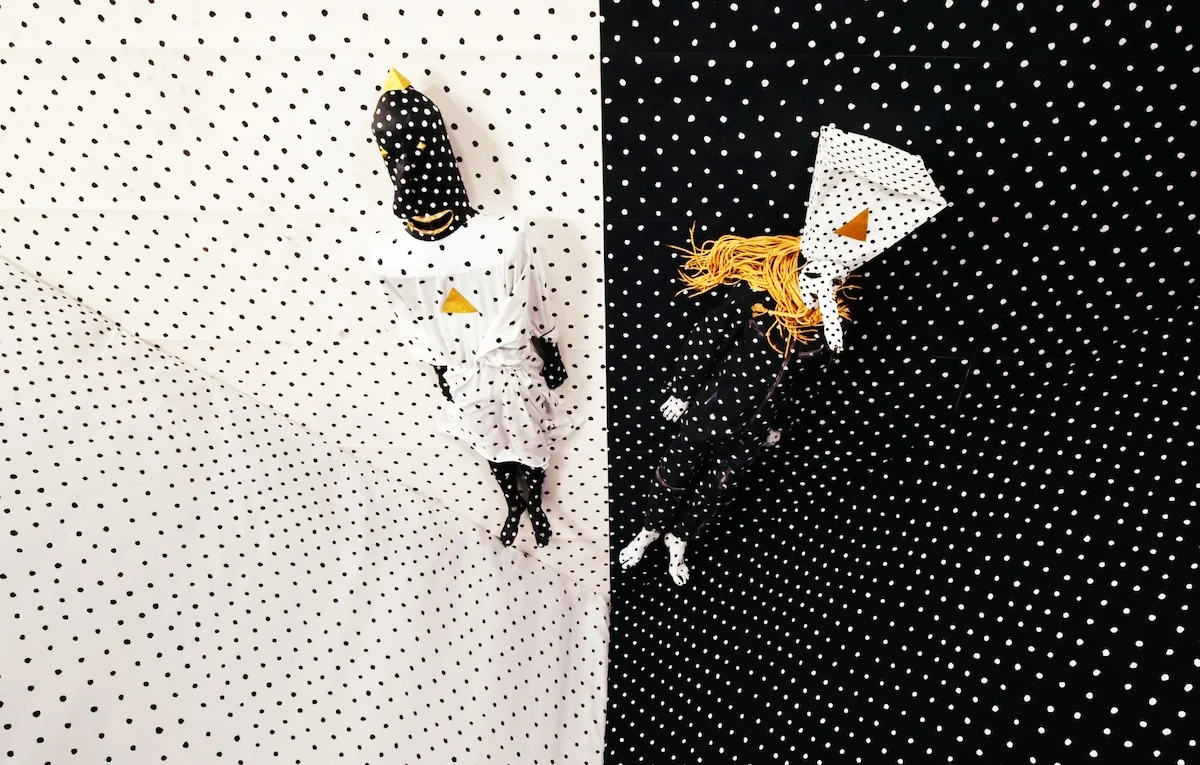
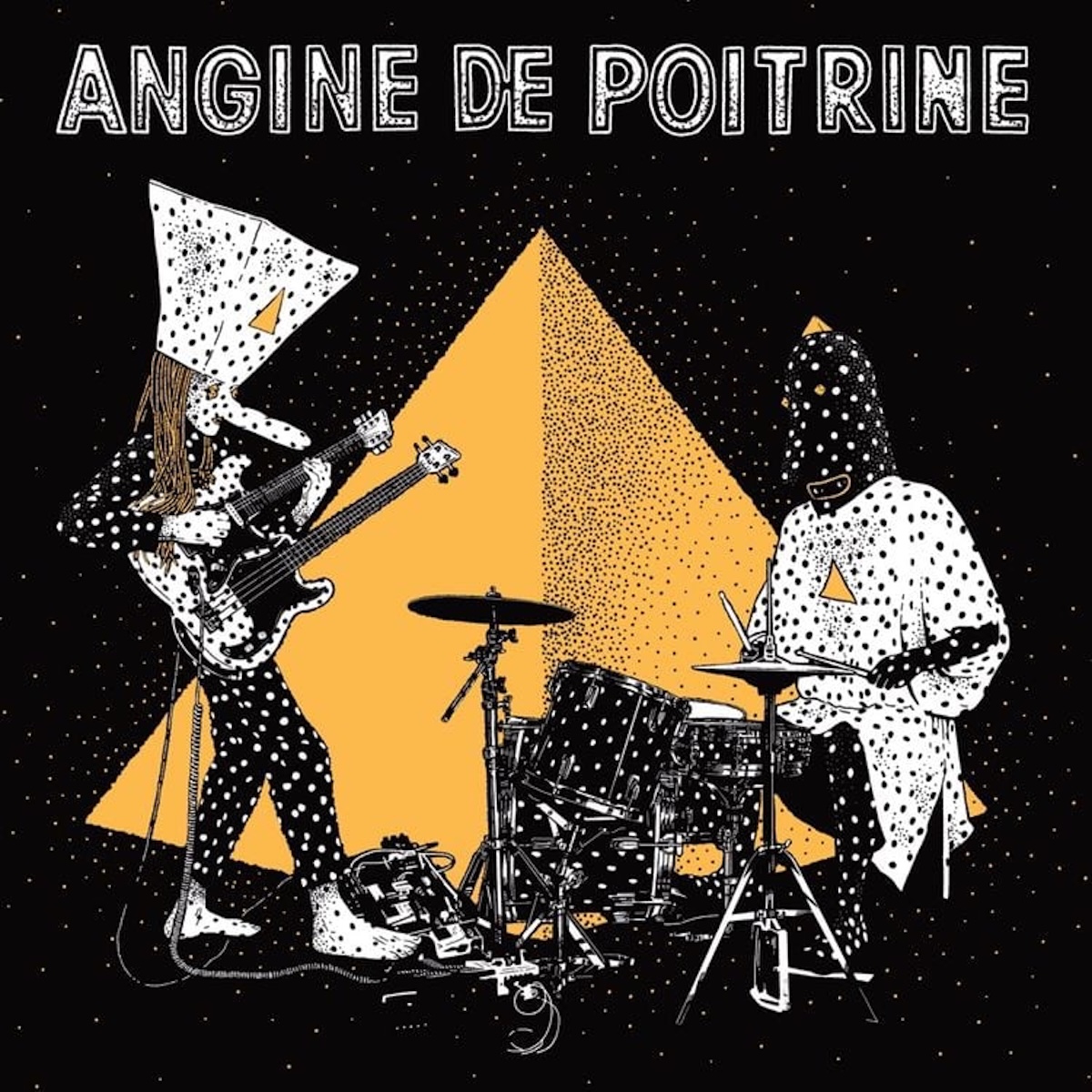
Something like this had never been seen before. In recent days, Instagram feeds have been filled with images of the two instrumentalists from Saguenay, Quebec whose identity is not known, although the hunt is open for names and faces. I see them, only them, their polka dots, their costumes, the cover of Dark Side of the Moon redone with their graphics, the two transformed into Lego characters and then dropped into fashion week, drawn in a cartoon version, skits on how they have or have not changed rock, guitarists who reproduce their phrasings. And of course endless comments on why they like them so much. The Internet that explains things has gone wild, converging on the belief that in a time of songs that are made or appear to be made with artificial intelligence we need oddities that only humans can invent. In an era of standardized music, we are fascinated by those who speak an alternative language.
I bet my copy of Sailing in the Seas of Cheese that the most typed message in the last few weeks in the messaging systems of enthusiasts was “but have you seen these?” and its variants. They were unknown. In the space of a few weeks, thanks to the 27-minute KEXP video, word of mouth and the penetrating power of algorithms, they have become the most talked about rock group in the world. U2 surprise release EP? And who cares if the second album of these two crazy people who express themselves by making alien noises comes out. We no longer want to sing in the name of love, we want to move our heads and feet with pieces that are titled Utzp And Angorwithout even knowing what the titles mean, probably nothing, definitely nothing.
The music of Vol.II36 instrumental minutes rarely accompanied by bizarre verses, is entirely played by the two who call themselves Klek de Poitrine and Khn de Poitrine. The first plays drums, the second bass and guitar. To play this stuff live he uses a double-necked instrument and pedals for the loop, but you already know this if one of the seven and a half million views of the KEXP video is yours. The overlapping of looped and played parts means that in their pieces, which are quite long, there is an extensive use of polyrhythms. And yet there is nothing truly crazy and reckless in their instrumentals. It's compelling, changing and evolving music while based on the concept of repetition, but which aims to remain relatively simple, with a surprisingly positive spirit.
In their Instagram bio they define themselves as a Dada-Pythagorean-Cubist microtonal rock orchestra. The microtonal music thing has attracted a lot of attention and needs to be explained. In the Western equal temperament which is the basis of the music we listen to, the octave, i.e. the interval between two sounds whose frequency is double the other like the central C and the immediately lower one, is divided into 12 semitones which correspond to the 12 notes, the seven that everyone knows (the white keys of the piano) and those altered with sharps and flats (the black keys). In microtonal music the octave can be divided into smaller parts, typically into quarter tones, i.e. half of a semitone, therefore half the distance that separates E from F or C from C#. Since we are used to hearing music organized in keys that involve hierarchies between notes that seem “natural” to us (even if they are not), microtonal music sounds strange or even wrong.
Obviously it is not in itself and indeed in other musical cultures the use of microtones is perfectly normal. It was precisely the fascination for Arabic and oriental music that uses them that pushed Khn to measure himself with microtones and modal scales, an approach widely experimented in jazz and contemporary music. Harry Partch had managed to divide the octave into 43 microtones, building an instrument capable of reproducing them, Khn limited himself to adding frets to the guitar among those present. Many parts of Angine de Poitrine's songs do not make extensive use of microtones, but the result can still be heard clearly, with phrasings that seem strange, wrong but only slightly, as if the guitar had been slightly out of tune and then in the next note perfectly in tune again. There are echoes of Eastern European music, but set within a very Western idea of groove and frenetic, dissonant, syncopated rock. It's music you can head bang to and even think about dancing to, with passages that seem to replicate the sense of ecstatic abandon of certain electronics.
So does microtonality make any difference? In part yes, because it creates a sort of interesting harmonic mismatch even if in the style of the two it is not more important than the rhythmic scans. And partly no, not everyone who listens Vol.II they capture ultrachromatisms and are thus sensitive to the pitches of sounds. However, we usually hear the slight discordance of certain notes compared to those we would expect, but at the same time, since they are deviations of quarters of a tone, we are able to trace them back to a known pattern. We sense that there is something strange, but not to the point that it seems completely wrong.
In any case, presenting themselves as a microtonal rock band has increased the band's appeal and for once fueled a discussion on how music is made and not on what revolves around it. And in any case, the understanding between the two arrives or should reach everyone, the interplay, the world in which their musical personalities meet, the ingenuity of the rhythmic combinations, the impact, even the so-called primitive character of playing with just two (plus the ghost in the machine, the loop). It's the other prodigy of Angine de Poitrine, it's their paradox: they present themselves as aliens and remind us that playing together – and they've been doing it for about twenty years – is a very human fun.
Only certain incurable optimists think that Angine de Poitrine have become the group everyone talks about thanks to their music. If we don't talk about anything else it's because they look like aliens. In fact, they look like alien animals. Without the black and white polka dot costumes, without the papier-mâché masks, without that nose that stretches towards the guitar, without the spatial hello hello with his hands, without Khn's bare foot operating the effects pedals, without Klek's bell-shaped helmet their videos wouldn't have all those views and Vol.II would have ended up like the Vol.1 released two years ago and listened to by few. Having a dance with other masked groups only partially explains the phenomenon and what it feels like to see them play, even just in a video. Like in the cinema, the suspension of disbelief is triggered and for a moment, the first time you find them in front of you, you are willing to play the game and believe that those two are not musicians disguised to have a carnival or to hide their identity, but guys from another world who don't know the rules of tonality in ours and who have fun like crazy playing together.
But the music is there and it says one thing: Angine de Poitrine have made math rock fun. Hear the beginning of Fabienk or the way in which the two seem to challenge each other by taking the pieces to unusual places, pay attention to the exhilarating character of certain passages and certain timbres, to the nonsense of the rare sung parts, listen to the progressions which despite the hard impact are not ugly, but raise a smile, the spatial polka of Utzpthe distorted prog of Yor Zarad.
It is usually very technical music, made with passion, but which the general public is unlikely to be passionate about, it is played with the precision needed to make the rhythmic complexity and metric connections effective, often with calm indifference towards popular taste. Angine de Poitrine play it with a vitality, a spirit, a sense of humor and a joy in doing it together that paradoxically unites them with certain rock bands between the '50s and '60s, when instrumental 45s hit the charts and people were racking their brains over the puzzle of twangy sounds that seemed out of tune, seventh chords with an augmented ninth, pentatonic scales. Even then, fantasy seemed alien and artificial intelligence was science fiction.
Daniel D`Amico for SANREMO.FM
