
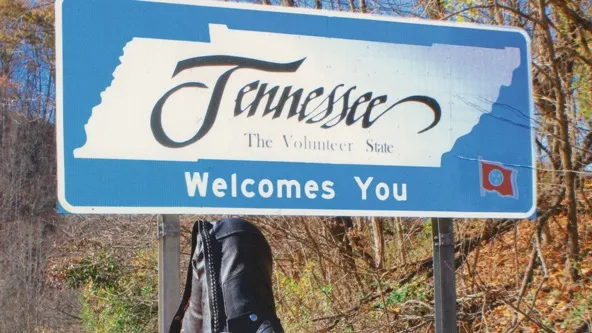
Zoh Amba spent their Kingsport, Tennessee adolescence diving into YouTube, immersing themselves in videos of jazz saxophonists like Albert Ayler and Charlie Parker. Taking up saxophone themself, they developed a skronking, wildly intense style as if trying to transcend the constraints of their instrument. After dropping out of a conservatory, they became a fixture in the New York City jazz scene, playing with peers like Wendy Eisenberg at John Zorn’s experimental music venue the Stone. “I love straight-ahead [music], but unfortunately, it’s just not the song in my heart,” Amba once told The New York Times.
As they return to their Appalachian roots, that song has changed: Their Matador debut, Eyes Full, is a 13-song, 40-minute singer-songwriter record, trading Vijay Iyer collaborations for Folk Bitch Trio and Courtney Barnett opening slots. It’s not without precedent: In 2024, Amba formed Beings, a supergroup with other genre-hoppers like guitarist Steve Gunn and multi-instrumentalist Shahzad Ismaily–Amba even took lead vocals. On Amba’s Sun, they infrequently ditched the saxophone for piano and their first instrument, guitar. With a band including Beings bandmate (and Dirty Three drummer) Jim White and MJ Lenderman’s bassist, Landon George, Amba aims to transfer the ferocity of their saxophone playing to folk music. It’s an intriguing concept that only occasionally works in practice.
No score yet, be the first to add.
In 2024, Amba told the Roulette podcast, “People that think that [I sound like Ayler], you’re not hearing the right thing,” and that disclaimer may also apply when comparing Eyes Full to Big Thief, never mind that Adrianne Lenker and Amba’s sneering vocals both owe a lot to Bob Dylan, too. (You could also think of a scragglier Emmylou Harris.) Amba, to their credit, lightly carves out their own niche: Recorded with zero overdubs, the sound on Eyes Full is rawer than even the still fairly grounded live-to-tape Big Thief records. Their band played together for several hours a day in advance of the studio—but for a group of jazz musicians, that means there’s room for experimentation. “Dead End Street” shambles along as only a meticulously rehearsed band can, the dynamics still controlled enough to pull off a mid-song noise rock break.
According to press materials, these are character-based narratives, but Amba delivers each song like it’s achingly autobiographical, their voice often cracking as if under the weight of memory. The goal is to spotlight underrepresented stories: the heroin addict on “Odd Jobs,” the burned-out friend looking for God on “Another Time.” That need for alternative perspectives leads to uncomfortable territory on opener “OCD”: “Dance with me until they drug our minds,” they sing. Yes, overmedication is a real crisis, and OCD is frequently misdiagnosed, but Amba’s song turns a struggling kid into some pure-hearted, misunderstood dreamer. Charitably, they’re less interested in telling listeners what to feel than getting across the character’s angst—the song accelerates in fits and starts like a broken rollercoaster, mirroring the stasis of its numbed protagonist.