
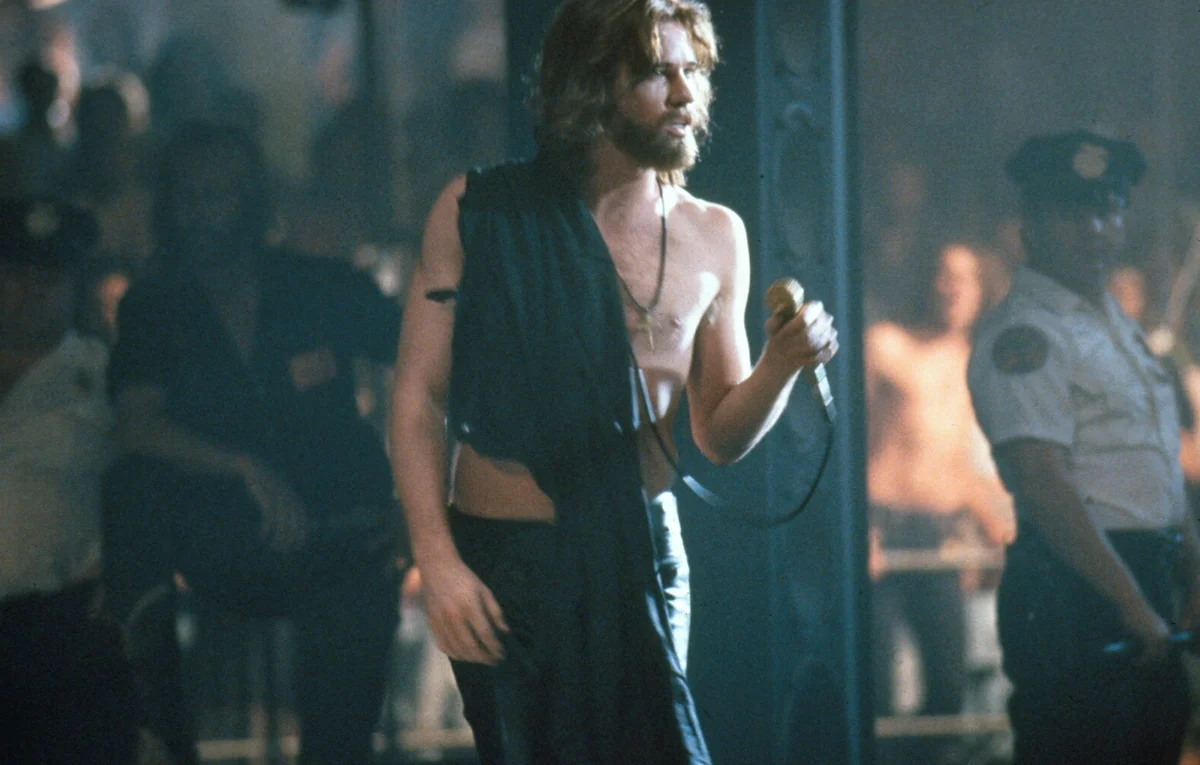
There are films that, over the years, continue to divide just as much as the day they were released. The Doors by Oliver Stone belongs to this category. 35 years after the first distribution, the return for three days (today, Tuesday 14 and Wednesday 15 July) in Italian cinemas of the restored 4K version offers the opportunity to put back at the center a question that has accompanied the film since 1991: how much does faithfulness to the facts matter when telling a myth?
It is an inevitable question, because few musical biopics have aroused equally contrasting reactions, with the public of the time almost immediately transforming it into a cult and the critics today as yesterday strongly divided. Not even the Doors, the real ones, were ever able to express a unanimous opinion on the film. Ray Manzarek, for example, hated him: «Oliver Stone murdered Jim Morrison. The film portrays Jim as a violent, drunken lunatic. That wasn't Jim. When I left the cinema, I thought: “Who was that idiot?”. Jim didn't set fire to Pam's closet. He didn't throw a television at me. His student film contained no images from The triumph of the will. It was all made up from scratch. And Jim never dropped out of film school: he graduated from UCLA. In the film, however, he appears only as a drunken hedonist. The tragedy is that fame consumed him. But that wasn't Jim's message. He was smart. He was affectionate. He was a good man who believed in freedom and questioning authority. But watching this film, you would never know it.”
According to the keyboard player, the director had reduced Jim Morrison to a caricature, turning him into a self-destructive drunkard incapable of moving beyond alcohol, drugs and excess. A reading which, in his opinion, inevitably ended up impoverishing everything that Morrison had been as a poet, author and singer. For the sake of intellectual honesty, it must be said that Manzarek had a bad tooth, because Stone had decided to use John Densmore's memoir instead of his own as inspiration for the screenplay, so part of his resentment was due to ego issues.
Manzarek was right, but only partially. Because Morrison really had a devastating relationship with alcohol and substances and denying it or sugarcoating it today (as in 1991) would make little sense. The point, rather, is another: Stone deliberately chooses to talk about that part of his personality as if it were the key through which to interpret everything else. The result is a Jim who is almost always over the top, magnetic, self-destructive and, it goes without saying, decidedly shamanistic, but destined to devour everyone around him. More Jimbo than Jim, to put it simply. Something decidedly far from the concept of an authorized biography, but certainly the product of those who had seen that revolution with their own eyes. John Densmore, with whom I have had the opportunity to speak several times over the years, has always shown much more openness towards Stone's work and his cameo in the film confirms this, while Robby Krieger offered the most balanced summary of the whole story: it is a great musical film, the first part and the concert scenes are exceptional, but it doesn't really tell what happened.
The Doors it's the opposite of Bohemian Rhapsody. Presented as a film about Freddie Mercury, it inevitably ended up telling the story of Queen. The Doors uses the band as a backdrop in which to stage the figure of Jim Morrison, who occupies every inch of the screen. The others exist, of course, but they remain satellites revolving around that sun. It's frankly inevitable. After all, Oliver Stone and Morrison shared much more than it might seem. Both had attended film schools and, even before becoming a rock star, Morrison dreamed of directing films, experimenting with images, building a personal visual language. It must also be said that, beyond a marked visionary nature, Morrison's works were so poorly edited and often so abstruse even for the late 1960s that they were eliminated shortly after their first and only screening. However, it remains poetic that the great film about his life arrived exactly twenty years after his death, made by a director who grew up in the same historical period in which Jim imagined his future behind a camera.
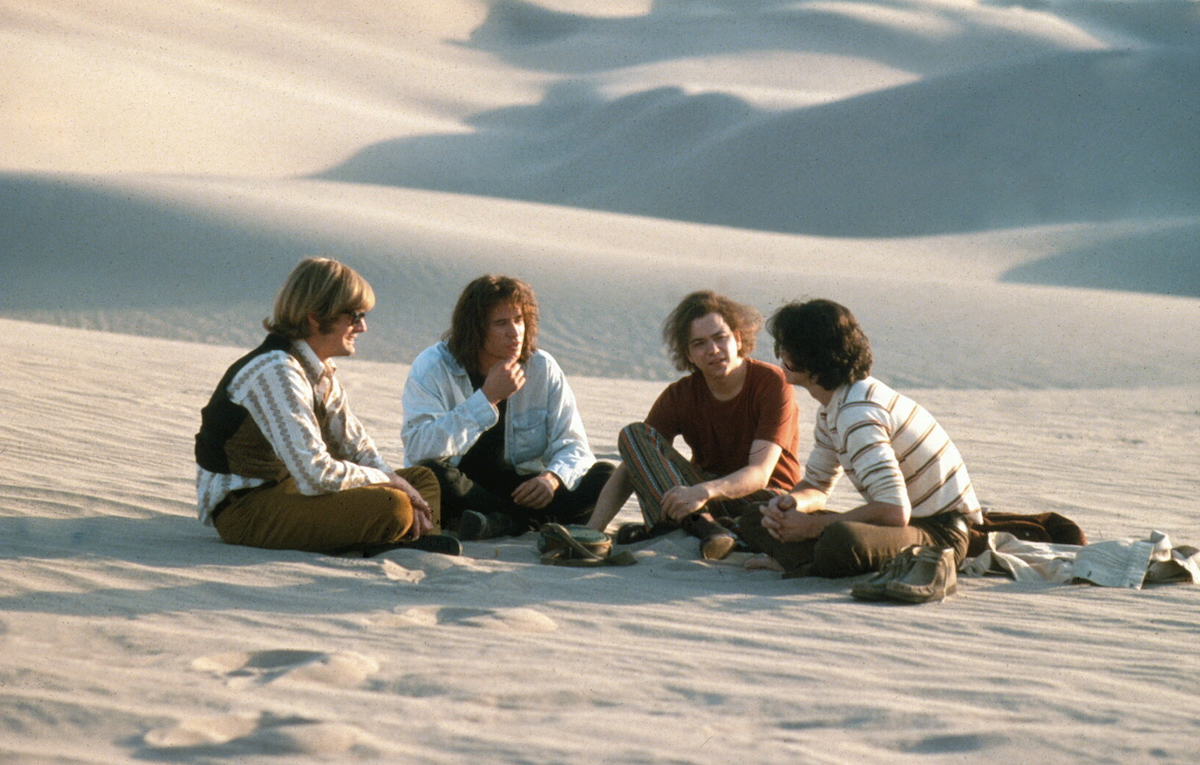
The Doors depicted in Oliver Stone's film. Photo: Lucky Red
There is one point that practically no one has ever questioned and it is the most important aspect of all: The Doors remains an extraordinary musical film. Stone turns live performances with a power that still leaves people impressed today. It doesn't try to imitate concerts, which is very popular in current biopics, but creates an almost hallucinatory experience in which music and images end up feeding each other. It is probably the film that best managed to convey the ritual character of the concerts of the time, that continuous oscillation between rock, theatre, poetry and provocation.
Adhering to reality or not, it manages to make us feel the sensation of danger and Dionysian high that all those who have witnessed it describe. Much of the credit goes, of course, to Val Kilmer. Reducing his interpretation to a simple imitation would be almost offensive. Kilmer got so into the part that he admitted he had great difficulty abandoning it once filming was finished, as well as having paid for weeks of lessons out of his own pocket to learn how to reproduce Morrison's tone at every stage of his career. He studied every available recording for months, learned the band's repertoire to the point of singing it himself during preparation, and even confused some of the Doors' historic collaborators, in some cases unable to distinguish his voice from the original one. Krieger himself admitted that he was almost ashamed when on a couple of occasions he wasn't able to tell whether it was Kilmer or Morrison singing.
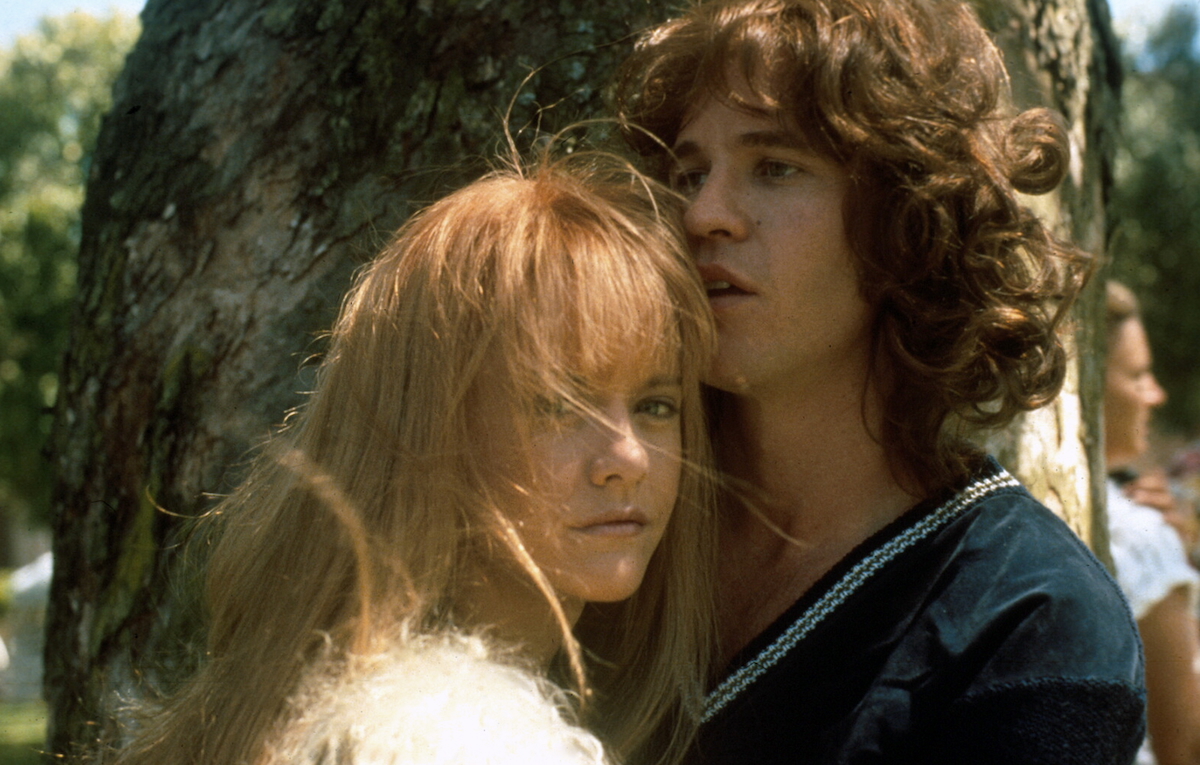
Meg Ryan (Pamela Courson) and Val Kilmer (Jim Morrison). Photo: Lucky Red
Even today his remains one of the most impressive performances ever given by an actor in a musical biopic, so much so that it makes it almost impossible to imagine anyone else in that role. Of course, the dialogues sometimes border on the ridiculous (it's difficult to imagine that Jim and Pam spoke only through highly cultured literary quotations), everyone always seems more made than they actually were and certainly The Doors never had any chance of becoming a family film like it is today Michael. It is not among Stone's best films, but the choice not to tell that adventure in a linear way, but to narrate it in the way cinema can tell a myth, remains courageous and unconventional.
Stone deforms, amplifies and chooses some details while sacrificing others. It does pretty much what Coppola did with Apocalypse Nowtransforming Vietnam into a journey into madness rather than into a historical reconstruction. The two films even shared a curious fate: both contributed decisively to bringing the Doors back into the collective imagination. When in 1979 Coppola chose The End to open its journey into horror, a new generation suddenly discovered that music. Twelve years later Oliver Stone completed the work, giving Morrison definitive status as a cinematic icon. Without those two films, it's hard to imagine that The Doors would have retained such a powerful aura among those who hadn't yet been born when the band broke up.
Today the situation, in some ways, seems to recall that of the time: the Doors continue to be one of the most important groups in the history of rock, but they are much less present in the musical debate than they were a few decades ago. The hope is that this return to the theater will serve to replicate that miracle and not just reopen the eternal discussion on how much Oliver Stone betrayed the reality and legacy of the band and its leader.