
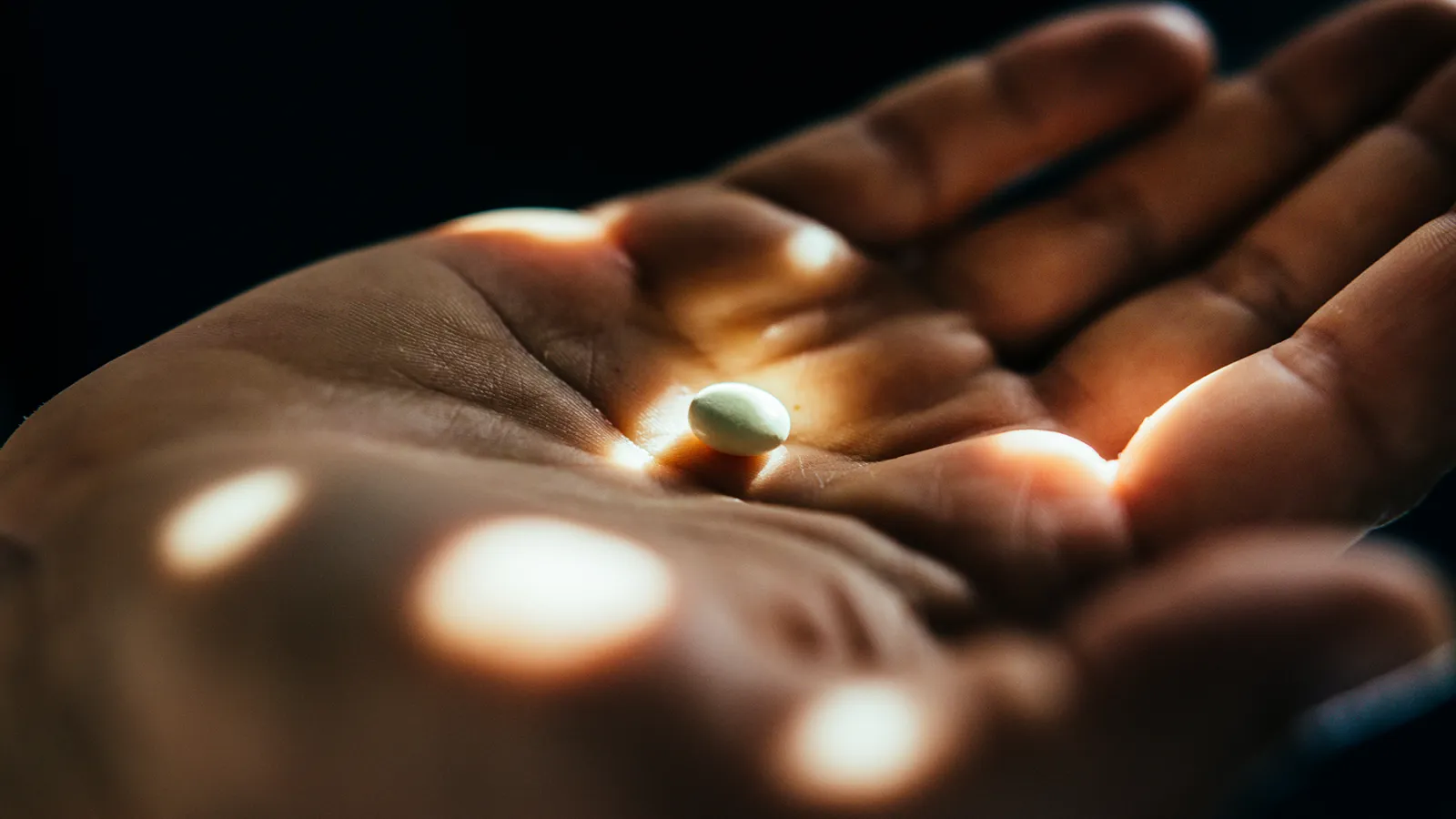
A new synthetic opioid on the illicit market is making headlines as the “next killer drug.” DEA officials say cychlorphine is a potent synthetic opioid that could be up to 10 times stronger than fentanyl, though harm reduction advocates caution that media coverage could be inflating the threat.
The warnings are urgent, with reports that cychlorphine is taking over the illegal drug supply at an “exponential rate” alarming people across the U.S. In April, after a reported fatal overdose, San Francisco health officials issued a warning about N-Propionitrile chlorphine, saying the drug had appeared in the city for the first time. The New York Times later identified the victim as Dante Lacourte, a 16-year-old who was found unresponsive in his bedroom by his mother. Christina Lacourte administered two doses of Narcan to her son, but they did not revive him. His autopsy identified cychlorphine as the drug responsible for his death.
Though data is limited, according to an April 30 alert from the Office of National Drug Control Policy (ONDCP), 55 deaths nationally were linked to cychlorphine between 2025 and early 2026, while Tennessee’s Knox County Regional Forensic Center (RFC) said that the state alone had seen 63 deaths linked to the drug between July 2025 and September 2026.
What Is Cychlorphine?
N-Propionitrile chlorphine, commonly referred to as cychlorphine, was first detected in the United States drug supply in 2024 by the Center for Forensic Science Research & Education (CFSRE). Later that year, the Drug Enforcement Agency (DEA) reported its first U.S. detection after encountering it at a Florida laboratory.
Cychlorphine is part of a new class of drugs known as “orphines,” which are their own subclass of synthetic opioids. The U.S. opioid crisis has evolved through waves driven by the displacement of one class of illicit drug by the next. According to the CDC, the first wave began in the 1990s, driven by a tripling in opioid prescriptions, most notably when OxyContin was introduced by Purdue Pharma in 1995. The second began in 2010, when heroin, made cheaper by more efficient distribution, flooded the illicit market just as federal authorities began to tighten regulations on prescription opioids. The third wave began in 2013 with substantial increases in overdose deaths involving illegal synthetic opioids like fentanyl, which had previously been used only in clinical settings for people undergoing surgery or cancer treatment. Now, however, it began to be integrated into the illicit drug supply and sold as “heroin,” or counterfeit opioid or benzodiazepine pills.
Following a global crackdown on fentanyl, a class of cheap, potent synthetics called nitazenes gained a foothold in the illicit drug market starting in 2019. In the U.S., the DEA classified isotonitazene as a Schedule 1 substance in 2020; since then, seven other nitazenes have been similarly scheduled. Last year, China, where many of these drugs originate, implemented a generic ban on nitazenes. Orphines have since emerged as a replacement in U.S. and international drug markets. In January 2026, CFSRE put out an alert describing the emergence of cychlorphine and other orphines as “global synthetic opioid threats.”
In August, the DEA issued an emergency order placing cychlorphine and three other orphine analogs into Schedule I, meaning they are deemed to have a high potential for abuse, and no currently accepted medical use. Its Schedule I status makes cychlorphine almost impossible for most researchers to access, and claims by unnamed doctors that the drug is “10 times more potent than fentanyl” have not been proven. Still, Dr. Shan Yin, a board member of the American College of Medical Toxicology, tells Rolling Stone that it is reasonable to assume that the drug is more potent than fentanyl. “I believe that the 10x potency claim is an estimate based on pharmacologic findings from similar compounds,” he says. “This is not like a marketed drug where you could [administer it to] humans to determine what doses produce the same level of analgesia.”
Mike Selick, director of capacity building and community mobilization with the National Harm Reduction Coalition, says that the unpredictability of illicit drugs like cychlorphine unexpectedly ending up in someone’s purchase is a large part of the danger. “Comprehensive drug checking is always the best option,” he says, referring to testing substances for high-potency synthetics like fentanyl; however, standard test strips can’t detect the newer cychlorphine, which is reportedly turning up in fentanyl, cocaine, and counterfeit pills.
No, Narcan Isn’t ‘Ineffective’
Reports that naloxone, the life-saving medication that rapidly reverses an opioid overdose, is “ineffective” in cychlorphine cases have circulated despite evidence to the contrary. Dr. Darinka Mileusnic-Polchan, chief medical officer at the Knox County Regional Forensic Center, claimed in a February press release that “Narcan does not completely block the effects of the drug and multiple doses may be needed to prevent an overdose.” The Center’s director and chief administrative officer, Chris Thomas, later told Filter magazine that that information came from federal officials: “In our discussions with toxicologists from the DEA we were informed that due to the potency of this particular drug that there is a possibility that multiple doses of Narcan would most likely be needed or possibly ineffective.”
It’s unclear why DEA made that claim. “There is no convincing evidence that cychlorphine is resistant to naloxone,” Yin says. “In fact, there is at least one published case report of a patient with a cychlorphine overdose who responded to naloxone. As with other potent opioids, some patients may require multiple doses of naloxone. However, this is not unique to cychlorphine, and people should absolutely administer naloxone if they suspect an overdose.”
Selick says overdose protocols should always be followed, no matter what: “Naloxone doesn’t work on an opioid; it works on the receptors of the opioids by blocking them. When [officials] say things like naloxone doesn’t work, it makes people more likely to do nothing.”
Preparing for the Unknown
Without a way to test substances for cychlorphine, Selick says people who use drugs should keep Narcan on hand and employ harm reduction practices like staggered use: avoiding using at the exact same time so at least one person stays unimpaired and can monitor others for overdose. Along with naloxone, rescue breathing and airway management — emergency life-support actions used to restore oxygen and clear blocked passages when a person stops breathing — “are the most important things in any form of opioid overdose,” Selick says.
Despite the attention the media is currently giving cychlorphine, it remains fairly rare in the U.S. drug supply. Since 2024, the DEA says agency laboratories have identified just 135 cychlorphine exhibits (physical samples), compared with more than 13,000 fentanyl exhibits tested between July 2025 and September 2026. “The medical risk is real, although fentanyl itself is still responsible for the substantially greater burden of deaths than cychlorphine or any other opioid currently,” Dr. Yin says.
Dealing with the constant evolution of novel synthetics is like playing a kind of drug whack-a-mole. Selick says that being hyper-focused on any drug is a distraction in combating the opioid crisis. “Focusing on a specific drug ignores the trend of newer, more potent or more harmful drugs coming to the market on a regular basis,” he says. “The solution is to end our war on drugs and make sure people are given proper medications to be able to exit the unsafe, unstable street supply with proper support.”