
Something wicked this way comes — a Ryan Murphy show that wants to be narratively enticing, chock-full of thrilling newcomers, and grippy in a way that feels almost illegal. Here we go again.
A writer, producer, and director, Murphy is an industry giant, the visionary behind some of the biggest television series of the 21st century. Since 1999, Murphy has had a hand in crafting — often as the sole creator — at least 30 scripted series, from the salacious medical drama Nip/Tuck and the hypersexual high-school drama Glee to the melodramatic network procedural 9-1-1 and the genre-bending anthology franchise American Story (of Horror, Crime, and Love fame). This year alone has seen two House of Murphy debuts: the FX series The Beauty, a body-horror ripoff of The Substance, and Love Story, the Nineties-reviving tale of JFK Jr. and Carolyn Bessette. Now, a third release has arrived: The Shards, a cocaine-fueled Eighties-set thriller based on the 2023 novelized memoir of the same name by Bret Easton Ellis (Wednesdays at 9 p.m. ET on FX). And a new Monster installment, The Lizzie Borden Story, is right on its heels, set to debut on Netflix Sept. 17.
Murphy has built an empire by keeping a full-to-bursting pipeline of shows and returning to certain creative wells. His voluminous oeuvre is laser-focused on exploring the idea of the inner freak. Every Murphy series, from the entirely imagined Scream Queens to the rooted-in-reality Hollywood, introduces audiences to a character and then flays them to open to display some abnormality — moral, sexual, physical. Along the way, he uses shock, camp, humor, and sometimes outright disgust to mine these human dark sides.
But the consequence of this relentless churn of work has been a wild inconsistency in quality, leading to a cooling with even his most devoted viewing public. For every hit that captures something essential about our existential dilemma, like the real-life crime adaptation Monsters: The Lyle and Erik Menendez Story, there’s an All’s Fair, the milquetoast legal drama that stunt-casts Kim Kardashian as a high-powered divorce attorney amid a roster of too-famous-for-this actors reading a Mad Libs-esque script. There was a time when a new Murphy-stamped show would be a season’s tentpole event. Now, when his name is attached, no one — not even his most steadfast fans — quite knows what they’re going to get.
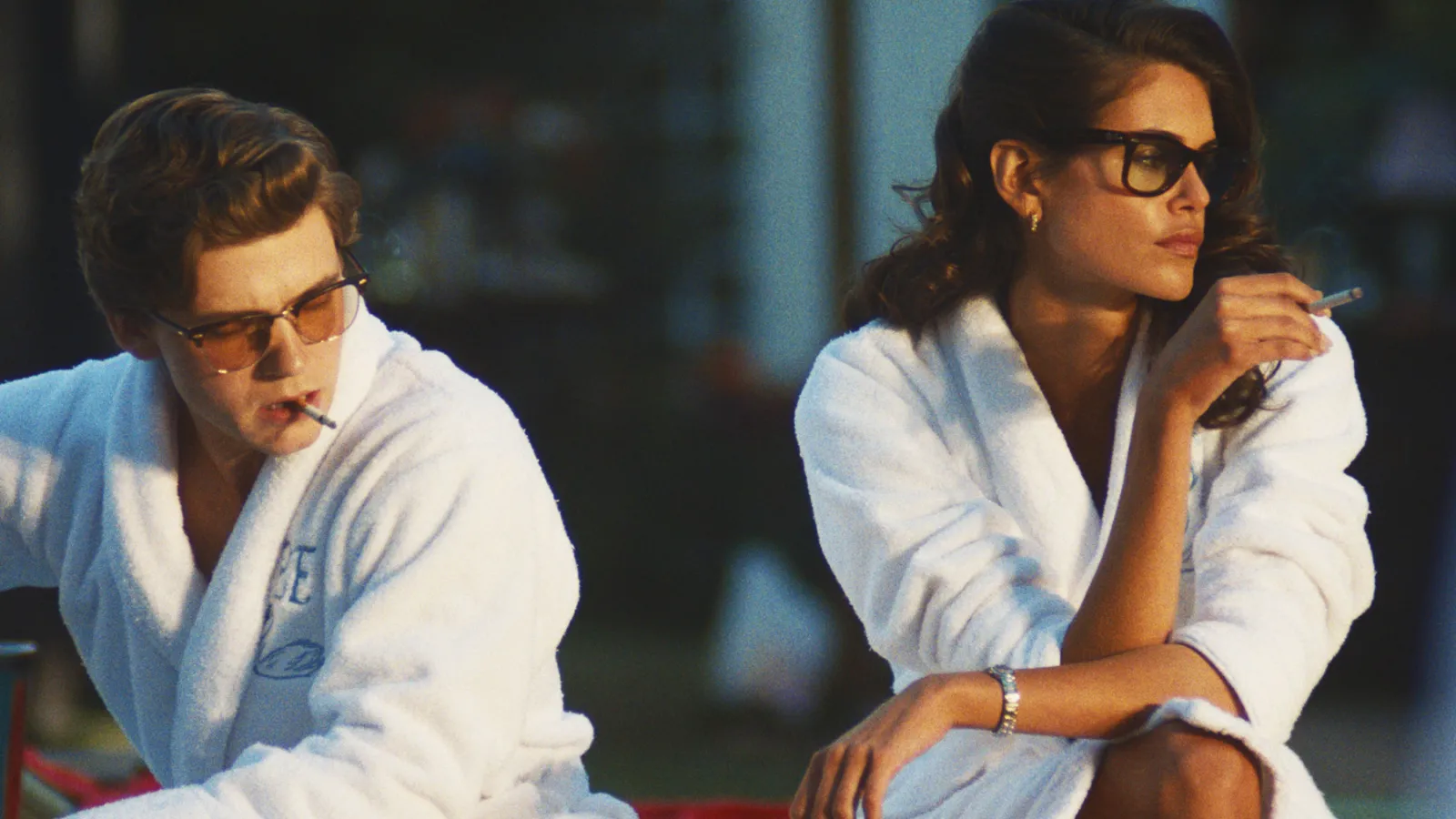
The Shards is the most recent — and perhaps glaring — evidence that Murphy has lost some creative command. As source material, Ellis’ autofictional story seems tailor-made for Murphy’s aesthetic. Kings of the self-insert, the two cultural lightning rods share the same reverence for nostalgia-tinged worlds and can effortlessly tap into both the alluring and the dangerous sides of sex, greed, and envy. The show sees a teenage Bret Easton Ellis (Igby Rigney), a senior at an elite L.A. prep school, in the midst of writing a novel he believes will change his life and kickstart his career as a Hollywood bigwig. The novel is based, in part, on Ellis’ tight-knit group of friends who run the school: his girlfriend, Debbie Shaffer (Hayes Warner); his best friend, Thom Wright (Graham Campbell); and the girl Ellis secretly pines for, Susan Reynolds (Kaia Gerber). When the emergence of a serial killer targeting teens coincides with the arrival of a new student, Robert Mallory (Homer Gere), suspicion and intrigue (and cocaine) become the name of the game. Ellis can’t tell if he wants to kill the new kid or fuck him, and those warring instincts threaten to rip his carefully built social scene apart.

The elite and debauched teens of The Shards.
FX
If Ellis weren’t such a literary fixture, it might be easy to imagine Murphy had created this setup himself. This is why it stings so badly that The Shards doesn’t work. Yes, there are good parts. As narrator and lead, Rigney builds a version of Ellis that always feels like he’s hiding a bubbling rage just underneath the surface — a Gucci-obsessed Ken doll with a volatile inner world. But the action is so dependent on overwrought dialogue, red herrings, titillating close-ups, and a barrage of throwback songs that the story constantly takes a backseat. When the actors manage to steal a memorable moment, that success feels like it’s coming not because of Murphy’s world-building but in spite of it.
It hasn’t always been this way. Murphy’s best work, like some of the most diabolical seasons of Glee (pre-graduation), the powerfully dramatic Pose, and even Netflix’s cancelled satire The Politician, uses the idea of the inner freak to expose our deepest vulnerabilities. He is rarely paternalistic or concerned with an ending moral lesson. His central characters can be nasty, disgusting, violent, hysterically cruel, and passionately consumed. Yet whether they’re fiendish (American Horror Story’s multiple Jessica Lange offerings) or misunderstood (Monsters’ Lyle and Erik) or tragic (Love Story’s Bessette, played so artfully by Sarah Pidgeon), they’re compellingly human. His greatest series let people see a character who has revealed the filthiest, most shameful parts of themselves, and imagine them as a mirror.
Unfortunately, there seems to be a clear link between Murphy’s uptick in production and his ability to hit those high-water marks. After the early successes of Glee (2009-2015) and American Horror Story (which kicked off in 2011), Murphy began to premiere multiple projects a year. Many of those shows banked on the popularity of his go-to stars, like the historical docudrama Feud, starring Lange, and The People v. O.J. Simpson, starring Sarah Paulson. But eventually even those big names failed to draw big audiences, as in the case of 2020’s Ratched, starring Paulson as the sinister One Flew Over the Cuckoo’s Nest nurse. Instead, there’s been a parade of series that boast Murphy’s name and signature shock factor but little of his wit or charm, like Halston (2021), which saw Ewan McGregor step into the Seventies fashion designer’s shoes; the neighborhood horror The Watcher (2022), starring Naomi Watts and Bobby Cannavale as a couple being stalked; or the torturous Grotesquerie (2024), where a detective (Niecy Nash) teams up with a nun to solve crimes. All of these shows committed what used to be a cardinal sin in the Murphy-verse but has now become a disappointing expectation: being forgettable.
In Hollywood, there’s a clear advantage to building a brand. Murphy’s thrives on emotional extremes and outrageous plot twists. When the work is good, he delivers lines and images that just won’t leave your head. That’s the magic that made the Glee cast stars and Lange own the word “bitch” (spit out as venomously as possible), and that still brings viewers to watch Angela Bassett play a police chief who’s somehow fought tsunamis and viruses and space missions gone wrong. But when his shows feel crafted from a checklist of ingredients — gays, sex, murder, repeat — they land like nothing more than shtick. The House of Murphy is a juggernaut, but its foundation appears to be wobbling. Is it time for a renovation?