

vote
7.5
- Bands:
TEMPLE GUARD - Duration: 00:25:12
- Available from: 11/06/2026
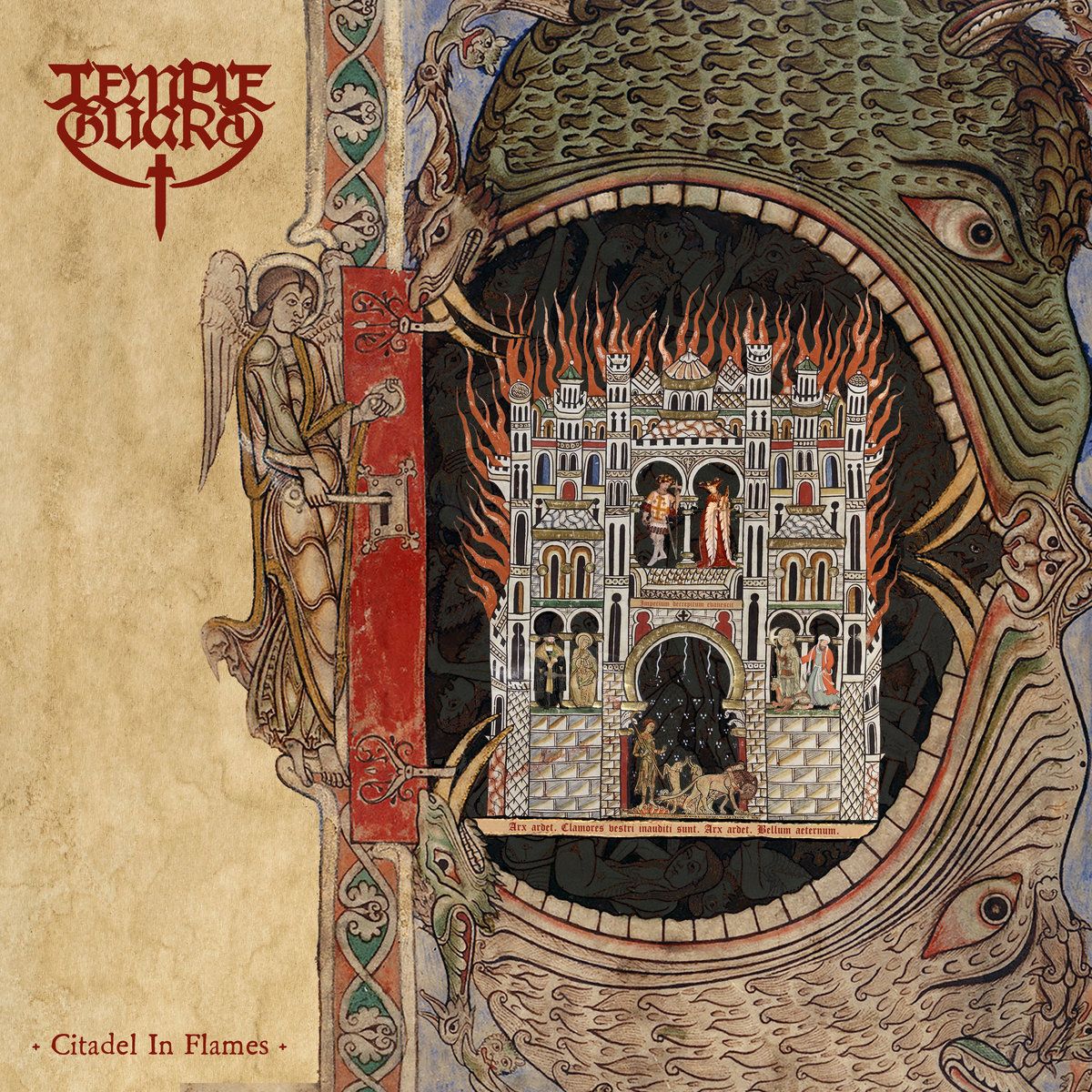
The fire evoked in the title is not just a metaphor: in the Temple Guard it is almost a permanent condition. For years the English band has been building its trajectory around an idea of music experienced as a declaration of war, a mixture of urgency and hardcore ethics, metal heaviness and militant vision that leaves little room for half measures. “Citadel in Flames” therefore arrives as a new chapter in a saga carried forward with surprising consistency: a job every two years or so, regular live activity and an increasingly recognizable presence in the main events of the British underground scene. A progressive growth, however, which has never affected that sense of mystery and threat that has always surrounded the band, remaining far from the logic of overexposure that often ends up emptying the most radical proposals of meaning.
Their strength lies precisely in the ability to inhabit a parallel dimension, where hardcore and metal language becomes the vehicle for a narrative made up of conflicts, condemnations and apocalyptic visions. The extremist and militant attitude is not an added element, but the gravitational center of the project. The band's political and social discourse develops through a deliberately imposing symbolism: the environmental collapse and the contradictions of contemporary society are described as a new holy war, a time of fallen prophets, marching armies and seven trumpets ready to announce the end. A biblical and mythological imagery that amplifies the sense of emergency, transforming each song into a sort of proclamation carved among rubble and flames.
From a musical point of view, “Citadel in Flames” further sets the pace. It is probably the heaviest work created by Temple Guard, the one in which the group manages to give greater depth and weight to its sound. The production is more massive, the guitars more full-bodied and the rhythm section works with a physicality that fully conveys the idea of a march towards disaster evoked by the lyrics. The base remains firmly anchored to the metalcore of the late nineties, but is occasionally contaminated by black and death metal veins that make the picture darker and more aggressive. In short, the starting point is once again familiar ground, the one traced by bands such as Earth Crisis, Arkangel and All Out War: with powerful riffs and stentorian cadences alternating with uptempo outbursts that incite revolt. As in the recent past, however, a certain attention also emerges to an even more extreme component, see the death metal influences (Bolt Thrower) of a piece like “Masked Resistance”, which ends up also recalling the very first Heaven Shall Burn.
It can therefore be said that the Temple Guard are not pursuing any modernization on a stylistic level: their terrain of action is defined, recognisable, almost a stronghold to be defended rather than a territory to be conquered. The difference lies in the way in which they still manage to bring to life stylistic features that have already been widely explored, avoiding the simple replica effect. The group works by accumulation, stratifying heaviness, atmosphere and aggression until obtaining a more mature and at the same time dynamic form of their language. In a panorama where the search for the distinctive element can end up becoming a pose, the English band therefore chooses a different path: that of an almost radical coherence, transforming a series of already known coordinates into something still vivid and credible. A new demonstration of strength from expert musicians, capable of handling this style with the confidence of someone who knows every corner of it, but also with enough energy to not let it become a tired exercise in nostalgia.
Daniel D`Amico for SANREMO.FM